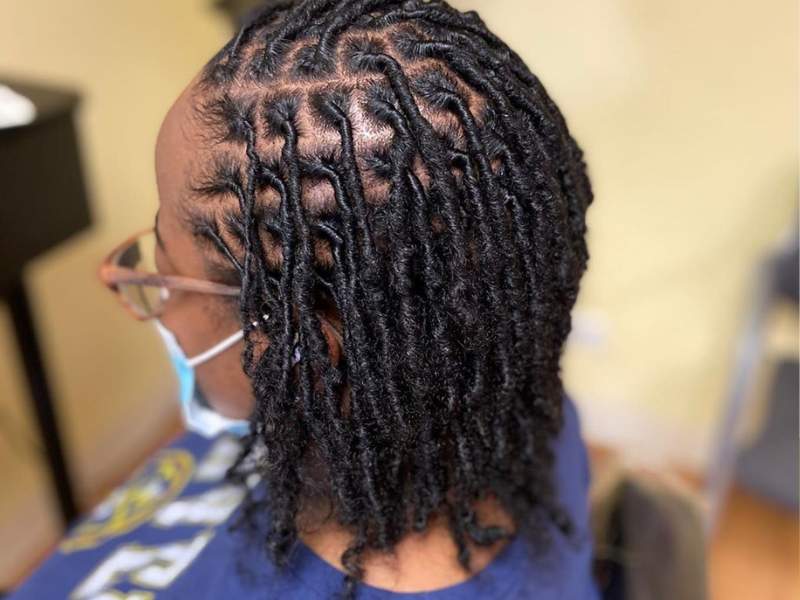

Faux locs are a beautiful way to enjoy the appearance of locs while keeping your options open. They are a temporary protective hairstyle that can be installed over your natural hair, giving you the opportunity to experiment with different lengths, textures, colors, and styles without making a permanent commitment to locs.
What I really like about faux locs is how much variety you can get from them. You can have soft, neat locs that look polished and understated, or choose a more textured style with curly pieces, distressed details, beads, or cuffs.
And once the installation is done, you are not limited to wearing the locs down every day. You can create buns, ponytails, half-up styles, side-swept looks, and beautiful occasion hairstyles.
But before choosing a style simply because it looks pretty in a picture, there are a few things worth understanding. The type of faux locs, installation method, length, weight, and maintenance routine can all affect how comfortable and practical the hairstyle will be.
You May Find This article Useful How to Style Medium Length Locs When You’re Bored With Your Look
So in this guide, I am going beyond simply showing you hairstyle ideas. I want to walk through the different types of faux locs, how they are installed, how to choose the right style, how to maintain them, and then share 15 faux locs hairstyles for women that you can actually consider for your next look.
What Are Faux Locs?
Faux locs are a temporary hairstyle created by wrapping or crocheting extension hair around sections of your natural hair to give the appearance of traditional locs.
Unlike permanent locs, your natural hair does not have to go through the process of actually forming locs.
This makes faux locs a popular choice for women who want to experiment with the look of locs while still being able to return to their natural hair afterward.

They can be installed using different techniques, and the finished appearance can vary considerably depending on the hair used and the method chosen.
Some faux locs look smooth and uniform, while others are deliberately textured, wavy, or distressed. Check out this article on Sisterlocks vs Traditional Locs which one is right for you.
You can also choose different lengths and thicknesses, which means you can create something very subtle or go for a much more dramatic hairstyle.
Why Women Choose Faux Locs
Before choosing your style, it helps to understand why faux locs appeal to so many people.
They give you the look of locs without permanent loc formation
If you have always wondered what you would look like with locs but aren’t ready to commit to growing them, faux locs give you an opportunity to experiment.
You can enjoy the appearance, try different lengths and styles, and eventually remove the extensions.
You may find this useful What do mature locs look like; 11 signs your locs are fully Mature.
They can help protect your natural hair
When installed correctly and maintained properly, faux locs can keep your natural hair tucked away and reduce the amount of daily manipulation.
However, calling them a protective style does not mean every installation will automatically protect your hair. Excessive tension, heavy extensions, poor scalp care, or leaving the style in too long can create problems.
The way the hairstyle is installed and cared for matters.
There are so many textures to choose from
You don’t have to settle for one particular appearance.
You can choose smooth locs, soft locs, distressed locs, goddess locs, butterfly locs, boho styles, or other variations.
They can be styled in many ways
Once installed, your locs can be worn loose, pulled into a ponytail, gathered into a bun, swept to one side, or decorated with accessories.
That versatility is one of the biggest reasons to consider them.
I have an article on How to Maintain Sister Locs and Keep Them Looking Beautiful, this tells you everything you need to know about maintaining sisterlocks
Different Types of Faux Locs to Know Before Choosing Your Hairstyle
Not all faux locs look or feel the same.
Understanding the differences can help you choose a style that matches your personality and lifestyle.
1. Goddess Locs
Goddess locs usually have a softer, more bohemian appearance.
They often combine loc-like sections with loose waves or curls toward the ends. This gives the hairstyle movement instead of making every strand look completely uniform.
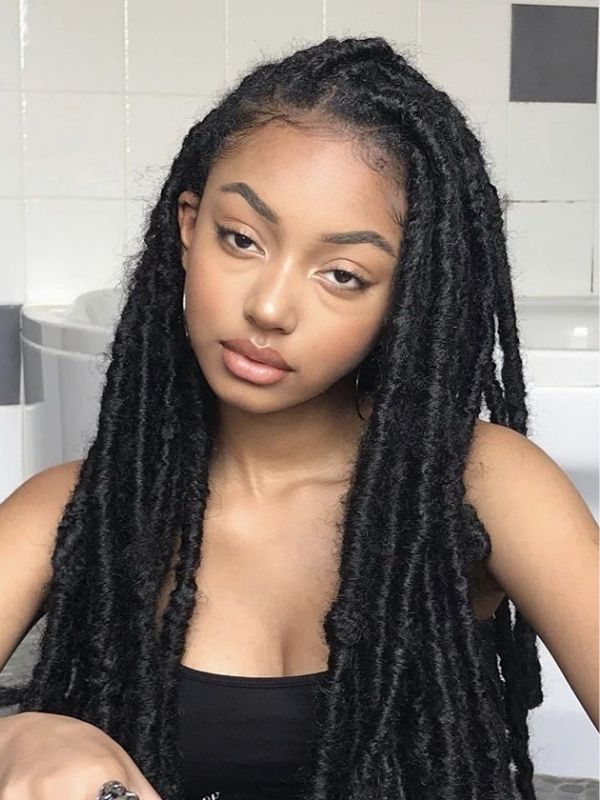
If you like hairstyles that feel feminine, relaxed, and slightly undone, goddess locs may be worth considering.
They can also be styled into buns, ponytails, and half-up hairstyles.
2. Butterfly Locs
Butterfly locs are known for their distressed, textured appearance.
Instead of looking perfectly smooth, they have loops and folds along the length of the locs.
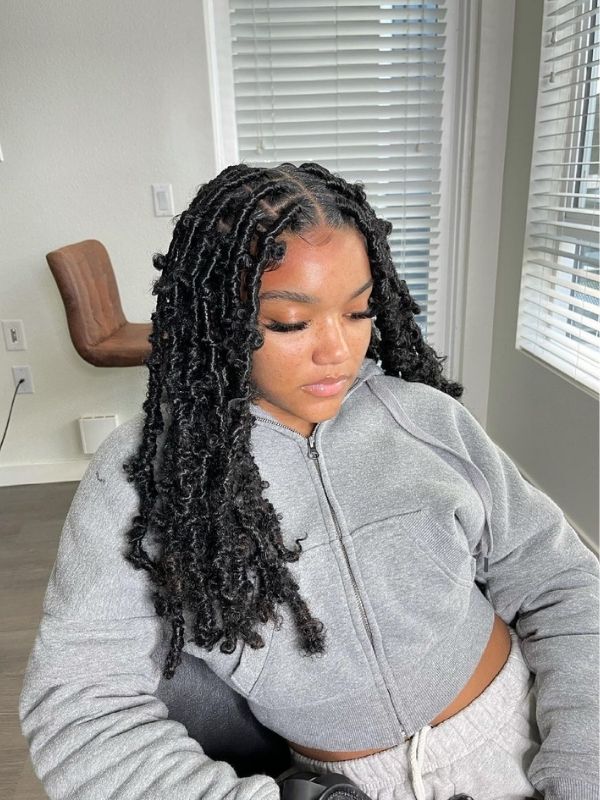
That texture is intentional and gives them a more casual, lived-in appearance.
Butterfly locs are especially appealing if you don’t want your faux locs to look extremely polished or uniform.
3. Soft Locs
Soft locs are designed to have a softer, more flexible feel.

They can give you a more relaxed appearance and may be easier to manipulate into different hairstyles depending on the installation and hair used.
If you want faux locs that don’t feel extremely rigid, this style may be worth exploring.
4. Traditional Wrapped Faux Locs
Traditional faux locs are often created by wrapping extension hair around a prepared base.

This method allows the stylist to build the loc around the natural hair and can create a customized appearance.
The final result depends heavily on the wrapping technique, the type of extension hair used, and the desired thickness. Read this article on How To Fix Thinning locs and Keep Them From Getting Worse
5. Crochet Faux Locs
Crochet locs can involve attaching pre-made loc extensions to a braided or otherwise prepared base using a crochet hook.
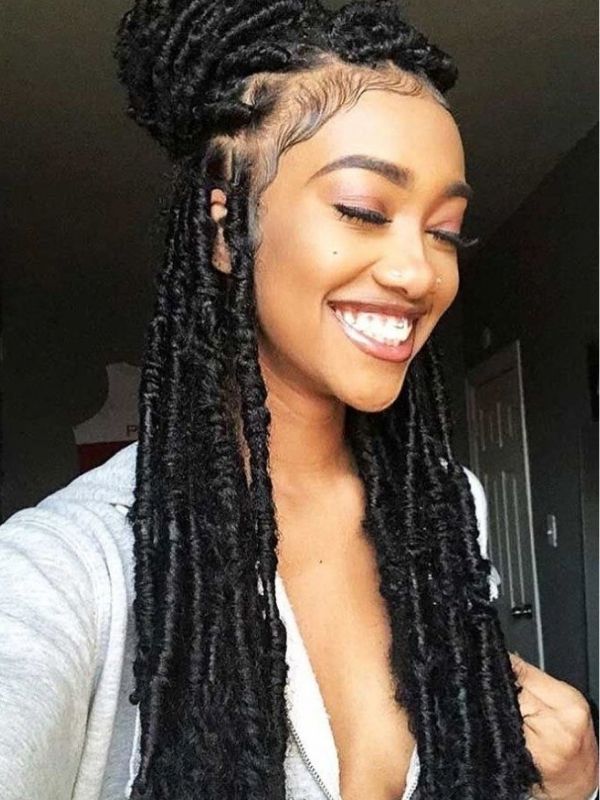
This method can make installation more straightforward because the loc itself is already formed.
The finished appearance depends on the specific extensions you choose.
How to Prepare Your Natural Hair for Faux Locs
Good preparation can make the installation process much easier.
You don’t want to rush straight from taking down an old hairstyle into another protective style without giving your natural hair some attention first.
Step 1: Wash Your Hair
Start with clean hair and a clean scalp.
Use a shampoo that works well for your hair and scalp, making sure you remove product buildup, sweat, and excess oil.
Don’t aggressively scratch your scalp with your fingernails.
Instead, massage the shampoo gently with your fingertips.
Step 2: Deep Condition
After washing, deep-condition your hair if that is already part of your normal hair-care routine.
This gives your hair some conditioning before it is tucked away.
Allow the conditioner to sit according to the product instructions, then rinse thoroughly.
Step 3: Moisturize Your Hair
Apply your usual moisturizing products while your hair is still manageable.
The exact products you use will depend on your hair’s needs, but the goal is to start the installation with hair that is properly cared for rather than extremely dry.
This will explain to you About How to fix frizzy locs without retwisting them, and also care for them.
Don’t overload the hair with heavy products.
Too much product can contribute to buildup underneath the extensions.
Step 4: Detangle Carefully
Gently detangle your hair from the ends upward.
This is not the moment to rush through knots.
Work in sections and use a suitable detangling product if needed.
Once the hair is detangled, you can divide it into sections for installation.
What You Need to Install Faux Locs
The exact materials depend on the installation technique.
For a traditional wrapped installation, you may need:
- Marley hair or another suitable wrapping extension
- Braiding hair for the base
- Rat-tail comb
- Hair clips
- Edge control
- Hair ties
- Scissors
- Crochet hook if your technique requires one
- Lightweight hair products
This article will guide you on How Often Should You Retwist Your Locs?
For crochet faux locs, you will generally need:
- Pre-made crochet locs
- Braiding hair for the base
- Crochet needle
- Rat-tail comb
- Hair clips
- Edge control if desired
If you are having your faux locs installed professionally, your stylist may provide most of the necessary materials.
How Faux Locs Are Installed
The exact technique can vary, but understanding the basic process will help you know what your stylist is doing.
How Long do starter Locs takes to mature? Read this guide for more explanation as a beginner.
Step 1: Section the Natural Hair
The hair is divided into individual sections.
The size of each section will influence how many locs you have and how thick the finished hairstyle appears.
Smaller sections generally create more individual locs, while larger sections create fewer, thicker locs.
Your stylist should also consider the density and strength of your natural hair.
Step 2: Create the Base
The natural hair is usually braided or otherwise prepared to create a base for the extensions.
A simple individual braid may be used for some installations, while other techniques can involve different base patterns.
The base needs to be secure enough to support the extension without being painfully tight.
Step 3: Attach the Faux Loc
With crochet installations, the pre-made loc is positioned around or through the prepared base and secured using the crochet technique.
The stylist works through the sections until the natural hair is tucked into the faux loc.
Step 4: Wrap the Hair
For traditional wrapped faux locs, extension hair is wrapped around the natural-hair base.
The wrapping continues down the length until the natural hair is covered.
The stylist then secures the end so the loc stays intact.
Step 5: Check the Finished Style
Once the installation is complete, check how your scalp feels.
Your locs should not be causing severe pain, excessive pulling, or persistent headaches.
A hairstyle being new does not mean you have to tolerate significant discomfort.
15 Faux Locs Hairstyles for Women to Try
Now that we’ve covered the foundation, let’s get into the Locs part.
These styles show just how many ways you can wear your faux locs once they are installed.
1. Long Faux Locs Worn Loose
Sometimes you don’t need to do much styling at all.
Long faux locs worn loose allow the length and texture to become the main feature of the hairstyle.
You can wear them with a middle part, side part, or even let them fall naturally without creating a precise part.
photo credit
How to Style It
Start by gently separating your locs with your fingers.
Create your preferred part at the front.
Bring the locs forward over your shoulders and arrange them naturally.
If you want a more polished appearance, smooth your edges lightly with a suitable product.
For a more relaxed look, leave your edges natural.
Looking for a birthday Styles to Rock? Here are 9 Gorgeous Birthday Locs, That steal the spotlight, you should try out.
Why Try It?
This is probably one of the easiest faux locs hairstyles because there is very little manipulation involved.
It also gives you the full impact of your chosen loc length and texture.
2. Half-Up, Half-Down Faux Locs
The half-up, half-down style gives you a nice balance between wearing your locs loose and keeping some of them away from your face.

How to Create It
Use your fingers or a rat-tail comb to separate the upper section of your locs.
Gather that section toward the back of your head.
Secure it with a hair tie or scrunchie.
You can leave it as a small ponytail or wrap the section into a bun.
Allow the rest of the locs to hang freely.
Styling Tip
Don’t make the top section too tight.
Faux locs can be heavy depending on their length and thickness, so keeping the style comfortable is more important than making the ponytail extremely firm. Go Through this article to see Different wedding Locs styles that are cute.
3. High Faux Locs Bun
A high bun can turn long faux locs into a completely different hairstyle.

How to Create It
Gather all your locs toward the crown of your head.
Secure them into a high ponytail.
Divide the ponytail into manageable sections.
Wrap the locs around the base of the ponytail, building the bun gradually.
Tuck the ends underneath and secure them.
If some locs refuse to stay in place, use a few hairpins rather than repeatedly tightening the entire hairstyle.
Festive period is fast coming, this article on 15 Christmas loc styles that will have everyone where you get your hair done might be useful to you.
Who Is It Good For?
This works particularly well with medium-to-long faux locs because you have enough length to build a fuller bun.
4. Low Faux Locs Bun
If you prefer something more understated, try a low bun.
How to Create It
Gather your locs at the back of your neck.
Secure them into a low ponytail.
Twist the locs gently and wrap them around the base.
Tuck the ends underneath.
Secure the bun with hairpins.
Leave a couple of locs around the face if you want a softer finish.
This style can work beautifully for work, dinners, events, or days when you simply want your hair away from your shoulders.
5. Side-Swept Faux Locs
A simple side part can make your faux locs look completely different.
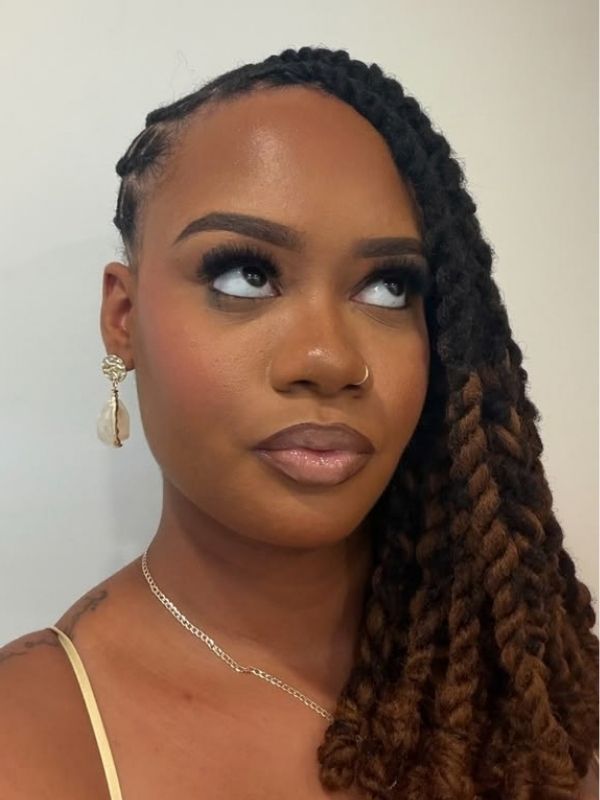
How to Create It
Create a deep side part.
Move most of your locs toward the opposite side.
Bring them over one shoulder.
Use a few discreet pins behind the ear if you want the locs to stay in position.
You can leave the ends loose or secure part of the hair into a small side ponytail.
Are you just staring your loc journey as a beginner, Read this article to Understand everthing you need to know Starter Locs: 11 Things Nobody told you before starting your loc journey
Add Accessories
A few gold cuffs placed near the front can draw attention to the side-swept effect.
6. Faux Locs Ponytail
A ponytail is practical, simple, and surprisingly stylish with faux locs.
How to Create It
Decide whether you want a high, medium, or low ponytail.
Gather your locs without pulling aggressively at the roots.
Secure them with a strong hair tie.
Take one loc from underneath the ponytail and wrap it around the hair tie.
Secure that loc underneath the ponytail with a pin.
High vs. Low Ponytail
A high ponytail gives you a more energetic look and allows your locs to fall dramatically down your back.
A low ponytail is more relaxed and can be easier to wear for everyday activities.
7. Goddess Faux Locs With Curly Ends
If you want a hairstyle with more movement, goddess faux locs are worth considering.
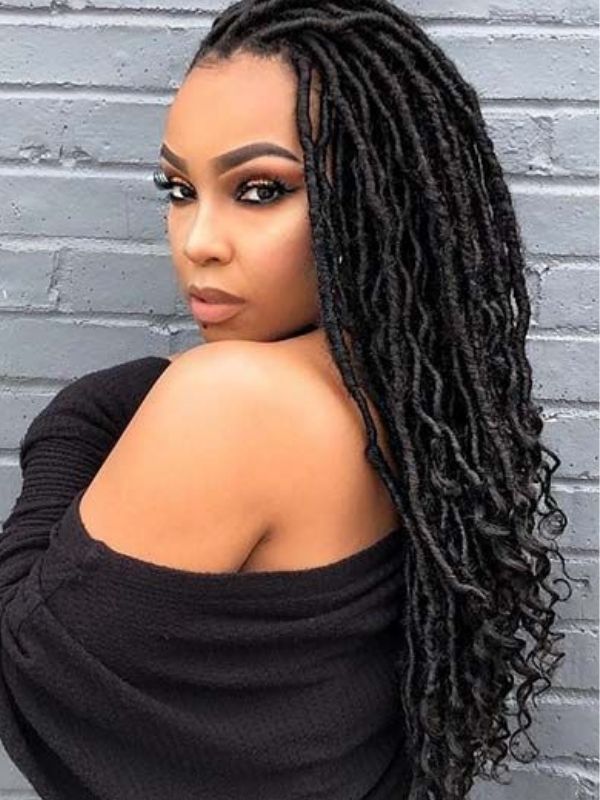
How to Style Them
Allow the locs and loose curly sections to fall naturally.
Avoid constantly brushing or manipulating the curly portions because doing so can cause them to lose their texture.
You can gather the front section into a half-up style while leaving the curly ends loose.
The contrast between the locs and curls creates the signature goddess appearance.
8. Butterfly Faux Locs With a Half-Up Bun
Butterfly locs already have plenty of texture, so a simple hairstyle can be enough to show them off.
How to Create It
Separate the upper portion of your locs.
Gather that section at the crown.
Wrap it into a loose bun.
Secure it without pulling too tightly.
Leave the remaining butterfly locs down.
The distressed texture will remain visible throughout the hairstyle.
9. Faux Locs With Gold Cuffs
You don’t always need a completely new hairstyle.
Sometimes a few accessories are enough.

How to Create the Look
Choose several locs around your face and throughout the hairstyle.
Place small gold cuffs onto selected locs.
Space them out rather than placing them all in one area.
You can also place several cuffs together on one or two locs to create a statement detail.
Other Accessories to Try
You can experiment with:
- Silver cuffs
- Wooden beads
- Shells
- Colorful beads
- Loc rings
- Decorative clips
- Scarves
Just pay attention to weight. Heavy accessories can add unnecessary stress to individual locs.
10. Faux Locs With a Head Scarf
A scarf can make your hairstyle feel completely new without changing the actual locs.
How to Style It
Start with your faux locs loose or gathered into a bun.
Fold your scarf into a long strip.
Place it around your head like a headband.
Tie it at the back or side.
You can leave the ends hanging or tuck them away.
For a bun, wrap the scarf around the base of the bun and secure it.
Choose a scarf that complements your outfit for an easy coordinated look.
11. Faux Locs Space Buns
Space buns are playful and give faux locs a completely different personality.
How to Create Them
Create a middle part from the front to the back.
Divide your locs into two equal sections.
Gather each section into a high ponytail.
Wrap each ponytail around its base to create a bun.
Secure each bun with pins.
Leave a few locs loose around the face if you want a softer appearance.
This style works particularly well for casual outings and fun events.
12. Short Faux Locs Bob
You don’t need long faux locs to enjoy the style.
A short faux locs bob can give you a completely different silhouette.
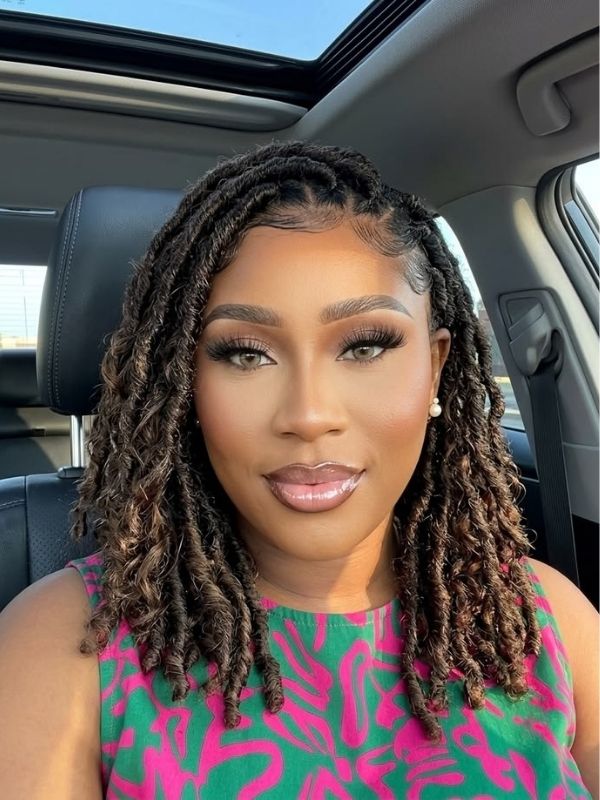
How to Style It
Keep the locs around chin or shoulder length.
Create a middle or side part.
Allow the locs to fall naturally around your face.
If your faux locs have curls or waves, allow that texture to show rather than trying to make everything perfectly straight.
Why Choose a Bob?
A shorter installation can be easier to wear loose because you don’t have as much length to manage.
It can also create a neat, structured appearance without requiring an elaborate updo.
13. Faux Locs Updo With Face-Framing Pieces
This is a beautiful option when you want your faux locs to look more formal.
How to Create It
Separate two or three locs near the front of your face.
Gather the remaining locs toward the back.
Twist sections of the locs and pin them into an updo.
Keep the front pieces loose.
You can gently shape them around your face.
Where to Wear It
This style can work for:
- Weddings
- Birthdays
- Dinner dates
- Church
- Formal events
- Photoshoots
- Celebrations
The key is making sure the updo is secure without creating uncomfortable tension.
14. Faux Locs With Beads
Beads can give your faux locs a more personalized appearance.
How to Create the Look
Choose a few locs that you want to decorate.
Slide the beads onto the selected locs.
Place them at different heights instead of making every bead sit in exactly the same position.
You can use neutral wooden beads for a natural appearance or colorful beads when you want something more playful.
You can also combine beads with metallic cuffs.
The important thing is not to overload individual locs with heavy accessories.
15. Side Faux Locs Bun
A side bun gives your faux locs an elegant shape while still allowing some of the locs to remain visible.

How to Create It
Create a side part.
Gather your locs toward one side near the lower part of your head.
Secure them into a loose ponytail.
Wrap the locs around the base to create a bun.
Secure the ends with pins.
Leave a few locs loose around the opposite side of your face.
You can add a few cuffs or decorative accessories to finish the style.
How to Choose the Right Faux Locs Length
Length can make a big difference in both appearance and comfort.
Short Faux Locs
Short locs are easier to manage and can create a neat, lightweight-looking hairstyle.
They are also a good option if you don’t particularly enjoy having hair down your back.
Medium Faux Locs
Medium-length locs give you a balance between manageability and styling options.
You can still create ponytails, half-up styles, and some types of buns without dealing with extremely long hair.
Long Faux Locs
Long locs give you the most room to experiment with hairstyles.
You can create larger buns, longer ponytails, dramatic side-swept styles, and other looks.
However, longer locs can also be heavier, so your natural hair and scalp need to be able to comfortably support the installation.
How Long Do Faux Locs Last?
Faux locs commonly last around 4 to 8 weeks, but there is no single timeline that applies to everyone.
The longevity depends on factors such as:
- Installation method
- Type of faux locs
- Hair texture
- How quickly your natural hair grows
- Scalp condition
- How often you manipulate the style
- How you sleep with the hairstyle
- How well the locs are maintained
Keeping them in longer is not automatically better.
If your scalp becomes uncomfortable, your natural hair begins to mat excessively, or you notice significant breakage or other problems, it is worth removing the style rather than trying to stretch the installation indefinitely.
How to Maintain Faux Locs
The installation may be finished, but maintenance is what helps the hairstyle continue looking good.
1. Protect Your Locs at Night
A satin bonnet or satin scarf can help reduce friction while you sleep.
If you don’t like wearing a bonnet, a satin or silk pillowcase is another option.
The goal is to reduce the amount of rubbing between your hair and your pillow.
2. Keep Your Scalp Clean
Protective styling does not mean you should ignore your scalp.
Your scalp still needs to be cleaned.
The exact washing method will depend on your installation, but avoid allowing heavy buildup to accumulate underneath the locs.
3. Don’t Overload Your Scalp With Products
It can be tempting to keep adding oils and products because you want your hair to feel moisturized.
However, constantly layering products can lead to buildup.
Use lightweight products sparingly and pay attention to how your scalp and hair respond.
4. Be Careful With Tight Hairstyles
Your faux locs may look beautiful pulled tightly into a high ponytail, but repeatedly creating tight hairstyles can put stress on your edges and scalp.
If your hairstyle hurts, feels excessively tight, or causes persistent discomfort, loosen it.
5. Keep Your Edges in Mind
Don’t repeatedly brush, slick, or pull your edges aggressively.
Your edges are still natural hair, even when the rest of your hair is tucked away.
Gentle handling matters.
How to Deal With Itchy Scalp in Faux Locs
An itchy scalp can happen for several reasons, including buildup, dryness, irritation, or sensitivity to a product or extension material.
Instead of immediately applying more and more oil, try to figure out what is causing the irritation.
Keep your scalp clean and avoid scratching aggressively.
If you develop significant irritation, sores, swelling, or persistent discomfort, don’t simply cover it up with another product. Consider removing the style and getting appropriate professional advice.
Can Faux Locs Damage Your Natural Hair?
Faux locs themselves do not automatically mean your hair will be damaged.
The bigger concern is how the hairstyle is installed and maintained.
Problems can occur when the natural hair is braided too tightly, the extensions are excessively heavy, the style is manipulated constantly, or the installation is kept in despite signs of scalp or hair stress.
A good protective style should not require you to tolerate significant pain.
If you feel strong pulling immediately after installation, speak up rather than assuming you need to “get used to it.”
How to Remove Faux Locs Safely
Removal deserves just as much attention as installation.
Don’t rush through it.
Start by cutting only the extension hair when you are completely certain where your natural hair ends.
If you are unsure where the extension ends and your natural hair begins, don’t cut blindly.
Once the extension is removed, gently unravel the natural-hair base.
Work section by section.
After everything is removed, gently detangle your hair, cleanse your scalp and hair, and follow with your normal conditioning routine.
If your installation is complicated or you’re worried about accidentally cutting your natural hair, having a professional remove it can be a safer option.
Faux Locs for Different Occasions
The same set of locs can look completely different depending on how you style them.
For Everyday Wear
Try:
- Loose faux locs
- Half-up, half-down
- Low ponytail
- Short faux locs bob
For Work
Try:
- Low bun
- Low ponytail
- Neat half-up style
- Simple side-swept locs
For Weddings and Special Events
Try:
- Elegant updo
- Side bun
- High bun
- Faux locs with subtle accessories
- Goddess locs with curly ends
For Casual Days
Try:
- Space buns
- High ponytail
- Loose locs
- Scarf styles
- Butterfly locs
Things to Consider Before Getting Faux Locs
Before booking your installation, think beyond the pictures.
How heavy will the style be?
Long, thick locs can carry considerably more weight than short, thin ones.
How much time do you have for maintenance?
Some styles need more attention than others.
Do you have a sensitive scalp?
If you do, discuss this with your stylist before installation.
How long do you plan to keep them?
Knowing your intended wear time can help you choose a suitable installation.
What will you actually do with the hairstyle?
If you love buns and ponytails, choose a length that gives you enough room to create them.
Final Thoughts
Faux locs give you plenty of room to experiment with your appearance without committing to permanent locs. You can change the length, texture, color, accessories, and styling depending on the look you want.
From goddess locs and butterfly locs to soft locs, long classic locs, elegant buns, ponytails, and playful space buns, there are so many directions you can take.
But I think choosing a beautiful hairstyle should go hand in hand with choosing one that you can actually live with comfortably.
Pay attention to the weight of the extensions, avoid unnecessary tension, take care of your scalp, protect your locs while sleeping, and don’t keep the style installed simply because you want to stretch it for a few more weeks.
Most importantly, have fun with it.
Your faux locs don’t have to look exactly like anyone else’s. Add a few beads, try a new part, put them into a bun, wear them loose, or add a scarf when you want a completely different feel.
Which of these faux locs hairstyles would you try first goddess locs, butterfly locs, a high bun, or long classic faux locs? Let me know in the comments.