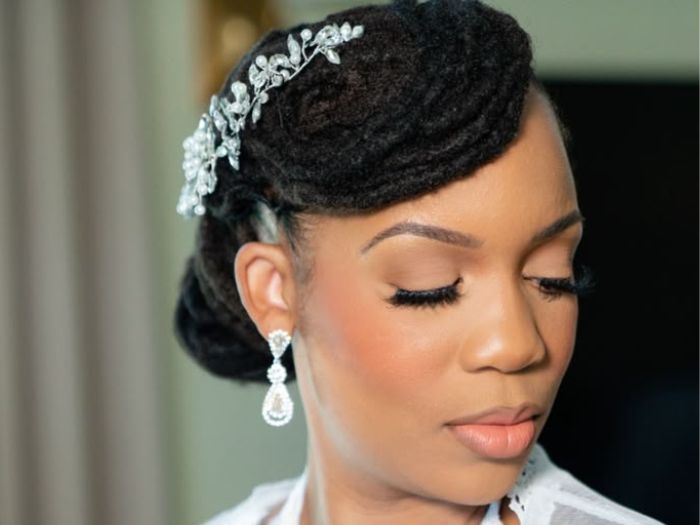
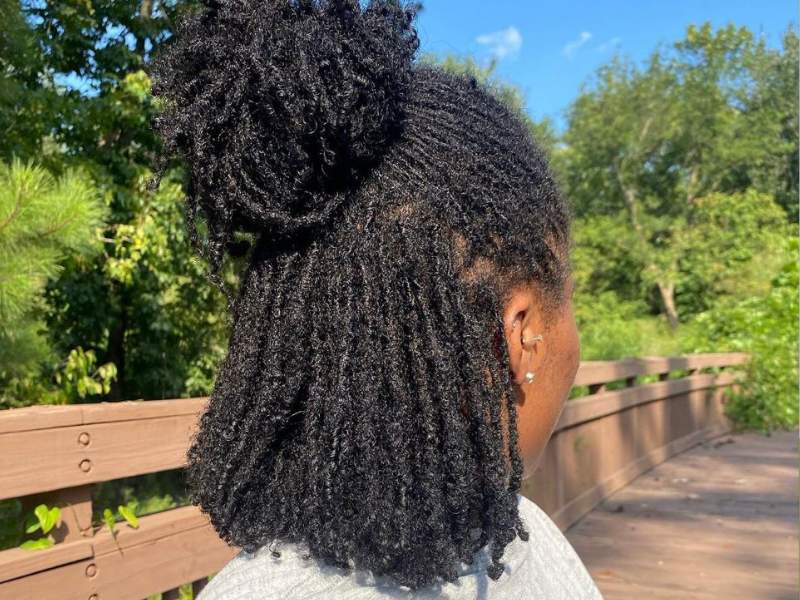
What Do Mature Locs Look Like? Signs Your Locs Are Fully Mature.
You can have locs for months, even years, and still look at your hair in the mirror and wonder, “Are my locs actually mature yet?” Maybe your locs feel thicker than they did when you started, but they still have frizz. Maybe some are firm while others feel softer. Or perhaps your locs have changed so much that you can’t tell where the starter stage ended and maturity began.
That confusion is completely understandable because mature locs don’t suddenly appear one morning. There is no specific day when you wake up and your locs magically become mature. Loc maturation happens gradually as the hair within each section becomes more established, compact, and intertwined.

And here’s something many people don’t realize: mature locs can still be frizzy, have new growth, and look different from the perfectly polished locs you see on social media. Maturity is not simply about having smooth roots or having a certain number of years in your loc journey. Festive period is coming, go through my guide on 15 christmas locs style that will have everyone asking where you get your locs done, to see inspos you will want to try out
So, what do mature locs actually look and feel like?
In this guide, we’ll go beyond the usual generic descriptions and look at the real signs that your locs are becoming fully mature, what changes you can expect, and how mature locs differ from starter locs. are you looking for a different ways to style your locs?, I have a step by step guide on to how to style your locs when you are bored with your locs
What Are Mature Locs?
Mature locs are locs that have developed a more established internal structure.
When you first start your locs, the hair is still relatively loose within each section. As time passes, the strands gradually become more intertwined and compact.
Eventually, the loc develops more stability and density.
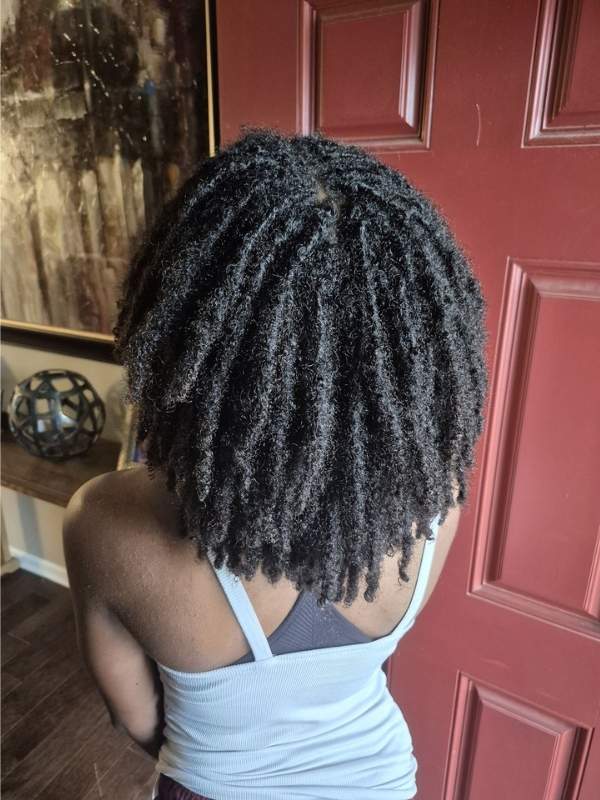
A mature loc generally:
- Holds its shape more consistently
- Feels denser and more established
- Has a more compact structure
- Doesn’t depend on frequent manipulation to maintain its basic form
- Has gone through significant changes from its original starter stage
However, mature doesn’t mean perfectly smooth.
This is important because many people mistakenly believe that a mature loc should have no frizz whatsoever.
That’s not true.
A mature loc can still have loose hairs, new growth, and natural texture.
11 Signs Your Locs Are Fully Mature
1. Your Locs Feel Firm and Established
One of the easiest things to notice is a change in how your locs feel.
Starter locs can feel relatively soft, loose, or flexible because the hair is still forming.
As your locs mature, they generally become more established and compact.
When you gently hold a mature loc, it may feel denser than it did during the early stages.
It doesn’t necessarily feel hard or stiff. Instead, there’s a sense that the hair has formed into a more stable structure.
You may notice this difference particularly when comparing older photographs of your locs with how they feel now.
2. Your Locs Hold Their Shape Better
Early starter locs can change dramatically after washing or manipulation.
They may swell, loosen, or look completely different from how they looked immediately after installation.
As locs mature, they generally become better at maintaining their established shape.
For example, if your locs started as two-strand twists, they may gradually lose the obvious appearance of the original twists as the hair develops.
Eventually, the loc has its own structure rather than simply looking like the hairstyle used to start it.
This is one of the biggest visual differences between starter locs and mature locs.
3. The Hair Inside the Loc Is More Compact
A mature loc isn’t simply a bunch of loose hairs wrapped together.
The strands within the loc have gradually become more intertwined.
This can make the loc feel denser and more compact.
If you gently examine the body of your loc, you may notice fewer areas that feel extremely loose compared with the early stages.
The structure becomes more established over time.
This is also why you shouldn’t judge maturity simply by looking at the roots.
The body of the loc tells you a lot about maturation.
4. Your Locs Have Gone Through the Budding Stage
Budding is a common part of the loc maturation process.
You may have noticed certain areas of your locs becoming thicker or more compact during the earlier stages.
Those areas can feel like small dense sections developing inside the loc.
As your locs continue to mature, these changes can become less dramatic because the developing structure becomes more established.
Not every person’s locs will follow exactly the same pattern, though.
Some people notice obvious budding, while others don’t recognize it as clearly.
So don’t worry if you never experienced a dramatic “budding” moment.
5. Your Locs May Look Less Like Your Original Starter Style
This is a major sign that your locs have developed.
Think back to the day you started.
Were they:
- Two-strand twists?
- Comb coils?
- Braids?
- Interlocked sections?
Now look at them.
Can you still clearly see the original starter pattern?
If not, that’s a sign your hair has undergone significant structural changes.
For example, two-strand twist starters may eventually develop into cylindrical or more irregular locs where the original twist pattern is no longer obvious.
The loc becomes its own structure.
6. Your Locs May Become More Uniform in Density
Don’t misunderstand this one.
Mature locs don’t have to be perfectly identical.
It’s completely normal for individual locs to have different shapes and sizes.
However, as your locs develop, they may become more consistently dense compared with the very early stages.
You may no longer have one section that feels extremely loose while another feels tightly compacted.
Some variation will always exist because your hair isn’t identical in every area of your scalp.
7. You Still Have Frizz — and That’s Normal
This is probably the sign that surprises people the most.
You might think:
“If my locs are mature, why are there still hairs sticking out?”
Because maturity doesn’t mean the complete absence of frizz.
Even mature locs can have loose hairs.
You can have:
- New growth
- Baby hairs
- Loose strands
- Frizz around the roots
- Hair sticking out along the body of the loc
Humidity can also make your locs appear fuzzier.
The difference is that the main structure of the loc is established even though individual hairs may still stick out.
So don’t keep retwisting your locs simply because you see frizz.
8. Your Locs Have Developed Their Own Texture
Another interesting change is texture.
Starter locs often resemble the method used to create them.
Mature locs tend to develop their own appearance.
A loc that began as a neat coil may eventually become thicker, more textured, and less obviously coiled.
A two-strand twist may lose its visible twist pattern.
An interlocked loc may develop its own shape and density.
This is part of what makes mature locs unique.
Your hair is no longer simply maintaining the appearance it had when you started.
It has developed into something different.
9. Your Locs May Feel Heavier Than They Did Before
As your locs become denser and continue growing, they may feel heavier.
This can be especially noticeable if you have long or thick locs.
You may notice the difference when:
- Washing your hair
- Putting your locs into a style
- Wearing your hair down
- Moving your head
- Gathering your locs together
However, increased weight isn’t automatically a sign that your locs are healthier or more mature.
If your locs become excessively heavy and you notice thinning at the roots, tenderness, or breakage, that’s something to take seriously.
Mature locs should not require you to ignore signs of tension.
10. Your Locs Need Less Manipulation to Look Like Locs
This is a subtle but important difference.
Starter locs often require maintenance to preserve their sections and appearance.
As your locs mature, the established structure generally becomes more self-supporting.
You don’t have to constantly convince the hair to stay together.
Even after washing, your locs still look and feel like locs.
That’s a sign of development.
It doesn’t mean you should stop maintaining your hair completely.
Your scalp still needs cleansing, your roots continue to grow, and your locs may still need professional maintenance.
But the basic structure of the loc no longer depends on constant manipulation.
11. Your Locs Have Their Own Established Shape
Eventually, you may stop looking at your locs and seeing “starter locs.”
Instead, they simply look like your locs.
Some may be cylindrical.
Some may be slightly flat.
Some may be thicker in certain areas.
Some may have natural bends.
That’s okay.
Mature locs don’t all look identical.
In fact, part of the beauty of mature locs is that they develop characteristics unique to the person wearing them.
Your locs may not look exactly like someone else’s, even if you started with the same method.
Mature Locs vs. Starter Locs: What’s the Difference?
Understanding the difference can make the maturation process easier to recognize.
| Starter Locs | Mature Locs |
|---|---|
| Hair is still forming | Hair has a more established structure |
| May unravel more easily | Generally holds its structure better |
| Often very fuzzy | Can still have frizz, but the core is established |
| May resemble the starting method | Develop their own appearance |
| Often softer or less compact | Generally denser and more compact |
| Can change significantly after washing | Usually maintains its basic form better |
| Sections may feel very different | Density is often more established |
Remember that this is a general comparison, not a strict checklist.
Everyone’s loc journey is different.
Does Frizz Mean Your Locs Aren’t Mature?
No.
This is one of the biggest misconceptions about mature locs.
Frizz is simply loose hair.
You can have beautifully mature locs and still have hairs sticking out.
New growth will continue appearing because your scalp continues producing hair.
Your environment also affects how your locs look.
Humidity, dryness, friction, and manipulation can all increase visible frizz.
So don’t use the amount of frizz as your main measurement of maturity.
Instead, look at the overall structure of the loc.
Can Mature Locs Still Change?
Absolutely.
Mature doesn’t mean your locs stop changing.
Your locs continue to grow from the roots.
As they become longer and heavier, their shape can change.
You may also notice changes in:
- Thickness
- Length
- Texture
- Color
- Root appearance
- Overall weight
Your locs can continue evolving for years.
That’s why “mature” doesn’t necessarily mean “finished forever.”
How Long Does It Take for Locs to Become Mature?
There isn’t a universal timeline.
Some people’s locs become noticeably established within months, while others take much longer.
The process can be influenced by:
- Hair texture
- Hair density
- Starter method
- Loc size
- Maintenance routine
- Manipulation
- Individual hair characteristics
This is why comparing your locs to someone who started theirs at the same time isn’t always useful.
You can both be one year into your loc journey and have completely different-looking hair.
Can You Make Your Locs Mature Faster?
There isn’t a safe shortcut that can instantly mature your locs.
Products marketed as something that will “lock your hair faster” shouldn’t be treated as magic solutions.
Maturation is a physical process involving how the hairs within your sections develop and compact.
Instead of trying to force the process, focus on creating good conditions for your locs.
Keep your scalp clean
A clean scalp is an important part of maintaining your hair.
Avoid excessive manipulation
Constantly twisting, pulling, or separating your locs isn’t necessary.
Be careful with heavy products
Buildup can become trapped inside locs and may be difficult to remove.
Protect your locs from excessive friction
A satin or silk bonnet or pillowcase can help reduce nighttime friction.
Don't retwist simply because of frizz
Your locs can be mature and still have new growth and frizz.
How Often Should You Retwist Mature Locs?
Mature locs still need maintenance, but the frequency depends on your hair and preferred method.
Some people prefer more frequent maintenance for a defined root appearance.
Others allow more new growth.
The important thing is not to assume that your roots have to look freshly retwisted all the time.
Repeated tension in the same areas can contribute to problems such as thinning.
If your roots feel sore after maintenance or you notice thinning around your hairline, talk to an experienced loctician about changing your routine.
Do Mature Locs Need Moisture?
Yes, but moisture doesn’t mean soaking your locs in oil.
Your scalp and hair still need appropriate care.
The best routine depends on your individual hair and scalp.
If you use products, avoid applying excessive amounts that could accumulate inside the locs.
And remember that oil and water are not the same thing.
Simply coating your locs with oil doesn’t automatically mean you’ve properly moisturized your hair.
A simple, consistent routine is usually better than constantly adding new products.
How Do You Keep Mature Locs Looking Healthy?
Healthy-looking mature locs aren’t necessarily the ones with the most perfectly retwisted roots.
Instead, pay attention to the condition of your hair.
Try to:
Keep your scalp clean.
Avoid excessive tension.
Don’t constantly manipulate your locs.
Watch for thinning or breakage.
Use products sparingly.
Protect your hair while sleeping.
Give your locs enough time between major manipulation.
And don’t forget the roots.
Your mature locs may look beautiful down the length, but weak or thinning roots can become a serious concern if ignored.
When Should You Be Concerned About Mature Locs?
Not every change is a sign of healthy maturation.
You should pay attention if you notice:
- Sudden or significant thinning
- A loc becoming unusually weak
- Breakage
- Persistent scalp pain
- Severe buildup
- Ongoing scalp irritation
- Excessive tension around the hairline
These aren’t problems you should try to hide simply by retwisting your locs.
If you’re concerned, have an experienced loctician examine your hair.
Frequently Asked Questions About Mature Locs
What do mature locs look like?
Mature locs generally have a more established, compact structure and hold their shape better than starter locs. They may be dense, textured, and cylindrical or have a more natural irregular shape. Mature locs can still have frizz and new growth.
How do I know if my locs are fully mature?
Look at the overall structure rather than just the roots. Mature locs generally feel denser, hold their shape better, and have a more established internal structure. The original starter pattern may also become less noticeable.
Can mature locs still be frizzy?
Yes. Frizz is normal even with mature locs. New growth, humidity, friction, and loose hairs can all contribute to frizz.
Do mature locs need retwisting?
Mature locs may still be maintained through retwisting or another maintenance method, depending on your preference and loc type. However, maintenance doesn’t need to happen simply because you see natural new growth.
How long does it take for locs to fully mature?
There is no universal timeline. Locs can take many months or longer to mature, and the process varies considerably from person to person.
Do mature locs get thicker?
They can. Locs may swell and become denser as they mature. However, the final thickness depends on factors such as your original section size, hair density, texture, and maintenance.
Can mature locs still shrink?
Yes. Locs can change in length and appearance even after they have become established. Hair structure, moisture, washing, and ongoing growth can affect their appearance.
Are mature locs supposed to be perfectly smooth?
No. Perfectly smooth locs are not a requirement for maturity. Mature locs can have natural texture, loose hairs, frizz, and new growth.
Why are some of my locs mature while others aren't?
Different locs can develop at different rates. Hair density, texture, friction, and differences between sections can all contribute to uneven maturation.
Can I make mature locs look neater without retwisting?
Yes. You can gently manage loose hairs, wear low-manipulation styles, and protect your locs from friction. You don’t have to retwist every time you want a neater appearance.
Can mature locs become damaged?
Yes. Mature locs can still experience thinning, breakage, buildup, and root stress. Maturity doesn’t make the hair immune to damage.
Your Locs Don’t Have to Look Perfect to Be Mature
If you’ve been waiting for the day when your locs will finally stop looking fuzzy, remember this: maturity isn’t about perfection.
Your locs don’t have to be completely smooth.
They don’t have to have identical sizes.
They don’t have to look freshly retwisted.
And they don’t have to look like someone else’s locs.
What matters is that the hair has developed a stable, established structure and continues to be cared for properly.
Your starter locs may have once looked like twists, coils, or loose sections. Over time, they change. They become denser, more established, and uniquely yours.
So if you’re looking at your locs wondering whether they’ve finally matured, don’t focus only on the frizz you can see.
Feel the loc. Look at its structure. Notice how it behaves after washing. Compare it with where you started.
Sometimes the clearest sign that your locs have matured is simply realizing that they no longer look like the hair you started with—they look like your locs now.