
How Long Do Starter Locs Take to Mature? What to Expect.
You can spend months looking at your starter locs and wondering, “Are these actually going to turn into locs?” One week they may look tight and defined, and the next they can become fuzzy, puffy, uneven, or even seem like they are coming apart. If you’ve been comparing your hair to pictures of mature locs online, you may start wondering whether your locs are developing too slowly.
The truth is that there is no exact date when starter locs suddenly become mature locs.
Loc maturation is a gradual process. Your hair has to change from newly formed sections into a more established, compact structure, and that transformation happens at different speeds for different people.
Some people begin noticing significant changes within several months, while others need considerably longer before their locs develop the density, firmness, and appearance they associate with mature locs.
So, if you’re currently staring at your starter locs wondering when they will finally “look like locs,” don’t panic.
This guide explains how long starter locs take to mature, what happens during each stage, why your timeline may be different from someone else’s, and what you can do to support your locs without trying to rush the process. Go through this article see more about starter locs and everything you need to know about it
What Does It Mean for Starter Locs to Mature?
Before talking about how long maturation takes, it’s important to understand what “mature” actually means.
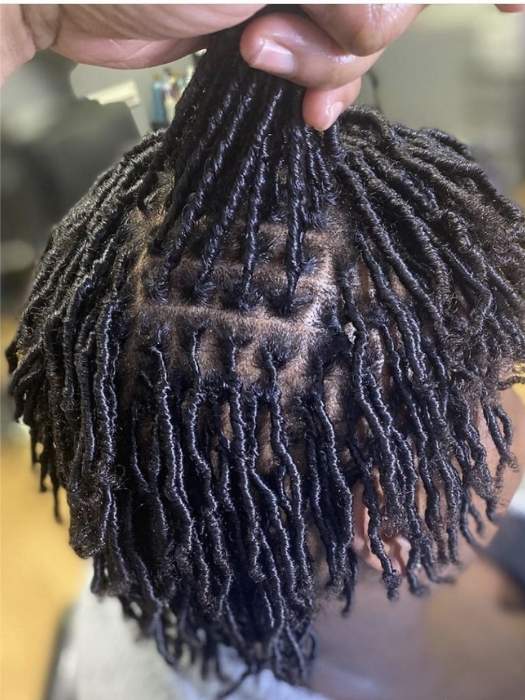
Starter locs are newly formed sections of hair. At this point, the hair is still relatively loose and hasn’t fully developed the compact structure associated with established locs.
As your locs mature, the hairs within each section gradually become more intertwined and compact.
You may notice that your locs:
- Feel firmer
- Become more cylindrical or established in shape
- Hold together more easily
- Have less loose hair within the body of the loc
- Become denser
- Develop a more consistent appearance
However, mature doesn’t mean perfectly smooth or completely frizz-free. I have a step by step guide on how to fix frizzy locs without retwisting them.
Even mature locs can have frizz, loose hairs, and new growth.
Maturation is more about the internal development and structure of the loc than simply how neat it looks.
How Long Do Starter Locs Take to Mature?
For many people, starter locs take many months to several years to fully mature, depending on the individual’s hair and loc method.
You may notice meaningful changes within the first several months, but reaching a fully mature appearance can take considerably longer.
There is no universal timeline because several factors influence how quickly your hair develops.
Someone may feel that their locs are becoming established after several months, while another person may still have very fuzzy, soft locs at that point.
Neither necessarily indicates a problem.
Your hair has its own timeline. what do mature locs looks like and 11 signs your locs are fully mature, this is a detailed guide and what to expect for a fully mature locs
The 5 Main Stages of Starter Loc Maturation
Rather than focusing on one specific number of months, it can be more helpful to understand what your hair may go through.
Stage 1: The Starter Stage
This is the stage immediately after your locs are installed.
Depending on your starting method, your hair may look like:
- Two-strand twists
- Coils
- Interlocked sections
- Small braided sections
- Another starter method

At this point, the hair has not yet undergone much internal locking.
Your locs may look neat immediately after installation, but don’t assume that appearance will remain unchanged.
As your hair begins adjusting, you may notice frizz, swelling, loosening, or changes in shape.
This stage is less about having mature locs and more about creating the foundation for them.
Stage 2: The Swelling and Frizz Stage
This is where many beginners start wondering what happened to their neat starter locs.
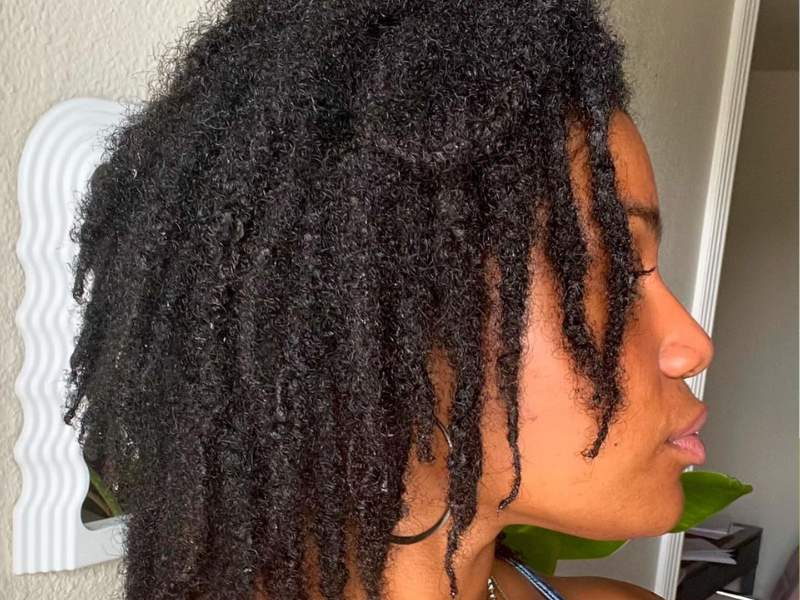
Your locs may begin to look bigger and fuzzier.
The hair can swell as it begins to tangle and develop more internal structure.
You may see loose hairs sticking out from the locs.
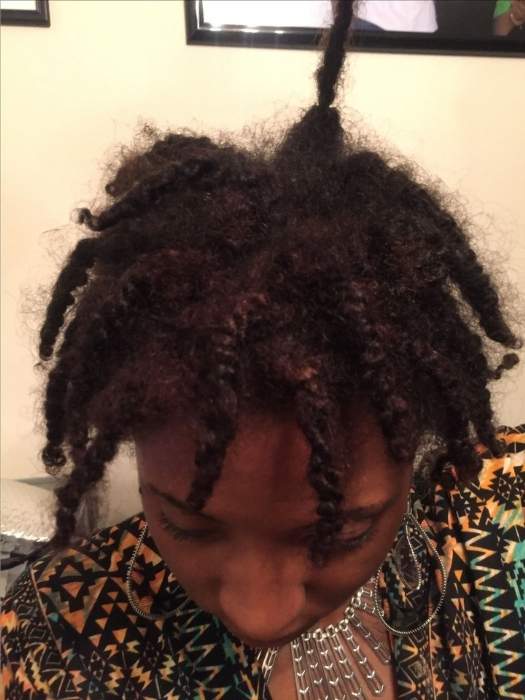
Some sections may appear thicker than others.
You may even notice that your parts aren’t as clearly visible as they were when you first started.
Don’t immediately assume something has gone wrong.
This stage is often part of the transition.
The hair is changing.
Stage 3: The Budding Stage
Eventually, you may notice small areas within your locs becoming denser or firmer.
These areas are often referred to as buds.
A bud can feel like a thicker or more compact section along the loc.
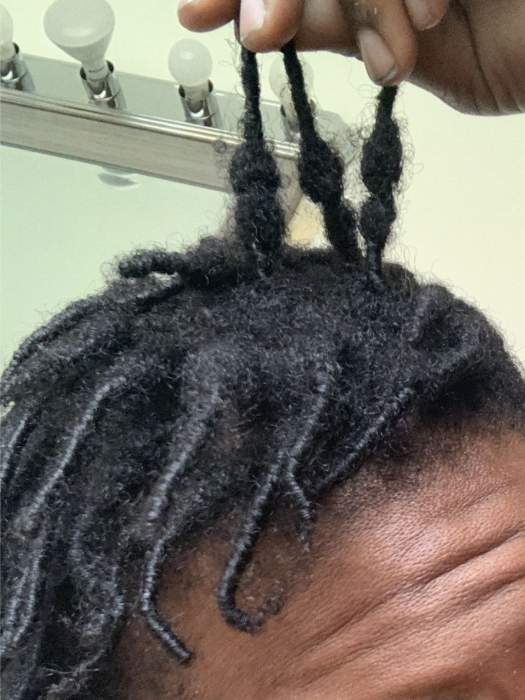
You may run your fingers down a loc and notice that one part feels noticeably denser than another.
This is an exciting stage because you can physically feel that the hair is beginning to develop.
However, budding doesn’t necessarily mean your locs are finished.
They still have plenty of development ahead.
Stage 4: The Teenage or Maturing Stage
This is the stage where your locs may start looking much more established, but they can still be unpredictable.
Some locs may look mature while others remain fuzzy.

You might notice:
- Less obvious unraveling
- More density
- Firmer locs
- Changes in shape
- Less loose hair within some sections
- More consistent loc structure
But you may still experience frizz and shrinkage.
This stage can last a while, so don’t become frustrated if your hair seems to stay here longer than expected.
Stage 5: Mature Locs
Mature locs have developed a more established internal structure.
They generally feel denser and more compact than starter locs.
The locs may also hold their shape more consistently.
However, mature locs aren’t necessarily perfectly smooth.
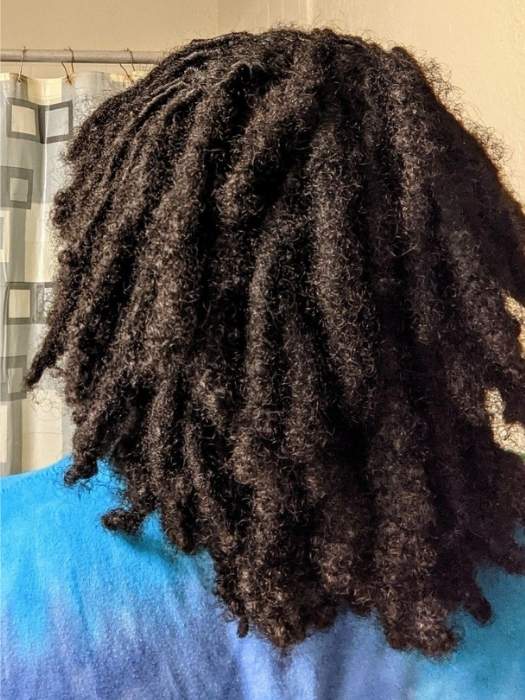
You can still have:
- New growth
- Frizz
- Loose hairs
- Different loc sizes
- Shrinkage
- Changes in texture
Your locs can be mature and still look natural.
Why Do Some Starter Locs Mature Faster Than Others?
This is where comparisons can become frustrating.
You may start your locs at the same time as someone else and notice that their locs look mature much sooner.
That doesn’t necessarily mean yours are progressing slowly.
Several things can influence maturation.
Your Hair Texture
Different hair textures can behave differently during the locking process.
Some hair may tangle and compact relatively quickly, while other hair may take longer to establish.
This is one reason you shouldn’t use someone else’s timeline as a deadline for your own hair.
Your Starting Method
The method used to create your starter locs can influence how they develop.
Two-strand twists, comb coils, braids, interlocking, and other methods create different starting structures.
The starting method isn’t necessarily a guarantee of how quickly your locs will mature, but it can affect the early stages.
Your Hair Density
The amount of hair you have in each section can influence the appearance and development of your locs.
This is another reason why two people can use the same starter method and still end up with very different results.
How Often You Manipulate Your Hair
Constantly touching, separating, twisting, or rearranging your starter locs can interfere with the natural development of the hair.
Your locs need time to form.
If you’re constantly trying to make them look perfectly neat, you’re not necessarily helping them mature faster.
Your Maintenance Routine
Your maintenance routine matters too.
Excessive retwisting can create unnecessary tension, while neglecting your scalp completely isn’t a good idea either.
The goal is balance.
Keep your scalp clean, maintain your locs appropriately, and avoid unnecessary manipulation.
Does Retwisting Make Starter Locs Mature Faster?
Not necessarily.
A retwist mainly organizes the new growth at the roots and creates a neater appearance.
It doesn’t magically turn immature locs into mature locs.
You can have beautifully retwisted roots while the actual body of the loc is still going through the maturation process.
This is an important distinction.
A neat retwist does not equal a mature loc.
The internal structure of the loc needs time to develop.
Retwisting too frequently simply because you want your starter locs to look mature can also place unnecessary tension on your roots.
Can You Make Starter Locs Mature Faster?
You cannot safely force your hair to mature overnight.
There are things you can do to support the process, but there is no magic product that can instantly turn starter locs into mature locs.
Your best approach is to give your hair the right conditions to develop naturally.
That means:
Keep Your Scalp Clean
A clean scalp supports a healthy loc journey.
Develop a cleansing routine that works for your scalp and your loc method.
Avoid Excessive Manipulation
Don’t constantly pull apart, twist, squeeze, or rearrange your locs.
Let them do their thing.
Be Careful With Products
Heavy products can create buildup inside developing locs.
You don’t need to drown your hair in oils, waxes, gels, or creams.
Protect Your Locs at Night
Using satin or silk can help reduce friction while you sleep.
Maintain Your Locs Appropriately
Work with an experienced loctician who understands your hair and can help you establish a maintenance routine that doesn’t create excessive tension.
Why Do My Starter Locs Look Frizzy While They Mature?
Frizz is extremely common during the maturation process.
As loose hairs begin becoming incorporated into the developing loc, some strands may stick out.
Humidity, friction, new growth, and your natural hair texture can also contribute to the fuzzy appearance.
Don’t feel like you need to eliminate every single loose hair.
Trying to constantly smooth your locs can lead to unnecessary manipulation.
Frizz doesn’t automatically mean that your locs aren’t progressing.
In many cases, it simply means your hair is still developing.
Why Are My Starter Locs Getting Thicker?
If your starter locs appear to be getting thicker, that can be part of the maturation process.
As the hair swells and begins to tangle, the loc can become wider and more textured.
This is one reason why your locs may look completely different six months into the journey compared with the day you started them.
However, dramatic changes in individual loc thickness, especially when accompanied by weakness or thinning at the roots, should be discussed with a knowledgeable loctician.
Why Are My Starter Locs Shrinking?
Shrinkage can be surprising.
You may begin your journey with relatively long hair and then notice that your locs seem much shorter.
This can happen because the hair changes its structure as the loc develops.
The hair isn’t necessarily growing backward.
Your scalp can continue producing new hair while the existing hair becomes more compact.
So don’t use visible length alone to judge whether your loc journey is progressing.
What Should Your Starter Locs Look Like After 3 Months?
There is no single correct appearance at three months.
Your locs may still look like twists or coils.
They may be fuzzy.
They may be swollen.
They may be budding.
Some may look more developed than others.
You may also experience some unraveling.
All of these things can occur during early loc development.
Instead of asking whether your locs “look mature” at three months, look for gradual changes in texture and structure.
What About After 6 Months?
By around six months, some people notice that their locs are becoming more established.
You may see:
- More budding
- Increased density
- Less frequent unraveling
- A more defined loc shape
- More compact sections
But your locs may still look fuzzy and uneven.
Don’t assume that six months means you should have fully mature locs.
Some people simply need more time.
What About After One Year?
After a year, many people notice a significant difference from their starting point.
The locs may feel firmer and more established.
You may also notice more consistent shapes and increased density.
But even after a year, your locs can still be maturing.
There isn’t a magical one-year finish line.
Your hair can continue changing beyond the first year.
Should All My Locs Mature at the Same Time?
No.
It’s perfectly possible for some locs to mature before others.
You might have a few locs that feel firm and compact while others remain fuzzy and soft.
Different sections of your scalp may also develop differently.
This can be influenced by hair density, texture, friction, and individual strand characteristics.
Don’t try to force every loc to match the most mature one.
Signs Your Starter Locs Are Progressing
Instead of obsessing over the calendar, look for actual changes in your hair.
You may notice that:
The locs feel denser.
Some sections may become more compact than they were initially.
The hair holds together better.
You may notice less unraveling during normal activities.
Budding becomes visible or noticeable.
You may see or feel thicker areas forming inside the loc.
The locs maintain their shape more easily.
They may stop looking exactly like the starter style you began with.
The texture changes.
The hair may become more compact and established.
These are more meaningful indicators of maturation than simply counting months.
When Should You Be Concerned?
Not every change during the loc journey should be ignored.
Contact an experienced loctician if you notice:
- Significant thinning around the roots
- Persistent scalp pain
- Excessive breakage
- A loc becoming unusually weak
- Severe buildup
- Persistent scalp irritation
- A noticeable area of hair loss
Frizz, shrinkage, and budding are generally very different from actual damage.
Learning to tell the difference can help you avoid unnecessary panic.
How to Be Patient With Your Starter Locs
Patience is easier said than done.
Especially when social media is filled with people showing perfectly mature locs.
But remember something important:
You’re usually seeing the result, not the years it took to get there.
You don’t see every fuzzy morning.
You don’t see the awkward stage.
You don’t see the unraveling.
You don’t see the months when the person wondered whether their locs would ever look the way they wanted.
You see the finished picture.
Your loc journey has its own timeline.
Take progress pictures every few months instead of checking your hair every day.
When you compare your current hair with a photo from six months ago, you’ll often notice changes that weren’t obvious day to day.
Frequently Asked Questions About Starter Loc Maturation
How long do starter locs take to mature?
Starter locs can take many months to several years to fully mature. The exact timeline varies depending on your hair characteristics, starting method, maintenance routine, and individual locking process.
Can starter locs mature in 6 months?
Some people’s locs can become noticeably more established within six months, but that doesn’t mean they are fully mature. Others may still have significant frizz, budding, or softness at this stage.
How do I know when my starter locs are mature?
Mature locs generally feel denser and more compact and hold their shape more consistently. However, there isn’t one appearance that defines maturity, and mature locs can still have frizz and new growth.
Do starter locs get thicker before they mature?
They can. Many starter locs swell and become thicker as the hair begins to tangle and develop a more established structure.
Can I speed up the maturation of starter locs?
There isn’t a safe way to force your locs to mature instantly. The best approach is to maintain a clean scalp, minimize unnecessary manipulation, avoid excessive product buildup, and give your hair time.
Should I be worried if my starter locs look messy?
Not necessarily. Frizz, puffiness, shrinkage, and unevenness are common during early maturation. These changes don’t automatically mean something is wrong.
How often should I retwist starter locs while they mature?
Your ideal maintenance schedule depends on your hair and your chosen maintenance method. Avoid retwisting simply because your roots aren’t perfectly neat, and discuss your schedule with an experienced loctician if you’re unsure.
Your Locs Are Not on a Deadline
If your starter locs aren’t mature yet, that doesn’t mean they’re failing.
There is no universal month when every person’s locs suddenly become mature. Your hair may move through the stages faster or slower than someone else’s, and that’s okay.
The frizz, swelling, budding, shrinkage, and unevenness you see along the way are often simply evidence that your hair is changing.
Instead of constantly asking, “Why aren’t my locs mature yet?”, start asking, “What is my hair showing me right now?”
If your locs are gradually becoming denser, holding together better, and developing their own structure, you’re likely watching the process unfold.
Give your starter locs the time they need. You don’t have to rush the journey to enjoy where your hair is going.