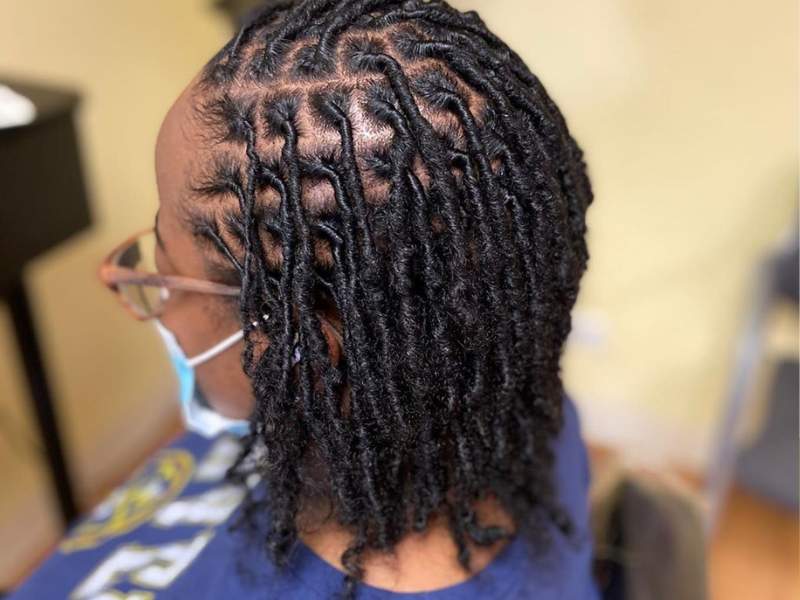
Starter Locs: 15 Things Nobody Tells You Before Starting Your Loc Journey That You Should Know.
You will probably hear that starter locs are simply the beginning of your loc journey. What people don’t always tell you is that the beginning can look nothing like the locs you imagined. One week your hair may look neat and defined, and the next it may look fuzzy, swollen, uneven, or like some of the sections are trying to disappear. You may even wonder whether you made the right decision.
That is normal.

Starter locs are not supposed to look like mature locs immediately. Your hair is going through a process of separation, swelling, budding, frizzing, loosening, and eventually tightening and forming into more established locs. How that process looks depends on your hair texture, the method used to start your locs, your maintenance routine, and simply how your individual hair behaves.
The biggest mistake you can make is trying to force your starter locs to look finished before they are ready.
If you are thinking about starting locs, or you have already started and are wondering why your hair looks different from the locs you see online, this guide will walk you through 15 things you should genuinely know before and during the starter loc stage. is your birthday around the corner, here are 9 gorgeous birthday loc style that will steal the spotlight, you should try out.
1. Your Starter Locs May Not Look Like the Locs You Imagined
Let’s start with the biggest reality check.
The pictures you save for loc inspiration are often of people with mature locs, not starter locs.
Mature locs tend to have a more established shape, density, and consistency. Starter locs can look much less predictable.
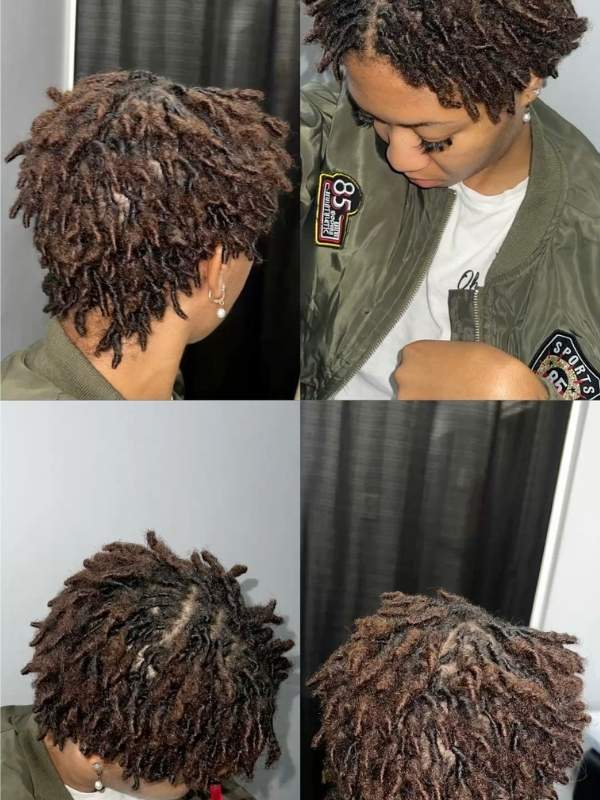
Depending on your starting method, your new locs may look:
- Skinny
- Puffy
- Frizzy
- Uneven
- Loose
- Shorter than expected
- Larger at certain points
- Tighter at the roots than the rest of the loc
- Completely different from the final look you want
This does not necessarily mean that your loctician did a bad job.
Your hair needs time to change.
For example, a coil that looks very small during your first few weeks can swell significantly as the hair begins to tangle and compress. Likewise, a loc that initially looks thick may become more compact as it matures.
Don’t judge the final appearance of your locs based on the first few weeks.
2. Frizz Is Not Automatically a Problem
One of the biggest surprises for people starting locs is how much frizz they may experience.
You may see tiny hairs sticking out of the locs, especially around the roots and along the body of the loc.
That can be frustrating if you were expecting perfectly smooth locs.
But here’s the important part: frizz is part of the locking process for many people.
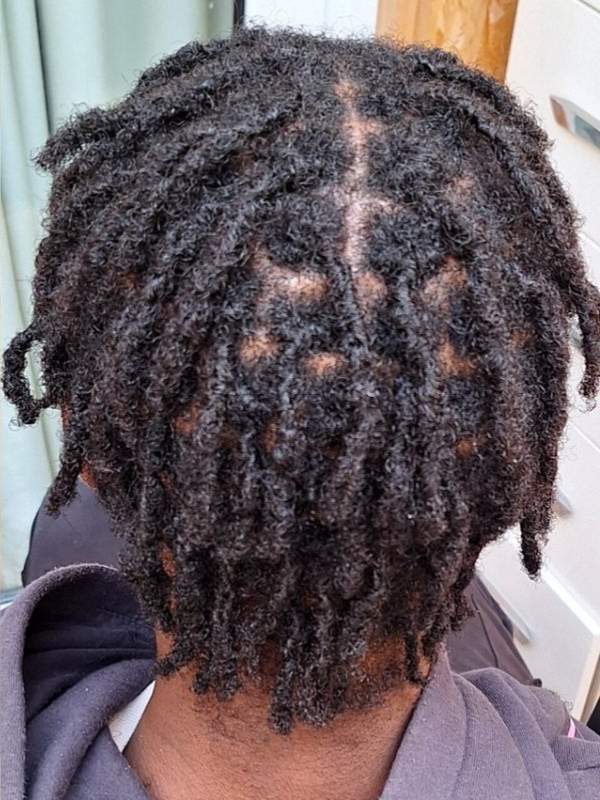
Your hair is essentially becoming more intertwined. Loose hairs need somewhere to go, and they may gradually become incorporated into the developing loc. Go through my guide on to how to fix frizzy locs without retwisting them, to know how go about your starter frizzy locs.
Trying to smooth every loose strand immediately can lead to excessive manipulation.
You don’t need to panic every time you see a fuzzy loc.
In fact, constantly trying to make starter locs look perfectly neat can work against the process you’re trying to achieve.
3. Some Starter Locs May Unravel
This is something you should know before starting so you don’t become alarmed when it happens.
Depending on the starting method and your hair texture, some locs may loosen or partially unravel, particularly after washing.
This is especially common during the early stage when the hair hasn’t fully established itself as a loc.
It doesn’t necessarily mean your loc journey is failing.
Your loctician may use a particular maintenance technique to help keep the sections intact, but some movement is still possible.
This is one reason why your washing technique matters during the early stage.
Instead of aggressively scrubbing your hair back and forth, focus on cleansing the scalp gently and allow the water and cleanser to move through the locs without excessive manipulation.
If a particular loc repeatedly unravels significantly, mention it to your loctician rather than repeatedly trying to fix it yourself.
4. Your Locs Will Go Through an Awkward Stage
Almost everyone talks about the beautiful mature-loc stage.
Not enough people talk about the stage in between.
Your starter locs may reach a point where they don’t look like loose natural hair anymore, but they also don’t look like the mature locs you wanted.

This is what many people refer to as the awkward stage.
Your locs may:
- Stick out in different directions
- Shrink considerably
- Become puffy
- Look uneven
- Feel thicker in some areas
- Have obvious new growth
- Seem shorter than before
This stage can test your patience.
The important thing is to understand that awkward does not mean unhealthy.
Your hair is changing structure.
Instead of constantly manipulating it because you dislike the appearance, learn to style it gently when necessary and allow it to develop.
5. Your Locs May Shrink
If you start your locs from longer hair, don’t be surprised if they appear significantly shorter. sisterlocks vs Traditional locs which one is right for you.
As the hair begins to form and compact, the length can change.
This is particularly noticeable with methods where the hair is initially stretched or loosely arranged.
For example, you might start with hair that reaches your shoulders and later notice that your locs sit much higher.
That doesn’t necessarily mean your hair stopped growing.
Growth and visible length are two different things.
Your hair can continue growing from your scalp while the developing locs become more compact.
Don’t measure your progress solely by how long your locs look.
6. Your Hair Texture Can Affect the Locing Process
There isn’t one universal starter loc timeline.
Hair texture, density, strand characteristics, and the starting method can all influence how quickly your hair begins to lock and mature.
Some people’s hair may begin forming tighter structures relatively quickly.
Others may experience a longer period of fuzziness and softness.
This is why comparing your three-month-old locs to someone else’s three-month-old locs can be misleading.
You may both have “three-month-old locs,” but your hair may be behaving completely differently.
Your loc timeline belongs to your hair.
7. The Method Used to Start Your Locs Matters
Starter locs aren’t all created the same way.
Some common methods include:
Two-strand twists
Hair is divided into sections and twisted together.
This can give a softer, more textured starting appearance and is a popular option for people transitioning from natural hair into locs.
Comb coils
The hair is coiled around a comb to create individual starter sections.
This can create a neat initial appearance, although the coils may loosen during washing depending on the hair and maintenance.
Interlocking
Hair is passed through itself using a specific technique to create the foundation of the loc.
Because of the way the hair is secured, this method can behave differently from twists or coils.
Freeform
The hair is allowed to naturally form without regular parting and conventional retwisting.
The resulting locs tend to have a much more organic appearance.
The method you choose affects the starting appearance, maintenance requirements, and potentially how your locs develop.
That’s why it’s worth discussing your desired final look with an experienced loctician before you start.
8. Your Parting Is More Important Than You May Think
People often focus on the appearance of the individual locs and forget about the foundation underneath them.
Your parting pattern affects how your locs are distributed across your scalp.
You may choose:
- Square parts
- Diamond parts
- Crescent-shaped parts
- Organic or irregular sections
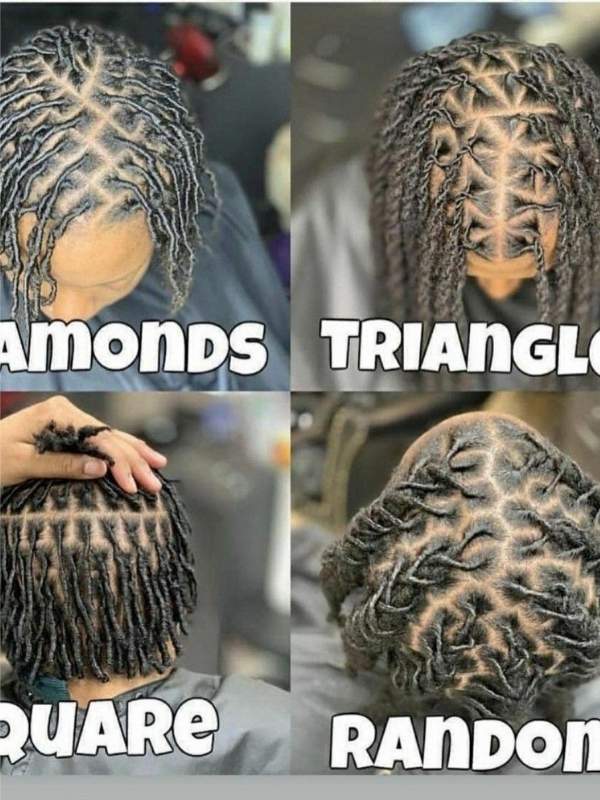
Your hair density and the size of locs you want should also influence the sectioning.
If you want very small locs, your loctician needs to consider whether your hair density and strand strength can support the desired size.
Likewise, making locs too large or too heavy for certain areas can create problems later.
Think about your desired final loc size before installation, not after.
Changing the structure of established locs can be much more difficult than choosing the right foundation from the beginning.
9. Don’t Chase a Fresh Retwist Every Week
A common beginner mistake is believing that neat locs must always have freshly defined roots.
They don’t.
Your roots will naturally grow.
That means there will be a period where you can clearly see new growth between maintenance sessions.
That is normal.
Constantly retwisting the same areas simply because you see new growth can create unnecessary tension.
Over time, excessive manipulation can contribute to weak areas, thinning, or breakage.
Your maintenance schedule should be based on your hair and scalp, not on the pressure to keep your roots looking freshly retwisted every day.
If you’re unsure how often you should maintain your locs, discuss it with your loctician.
10. Washing Your Starter Locs Is Still Important
One of the worst pieces of advice a new loctician can give is to avoid washing your hair for an unnecessarily long period simply because you have starter locs.
Your scalp still needs to be clean.
Sweat, oil, dirt, and product can accumulate on your scalp regardless of whether your hair is loose or locked.
The exact washing schedule can depend on your scalp, lifestyle, hair, and starting method.
When washing starter locs, the important thing is to be gentle.
Avoid aggressively rubbing your locs together.
Instead, concentrate on cleansing the scalp and allow the cleanser to work through the hair.
Rinse thoroughly.
And most importantly, allow your locs to dry completely.
Starter locs can hold onto water, particularly when they become denser.
11. Heavy Products Can Become a Problem
When your starter locs look dry or frizzy, your first instinct might be to add more product.
That’s understandable.
But piling oils, gels, waxes, creams, and conditioners onto developing locs can create buildup.
And once buildup becomes trapped inside a loc, removing it can be difficult.
You don’t need a shelf full of products to grow healthy locs.
Your routine should be simple.
Focus on:
A clean scalp + appropriate moisture + gentle maintenance + patience.
If you’re unsure whether a product is appropriate for your locs, ask your loctician.
Also pay attention to how your hair responds rather than buying something simply because another person’s locs look good after using it.
12. Sleeping Habits Can Affect Your Starter Locs
Your nighttime routine matters more than you may realize.
Your locs rub against your pillowcase while you sleep, and repeated friction can contribute to frizz and dryness.
A satin or silk bonnet can help reduce friction.
You can also use a satin or silk pillowcase.
The important thing is to choose an option that doesn’t squeeze your locs or put uncomfortable pressure on your hairline.
You should also avoid going to bed with soaking-wet locs.
Let your hair dry properly before sleeping.
13. Your Locs May Not All Mature at the Same Speed
This can be particularly confusing.
You may notice that some locs look tight and established while others remain fuzzy or loose.
That’s normal.
Your scalp isn’t producing identical strands in every single section, and different areas of your head may behave differently.
The nape, crown, sides, and front can all have different characteristics.
Some locs may also be exposed to more friction from clothing or sleeping.
So don’t assume something is wrong simply because one section is developing differently from another.
However, if you notice significant thinning, breakage, or a loc becoming unusually weak, don’t ignore it. Get it assessed by an experienced loctician.
14. You Don’t Need to Copy Someone Else’s Loc Routine
Social media can make starting locs confusing.
One person says they moisturize every day.
Another says they never moisturize.
Someone retwists every four weeks.
Someone else waits much longer.
One person washes weekly.
Another has a completely different schedule.
Then you start wondering:
“Which one am I supposed to follow?”
The answer is that there isn’t one routine that works for every head of locs.
Your hair texture, scalp, lifestyle, environment, loc method, and maintenance preferences all matter.
Use other people’s routines as information, not instructions.
Pay attention to how your own hair responds.
If your scalp is irritated, your hair is breaking, or your locs are becoming weak, your routine may need adjustment.
15. Patience Is Actually Part of Loc Maintenance
This may be the most important thing nobody tells you.
You cannot rush every stage.
There will be days when you love your locs.
There may also be days when you wonder why they look so different.
You may experience frizz, shrinkage, unraveling and uneven locs,
Also You may go through the awkward stage.
And then, gradually, you start noticing changes.
The locs become more established.
The texture changes.
The shape becomes more defined.
The hair begins to look more like the vision you had when you started.
That transformation takes time.
Starting locs is not just a hairstyle change. It’s a commitment to allowing your hair to develop instead of constantly forcing it into a finished appearance.
What Should You Do During the First Few Months of Starter Locs?
Your main priorities should be surprisingly simple.
Keep your scalp clean.
Avoid unnecessary manipulation.
Protect your locs while sleeping.
Use products sparingly.
Follow an appropriate maintenance schedule.
Watch for signs of excessive tension or breakage.
And give your hair time to develop.
You don’t need to constantly “fix” your starter locs.
In many cases, the best thing you can do is leave them alone and allow the process to happen.
Signs Your Starter Locs May Need Attention
Although frizz and unraveling can be normal, some things deserve attention.
Speak to your loctician if you notice:
- Significant thinning at the roots
- Persistent scalp pain
- Excessive breakage
- Locs becoming unusually weak
- Severe buildup
- Persistent scalp irritation
- Locs becoming extremely thin compared with surrounding sections
Pain should not be treated as proof that a hairstyle is working.
If a maintenance session feels excessively tight or your scalp remains sore afterward, tell your loctician.
Your loc journey should not require you to tolerate ongoing discomfort.
How Long Do Starter Locs Take to Mature?
There is no exact deadline.
Some people’s locs begin to look more established relatively early, while others take considerably longer.
The timeline can depend on your hair texture, density, starting method, maintenance routine, and how your individual hair behaves.
Instead of asking, “Why aren’t my locs mature yet?”, pay attention to gradual changes.
Are the strands beginning to hold together better and becoming denser?
Are previously loose sections becoming more established?
Those changes are more useful indicators than comparing your hair to somebody else’s timeline.
Should You Be Worried About Frizz During the Starter Loc Stage?
Usually, no.
Frizz is one of the most recognizable parts of the early loc journey.
Your goal shouldn’t be to make every strand lie perfectly flat.
Instead, focus on keeping your hair and scalp healthy while allowing the locs to develop.
If you constantly manipulate the hair to remove every fuzzy strand, you may create more problems than the frizz itself.
Frequently Asked Questions About Starter Locs
What are starter locs?
Starter locs are newly formed locs at the beginning of the locking journey. They can be created using different methods, including two-strand twists, comb coils, interlocking, and other techniques.
How long do starter locs take to mature?
There is no universal timeline. Starter locs can take months or longer to mature depending on your hair characteristics, starting method, maintenance routine, and individual locking process.
Do starter locs unravel?
They can. Some starter locs may loosen or partially unravel, especially during washing or in the early stages. How much they unravel can depend on the starting method and your hair.
Can I wash starter locs?
Yes, starter locs still need proper cleansing. The key is to wash them gently and make sure they dry completely afterward.
How often should I retwist starter locs?
There isn’t one schedule that works for everyone. Retwisting too frequently can put unnecessary tension on the roots, so your maintenance schedule should be based on your hair’s needs and your loctician’s recommendations.
Why are my starter locs so frizzy?
Frizz is common because the hair is still forming and incorporating loose strands. New growth, humidity, friction, and the natural locking process can all contribute to a fuzzy appearance.
Can I moisturize starter locs?
Yes, but avoid overloading them with heavy products. Use an appropriate lightweight moisturizing approach based on your hair and scalp needs.
Should I sleep with a bonnet when I have starter locs?
A satin or silk bonnet can help reduce friction while sleeping. A satin or silk pillowcase can also be useful if you don’t want to wear a bonnet.
Why do my starter locs look shorter?
Your hair may shrink as the locs begin to form and compact. This is especially noticeable if you started with longer stretched hair.
Why are some of my starter locs maturing faster than others?
Different sections of your hair can behave differently. Hair density, texture, friction, and the characteristics of individual strands can all affect how quickly particular locs develop.
Can I style starter locs?
You can often use gentle, low-tension styles, but you should avoid styles that pull tightly on the roots. Your loctician can recommend options appropriate for the stage of your locs.
What should I avoid putting in starter locs?
Avoid unnecessarily heavy products and excessive amounts of waxes, gels, oils, or creams that can create buildup. Your routine should be simple and suited to your hair.
Is it normal for starter locs to look messy?
Yes. Frizz, loose hairs, unevenness, and changes in shape are common during the early stages. Starter locs are a developing hairstyle, so they won’t necessarily look like mature locs immediately.
Your Starter Locs, Does Not Have To Perfect
Starting locs can be exciting, but it can also test your patience. The pictures online often show the beautiful finished result, while the messy middle gets left out.
That’s why it’s important to know what you’re signing up for.
Your starter locs may be fuzzy. They may shrink. Some may unravel. Different sections may mature at different speeds. You may go through an awkward stage where your hair doesn’t look anything like the inspiration photos you saved.
That doesn’t mean your loc journey is going wrong.
The healthiest approach is to learn what your hair needs, keep your scalp clean, avoid unnecessary tension and manipulation, use products thoughtfully, and give your locs enough time to become what they’re meant to be.
The goal isn’t to make your starter locs look mature overnight.
The goal is to give them the right foundation and let them grow into the locs you’ve been waiting for.