
How to Fix Thinning Locs and Prevent Them From Getting Worse.
Thinning locs can be frustrating, especially when you have spent months or even years growing and caring for your hair, only to notice that some of your locs are becoming noticeably thinner. You may begin wondering, “Why are my locs thinning?” or worry that the affected loc will eventually break off completely.
The good news is that thinning locs do not always mean you have to cut your hair or start your loc journey over. In many cases, the right approach can help you protect the weakened area and prevent further damage. However, the first step is understanding why your locs are thinning in the first place.
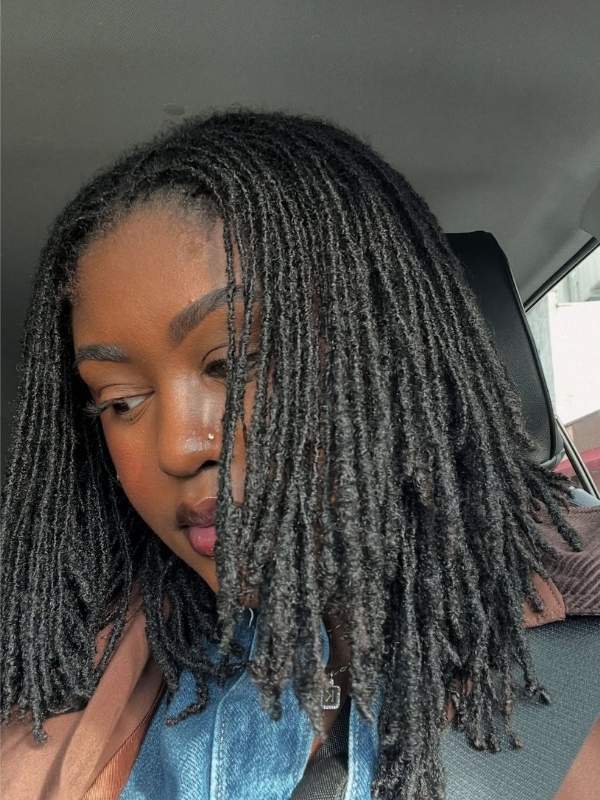
Excessive retwisting, tight hairstyles, heavy extensions, dryness, breakage, weak roots, and constant tension can all contribute to thinning locs. Sometimes, the problem is concentrated at the root, while other times, the middle or ends of the loc may become thin.
If you have noticed that your locs are getting thinner, don’t panic. In this guide, we’ll discuss the common causes of thinning locs, how to fix thinning locs, how to strengthen weak areas, and what you can do to prevent your locs from getting worse.
What Are Thinning Locs?
Thinning locs are locs that have become noticeably narrower in one or more areas compared with the rest of the loc. The thinning can happen at the roots, in the middle of the loc, or toward the ends.
A healthy loc does not necessarily have to be perfectly uniform from root to tip. Some variation in thickness is completely normal, especially depending on your hair texture, loc method, and how your locs were formed.
However, you should pay attention when you notice a significant change in thickness, particularly if the area feels weak, soft, loose, or fragile.
For example, you may notice that a loc that was once thick and strong now has a very thin section near the root. You may also notice loose hairs surrounding the area or feel like the loc is becoming lighter and weaker.
These can be signs that the loc needs more gentle care. Go through my guide to see how often you should retwist your locs: and signs you are retwisting too often or not enough
Why Are My Locs Thinning?
There isn’t just one cause of thinning locs. The reason can vary from person to person.
Here are some of the most common causes.
1. Excessive Retwisting
One of the most common causes of thinning locs is excessive retwisting.
Retwisting helps maintain the appearance of your locs by gathering new hair at the roots. However, constantly manipulating the roots can place stress on the hair.
If you retwist too frequently or your retwist is extremely tight, the repeated pulling can weaken the hair around the root.
Over time, this may cause the loc to become thinner.
Your locs don’t need to look freshly retwisted all the time to be healthy. Allowing your roots to grow and giving your hair a break between maintenance sessions can help reduce unnecessary tension.
2. Tight Hairstyles
Beautiful loc styles can be fun, but styles that pull tightly on your locs can contribute to thinning.
High buns, tight ponytails, tightly wrapped styles, and other hairstyles that place continuous tension on your roots may weaken the hair.
The problem becomes more serious when you repeatedly style the same area.
If a particular loc is already thinning, putting it into a tight hairstyle can make the problem worse.
Choose loose, low-tension hairstyles whenever possible, especially when your locs are already showing signs of weakness.
3. Heavy Loc Styles and Extensions
Locs can become heavier as they grow longer and thicker. Adding beads, accessories, extensions, or other heavy decorations can increase the weight.
If your locs are long or your roots are naturally fine, excessive weight may place additional stress on the hair.
This is particularly concerning when the weight is concentrated around a small number of locs.
You don’t necessarily have to stop accessorizing your locs completely. Instead, be mindful of how much weight you’re adding and avoid placing heavy accessories on weak or thinning locs.
4. Dryness and Lack of Moisture
Dry hair is more vulnerable to breakage.
Although locs should not be constantly saturated with products, they still benefit from appropriate hydration and a healthy hair-care routine.
When your hair becomes excessively dry and brittle, it can become easier for individual strands to break.
Pay attention to how your hair feels. If your locs feel extremely dry, rough, or brittle, review your moisturizing routine and make sure you’re using products that work well for your hair.
5. Constant Manipulation
Your locs need some time without being handled.
Constant twisting, pulling, separating, styling, picking, and rearranging can put unnecessary stress on the hair.
Even gentle manipulation becomes a problem when it happens repeatedly.
Try to leave your locs alone between maintenance sessions as much as possible. Sometimes the best thing you can do for thinning locs is simply give them a break.
6. Retwisting Too Tightly
There is a difference between maintaining your roots and pulling your hair too tightly.
If your scalp feels sore after a retwist, your hairline feels unusually tight, or you notice bumps or discomfort, the style may be putting too much tension on your scalp.
A retwist should not leave you in significant pain.
If you consistently experience discomfort after maintenance, consider asking your loctician for a gentler technique.
7. Weak or Damaged Roots
Sometimes thinning begins because the hair at the root is not strong enough to support the loc.
This can happen after repeated tension, breakage, or other forms of damage.
When the root becomes weak, the loc may begin to look thinner near the scalp.
Root thinning deserves particular attention because the root is responsible for supporting the rest of the loc.
8. Poor Maintenance Techniques
The way your locs are maintained can have a major impact on their condition.
Aggressive palm rolling, excessive twisting, rough separation, or pulling hairs into place can contribute to unnecessary stress.
A good maintenance routine should keep your locs neat without sacrificing the health of your hair.
How to Fix Thinning Locs
Once you’ve identified that your locs are thinning, the next question is naturally: how can you fix them?
The right solution depends on how severe the thinning is and where it is happening.

1. Give Your Locs a Break
Start by reducing unnecessary manipulation.
If you’ve been retwisting frequently or wearing your locs in tight styles, give them time to rest.
Avoid constantly touching the affected loc and try not to repeatedly pull it into different hairstyles.
Sometimes reducing tension is one of the most important steps you can take.
2. Stop Tight Retwisting
If your locs are thinning around the roots, reconsider how frequently and how tightly you’re retwisting.
You don’t need to retwist every time your roots become loose.
A little new growth is normal and does not mean your locs are unhealthy.
When you do retwist, focus on gentle maintenance rather than creating extremely tight roots.
3. Moisturize Your Locs Properly
Keeping your hair adequately hydrated can help reduce dryness and brittleness.
Instead of applying large amounts of heavy oils or thick products, focus on a simple routine that works with your hair.
A lightweight water-based moisturizer can be useful for many people, while a small amount of suitable oil may be used to help seal in moisture.
Avoid piling heavy products onto your locs because excessive buildup can become difficult to remove.
4. Avoid Heavy Products
Product buildup can make locs feel heavy and dirty and may interfere with proper cleansing.
Heavy waxes, thick creams, and excessive oils can accumulate inside locs.
If you notice buildup, simplify your routine and focus on keeping your locs and scalp clean.
Healthy loc care is not about using as many products as possible. Often, a simple routine is better.
5. Choose Low-Tension Hairstyles
If your locs are thinning, give them a break from styles that pull on the roots.
Instead, choose hairstyles that allow your locs to hang naturally without excessive tension.
You can still style your locs, but avoid keeping them tightly pulled for long periods.
It is also helpful to change your hairstyles rather than repeatedly putting tension on the exact same areas.
6. Be Gentle When Washing Your Locs
Clean locs are important, but washing should not involve aggressive rubbing or pulling.
Use a shampoo that works for your scalp and hair, cleanse thoroughly, and rinse well.
When washing, handle your locs gently.
Afterward, allow them to dry completely. Locs can hold water for a long time, so proper drying is especially important.
7. Have a Professional Examine Severe Thinning
If a loc has become extremely thin, especially near the root, don’t try to force it into a style or manipulate it repeatedly.
A knowledgeable loctician can examine the affected area and determine whether the loc can be repaired.
Depending on the situation, a loctician may recommend combining the weak loc with a neighboring loc or using another repair technique.
The appropriate method depends on the condition of the hair, so avoid attempting complicated repairs yourself if you are unsure.
Can Thinning Locs Grow Back?
In many cases, hair can grow back after the cause of the damage has been addressed. However, the answer depends on what caused the thinning and how much damage has occurred.
If the issue is mainly caused by excessive tension or manipulation, removing the source of that stress may allow the hair to recover and grow.
However, if there has been significant or long-term damage to the scalp or hair follicles, recovery may not happen in the same way.
This is why addressing thinning locs early is important.
Don’t wait until a loc is hanging by a few strands before changing your routine.
How to Prevent Thinning Locs
Prevention is much easier than trying to repair a severely weakened loc.
Don’t Retwist Too Often
Your locs do not need to look freshly retwisted every week.
Allow enough time between maintenance sessions for your roots to grow and recover.
The appropriate retwisting schedule varies depending on your hair, loc method, preferences, and loctician’s advice.
Avoid Excessive Tension
Pay attention to how your locs feel when you style them.
If a hairstyle causes pain, pulling, headaches, or significant scalp discomfort, it is too tight.
Your hairstyle should not come at the expense of your hair health.
Keep Your Locs Clean
A healthy loc routine should include regular cleansing.
Sweat, dirt, excess oil, and product residue can accumulate over time.
Clean your scalp and locs regularly while avoiding harsh or overly aggressive handling.
Keep Your Hair Hydrated
Dryness can make hair more fragile.
Develop a simple moisturizing routine that keeps your locs from becoming excessively dry without creating heavy buildup.
Remember that more product does not necessarily mean more moisture.
Protect Your Locs While Sleeping
Consider wearing a satin or silk bonnet, scarf, or using a satin pillowcase while sleeping.
These can help reduce friction between your hair and your bedding.
A protective nighttime routine can also help your locs maintain their appearance between washes and styling sessions.
Don't Ignore Weak Locs
If you notice one loc becoming thinner than the others, don’t ignore it.
Look at where the thinning is occurring and think about what may be causing it.
Is that loc always used in your favorite ponytail?
Does your loctician retwist it tightly?
Is it carrying the weight of extensions or accessories?
Finding the pattern can help you prevent the problem from becoming worse.
Don't Retwist Your Locs Too Tightly
A retwist should not cause pain, excessive tightness, or scalp discomfort. Pulling the hair tightly into the loc can weaken the roots and contribute to thinning over time. Ask your loctician to use a gentler technique, especially if you already have weak or thinning areas.
What If Your Loc Is Thinning at the Root?
Thinning locs at the root deserve special attention because the root is supporting the weight of the entire loc.
If you notice significant thinning near your scalp, reduce tension immediately.
Avoid tight retwists and hairstyles that pull on the affected area.
You may also want to have the loc examined by an experienced loctician.
In some cases, the loc may need to be repaired or combined with another loc to provide additional support.
Don’t wait until the loc breaks completely before addressing the issue.
What If the Middle of Your Loc Is Thinning?
When thinning occurs in the middle of the loc, it can sometimes be caused by breakage, weak hair, manipulation, or damage to that particular section.
Avoid pulling or twisting the weak area.
A professional loctician may be able to reinforce or repair the section depending on its condition.
Most importantly, don’t continue treating a fragile area as if it were a strong loc.
Can You Combine Thinning Locs?
Yes, combining locs can sometimes be used to strengthen or repair thinning locs.
If two neighboring locs are both relatively weak or one loc has become too thin to support its own weight, a professional may recommend combining them.
However, combining locs is not automatically the best solution for every situation.
The condition of your roots, the location of the thinning, the thickness of your locs, and your overall hair health all matter.
For this reason, it is better to have an experienced loctician assess the situation before deciding to combine locs.
Mistakes to Avoid When You Have Thinning Locs
When you discover thinning locs, it is understandable to want to fix the problem immediately. However, some reactions can make the situation worse.
Don’t Keep Retwisting the Weak Area
Trying to make a thinning loc look thicker by repeatedly twisting it can put even more stress on the hair.
Don’t Pull It Into Tight Styles
A weak loc needs less tension, not more.
Don’t Cover the Problem With Excessive Products
Heavy products cannot magically make a weak loc strong.
They may temporarily make it feel different, but they don’t address the underlying cause.
Don’t Ignore Pain
If your scalp hurts after styling, take that as a warning sign.
Pain and persistent tightness should not be considered normal parts of maintaining locs.
Don't Try Every DIY Repair You See Online
Not every loc repair method is appropriate for every person’s hair.
If a loc is severely thinning, getting professional advice can help prevent further damage.
How Long Does It Take to Fix Thinning Locs?
There is no single timeline for repairing thinning locs.
Hair grows gradually, and the amount of time needed for improvement depends on the cause and severity of the thinning.
If tension or excessive manipulation is the main issue, stopping the damaging behavior can help protect the area relatively quickly. However, visible improvement in thickness may take much longer because new hair needs time to grow.
Be patient with your loc journey.
Healthy hair growth is a process, not an overnight transformation.
When Should You See a Loctician or Hair Professional?
Consider seeking professional help if:
- A loc is extremely thin near the root.
- You can see significant scalp through the affected area.
- The loc is breaking repeatedly.
- You have tried reducing tension but the problem continues.
- Multiple locs are suddenly becoming thinner.
- Your scalp is painful, irritated, or unusually sensitive.
- You are unsure how to repair the affected loc.
A professional can help determine whether the issue is related to maintenance, breakage, tension, or another underlying problem.
If you are experiencing persistent scalp symptoms or unusual hair loss, it may also be appropriate to speak with a qualified healthcare professional or dermatologist.
Final Thoughts on Thinning Locs
Discovering thinning locs can be scary, but it doesn’t automatically mean that your loc journey is coming to an end. The most important thing is to identify what is causing the thinning and stop putting unnecessary stress on the affected areas.
Be gentle with your locs, avoid excessive retwisting, limit tight hairstyles, keep your scalp and locs clean, maintain appropriate moisture, and give weak areas time to recover. If a loc is severely damaged or thinning at the root, getting help from an experienced loctician can be a much safer option than trying to repair it yourself.
Remember that healthy locs do not have to look perfect every day. A little new growth, frizz, and variation in thickness are normal parts of having locs. What matters is paying attention to significant changes and taking action before a small problem becomes a major one.
With consistent, gentle care, you can give your locs the best possible chance to remain strong, healthy, and beautiful as they continue to grow.