
How Often Should You Retwist Your Locs? A Complete Guide to Retwisting Frequency.
Have you ever looked at your locs and wondered, “Is it time for a retwist, or am I retwisting too soon?” You are not alone. Knowing how often to retwist your locs can be confusing, especially when your roots start looking fuzzy, your locs seem less neat, or you notice new growth around your scalp.
While a fresh retwist can make your locs look neat and polished, retwisting too frequently can put unnecessary tension on your roots and scalp. On the other hand, waiting too long may make it more difficult to maintain your preferred parting and style.
So, how often should you actually retwist your locs?
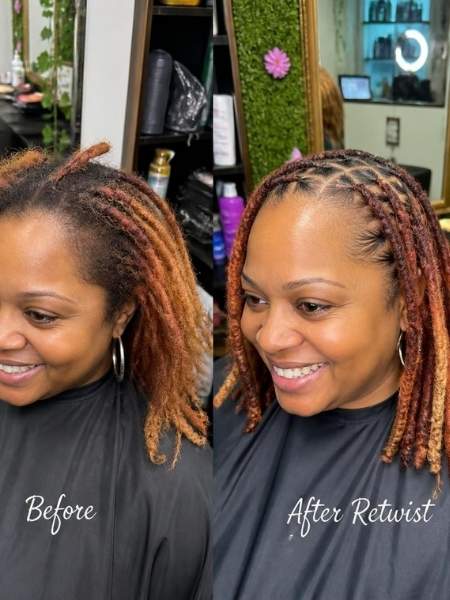
For most people, every 4 to 8 weeks is a reasonable general range, but your ideal retwisting schedule depends on your loc type, hair texture, amount of new growth, scalp condition, lifestyle, and personal preference. Some people can comfortably go longer between retwists, while others may need maintenance sooner.
In this guide, we will look at how often you should retwist your locs, how to know when it is time, the risks of retwisting too often, and how to maintain healthy locs between retwists. Go through this guide to see how to style medium length locs when you are bored with your look
How Often Should You Retwist Your Locs?
For many people, retwisting every 4 to 8 weeks provides a good balance between maintaining neat roots and giving the scalp and hair enough time to recover.
However, there is no universal schedule that works for everyone.
Some people retwist every four weeks because they prefer a very neat appearance. Others wait six to eight weeks or even longer because they want to minimize manipulation and encourage healthier roots.
Your locs do not necessarily need to be retwisted simply because you have visible new growth.
New growth is a normal part of having locs. In fact, seeing some loose hair at your roots is often a sign that your hair is growing.
The goal should not always be to keep your roots looking freshly retwisted. Instead, you want to find a schedule that keeps your locs manageable without putting unnecessary stress on your hair and scalp.
How Often Should You Retwist Starter Locs?
Starter locs usually require a little more attention because the hair is still beginning to form and settle into the loc structure.
Depending on your loctician’s method and your hair, starter locs may be maintained approximately every 4 to 6 weeks.
However, your loctician may recommend a different schedule based on your hair texture and the method used to start your locs.
During the starter stage, excessive manipulation can cause problems. Constantly twisting your roots because you want your locs to look perfectly neat can interfere with the locking process.

If you have starter locs, focus on:
- Following your loctician’s maintenance instructions.
- Avoiding unnecessary retwisting between appointments.
- Keeping your scalp clean according to your hair-care routine.
- Protecting your locs while sleeping.
- Being gentle with your roots.
Your starter locs do not need to look perfectly mature immediately. The budding, frizz, and changing texture are all part of the journey.
How Often Should You Retwist Mature Locs?
Mature locs generally give you more flexibility.
Many people with mature traditional locs choose to retwist every 4 to 8 weeks, while some comfortably go 8 to 12 weeks or longer between maintenance sessions.
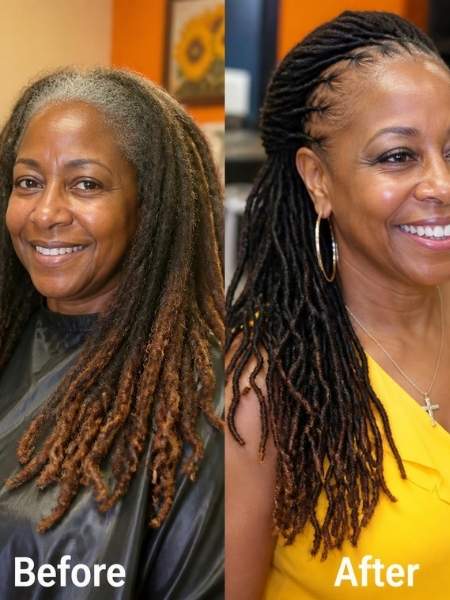
The longer you wait, the more new growth you may have at the roots. Some people love the natural appearance, while others prefer a cleaner and more defined look.
If your locs are healthy and your roots are strong, there is no rule saying you must retwist every month.
In fact, giving your roots more time between retwists can be beneficial if frequent manipulation has been causing thinning or tenderness.
How Often Should You Retwist Sisterlocks?
Sisterlocks and other small loc systems are different from traditional locs because they usually require a specific maintenance technique.
Know more about sisterlocks vs traditional locs, which one is right for you.
Retightening schedules are often more structured, with appointments commonly taking place every 4 to 6 weeks, depending on your loctician’s recommendations and your rate of hair growth.

Because Sisterlocks are very small, allowing too much new growth to accumulate can sometimes make maintenance more complicated.
Rather than choosing a schedule based solely on how your roots look, follow the maintenance schedule recommended by your certified Sisterlocks consultant or loctician. Are you going for a birthday party and wondering whether to rock your locs, see this 9 gorgeous birthday locs that steal the spotlight for an inspo
Is Retwisting Every 2 Weeks Too Often?
For many people, retwisting every two weeks is too frequent.
Although your roots may look neat after a retwist, repeatedly manipulating the same area of hair can place unnecessary tension on your roots.
Frequent retwisting may contribute to:
- Root thinning
- Breakage
- Scalp tenderness
- Weak locs
- Traction-related hair loss
- Excessive tension around the hairline
If your roots become noticeably fuzzy after only a couple of weeks, that does not necessarily mean you need another retwist.
Your hair naturally grows, and some frizz is completely normal.
Instead of immediately retwisting again, consider using gentle styling techniques that allow you to enjoy your locs without constantly manipulating the roots.
Is Retwisting Every 4 Weeks Okay?
Yes. Retwisting every four weeks can be perfectly reasonable for some people, especially if their hair grows quickly and they prefer a neat appearance.
However, the important question is whether your hair and scalp are tolerating the schedule.
If your roots remain strong, your scalp feels comfortable, and your locs are not becoming thin, a four-week schedule may work well for you.
But if you notice soreness, thinning, broken hairs, or weak roots, it may be time to increase the amount of time between retwists.
Is It Okay to Go 8 Weeks Without a Retwist?
Yes.
Going eight weeks without a retwist is not automatically bad for your locs.
Some people intentionally stretch their retwisting schedule to give their roots a break. Others simply prefer the fuller, more natural appearance that comes with additional new growth.
The biggest challenge may be managing the new growth and keeping neighboring locs from becoming overly tangled at the roots.
If you decide to go longer between retwists, pay attention to how your roots are developing and separate your locs gently when necessary.
Signs It May Be Time to Retwist Your Locs
Your calendar is not the only thing that should determine when you retwist.
Here are some signs that you may be ready for maintenance.
1. You Have Significant New Growth
One of the most obvious signs is the amount of new growth around your roots.
A little new growth is normal, but if your roots have become difficult to manage or your locs are beginning to combine at the base, you may be ready for a retwist.
2. Your Locs Are Becoming Difficult to Separate
Locs can sometimes begin to marry together at the roots, particularly when there is significant new growth.
If you want to maintain individual locs, gently separating the roots can help prevent them from becoming permanently joined.
3. You Prefer a More Defined Look
Sometimes there is no health-related reason for retwisting. You may simply want your locs to look more polished for an event, vacation, photoshoot, work, or another occasion.
That is completely fine.
Just avoid turning frequent cosmetic retwisting into a routine that constantly stresses your roots.
4. Your Parting Has Become Difficult to Maintain
If maintaining your original parting pattern is important to you, excessive new growth may make the sections less defined.
A professional retwist can help reorganize the roots and restore the appearance of your parting.
Signs You Are Retwisting Your Locs Too Often
Your hair can also tell you when your maintenance schedule is too aggressive.
Watch out for these warning signs.
Thinning at the Roots
If your locs appear noticeably thinner near the scalp than they used to, frequent retwisting or tight styling could be contributing to the problem.
Scalp Pain or Tenderness
A retwist should not leave your scalp feeling painful for days.
Persistent soreness can be a sign that too much tension is being placed on your hair.
Receding Hairline
The hair around your edges is particularly delicate. Repeated tight retwisting and hairstyles can place excessive tension on this area.
If you notice thinning edges, take it seriously and reduce tension.
Broken Hair Around the Roots
Seeing a lot of broken hairs around your roots may indicate that your hair is experiencing too much manipulation.
Very Thin Locs
If your locs are becoming progressively thinner, particularly at the roots, talk to an experienced loctician about your maintenance routine.
Why You Should Not Retwist Your Locs Too Often
It can be tempting to retwist your locs whenever they start looking fuzzy.
After all, a fresh retwist can make your hairstyle look incredibly neat.
But your roots need time to grow.
Every retwist involves manipulating the new growth and directing it back into the loc. Doing this too frequently can repeatedly stress the same strands.
Over time, excessive tension can contribute to weakened roots and thinning.
This is why healthy locs are more important than perfectly neat locs.
A little frizz does not mean your locs are unhealthy.
Does Retwisting Make Locs Grow Faster?
No. Retwisting does not make your hair grow faster.
Your hair grows from the scalp according to your natural hair-growth cycle. Retwisting mainly organizes the new growth and helps maintain the appearance and structure of your locs.
However, healthy maintenance can help you retain the hair you grow by reducing unnecessary breakage and preventing problems at the roots.
So, instead of thinking about retwisting as a way to speed up growth, think of it as a method of maintaining your locs.
How Long Should You Wait Between Retwists?
If you are unsure where to start, 4 to 8 weeks is a practical range to discuss with your loctician.
For example, if you had your last retwist on August 1:
A 4-week schedule would put your next retwist around August 29, while an 8-week schedule would put it around September 26. This gives you a simple way to estimate your next maintenance appointment based on the schedule that works best for your locs.
Every 4 weeks:
This may work if you have fast-growing hair and prefer a very neat appearance.
Every 5 to 6 weeks:
This can be a comfortable middle ground for many people.
Every 7 to 8 weeks:
This gives your roots more time between maintenance sessions and may suit people who prefer a more natural appearance.
8+ weeks:
Some people can comfortably stretch their retwists even longer, particularly if their locs and roots remain healthy and manageable.
There is no prize for retwisting the most frequently.
What To Do Between Retwists
The way you care for your locs between maintenance sessions can make a big difference.
Keep Your Scalp Clean
A clean scalp is an important part of maintaining healthy locs.
Follow a washing routine that works for your hair and loc stage. If you have starter locs, follow your loctician’s instructions about washing.
Protect Your Locs While Sleeping
Consider wearing a satin or silk bonnet or using a satin or silk pillowcase while sleeping.
This can help reduce friction and may help your locs retain moisture.
Avoid Constant Manipulation
Try not to constantly twist, pull, or play with your roots.
Your locs need time to grow and develop between maintenance sessions.
Be Careful With Tight Hairstyles
A beautiful updo can look amazing, but repeatedly wearing very tight styles can put additional stress on your roots.
If a hairstyle feels painful or excessively tight, it is better to loosen it.
Separate Your Locs When Necessary
If you want to maintain individual locs, gently check your roots and separate locs that are beginning to grow together.
Do not aggressively pull them apart.
Can You Retwist Locs Yourself?
Yes, some people choose to retwist their own locs, particularly after learning the proper technique.
However, technique matters.
A DIY retwist that is too tight or repeatedly performed on the same roots can cause problems.
If you are new to loc maintenance, learning from an experienced loctician can help you understand how much hair to retwist, how much tension to use, and how to maintain your parts.
If your locs are already thinning or your scalp is experiencing discomfort, professional advice is particularly useful.
Does Hair Texture Affect How Often You Should Retwist?
Yes.
Hair texture can influence how quickly your roots appear loose and how well your hair holds a retwist.
Some textures may show new growth more quickly, while others may hold their shape for longer.
However, hair texture should not be the only factor you consider.
Your hair’s strength, scalp health, loc maturity, lifestyle, and preferred appearance are also important.
Two people can have similar hair textures and still need completely different retwisting schedules.
Should You Retwist Your Locs Before a Special Occasion?
If you want a neat appearance for a wedding, birthday, vacation, graduation, photoshoot, or other special event, you can schedule a retwist beforehand.
Ideally, don’t wait until the last minute.
A fresh retwist can sometimes leave your scalp feeling tender, and you may want time for your locs to settle into the style.
Give yourself enough time to see how your hair responds before the event.
What Happens If You Stop Retwisting Your Locs?
If you stop retwisting your locs completely, your hair will continue to grow.
Your roots will become increasingly freeform, and neighboring locs may begin to grow together.
Over time, your locs may develop a more natural and less structured appearance.
This does not necessarily mean your locs are unhealthy.
It simply means you are choosing a different maintenance approach.
However, if you want to maintain clearly separated locs and a specific parting pattern, occasional maintenance will probably be necessary.
Retwist vs. Retightening: Are They the Same?
Not exactly.
A retwist is generally associated with traditional locs and involves twisting the new growth around the base of the loc.
Retightening is commonly associated with smaller loc systems such as Sisterlocks and uses a different technique to tighten the new growth.
The maintenance schedule can therefore differ depending on your type of locs.
If you have Sisterlocks or another specialized loc system, it is best to follow the maintenance recommendations associated with that system.
How to Find the Right Retwisting Schedule for Your Locs
Instead of copying someone else’s schedule, consider these questions:
How quickly does your hair grow?
If your roots become significantly grown out quickly, you may prefer more frequent maintenance.
How healthy are your roots?
Strong, healthy roots can tolerate maintenance better than fragile or thinning roots.
Do you experience scalp tenderness after retwisting?
If you regularly experience pain, your retwist may be too tight or too frequent.
Do your locs grow together?
If your locs frequently marry at the roots, you may need more regular separation or maintenance.
How neat do you want your locs to look?
Someone who prefers a freshly retwisted appearance may choose a shorter schedule than someone who enjoys a more natural look.
A Simple Retwisting Schedule to Consider
If you need a starting point, you can use this general guide:
| Loc Stage | Possible Maintenance Range |
|---|---|
| Starter locs | Around 4–6 weeks |
| Developing locs | Around 4–8 weeks |
| Mature traditional locs | Around 4–8+ weeks |
| Sisterlocks | Often around 4–6 weeks |
| Longer maintenance periods | 8–12+ weeks for some people |
Remember that these are general guidelines, not strict rules.
Your loctician may recommend a different schedule based on your specific hair and loc system.
Frequently Asked Questions About Retwisting Locs
Can I retwist my locs every 3 weeks?
You can, but doing so regularly may be too frequent for many people. If you find yourself needing a retwist every three weeks to maintain your preferred appearance, consider whether you can safely extend the time between appointments.
Is it better to retwist locs wet or dry?
This depends on your hair, technique, and the products being used. Your loctician can recommend the safest approach for your particular locs.
Does retwisting damage locs?
Retwisting itself does not automatically damage locs. However, excessive tension, overly frequent maintenance, and tight styling can contribute to thinning and breakage.
Can I wash my locs before a retwist?
Yes, many people prefer to wash their locs before a retwist so they are clean. However, follow your loctician’s recommendations, especially if you have starter locs.
Why do my locs look frizzy after a few weeks?
Frizz is normal. Your hair continues to grow and shed naturally, and loose hairs around the locs can create a fuzzy appearance.
Will retwisting make my locs mature faster?
Not necessarily. Loc maturation is a natural process influenced by your hair, loc method, texture, maintenance, and time. Retwisting mainly helps organize the roots.
Final Thoughts
So, how often should you retwist your locs?
For many people, every 4 to 8 weeks is a useful starting point, but your perfect schedule may be shorter or longer.
The most important thing is to pay attention to your roots and scalp rather than blindly following a calendar. If your locs are healthy, your roots are strong, and your scalp feels comfortable, you are probably on the right track.
And remember: your locs do not have to look freshly retwisted all the time to be beautiful or healthy.
Sometimes allowing your roots to breathe, accepting a little frizz, and giving your hair more time between maintenance sessions is exactly what your loc journey needs.