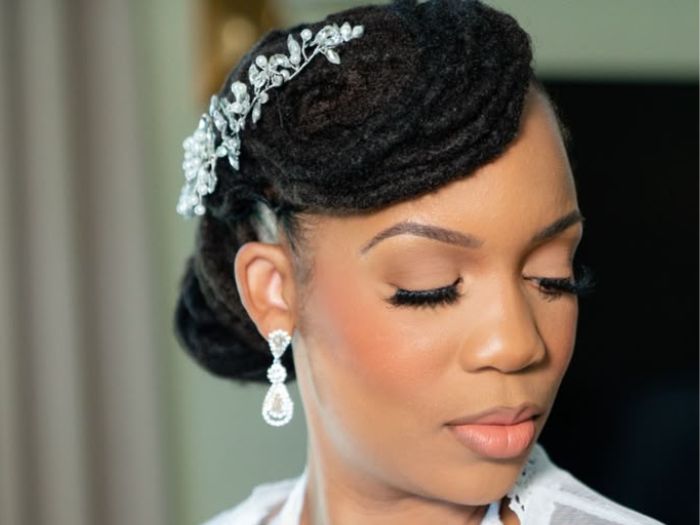
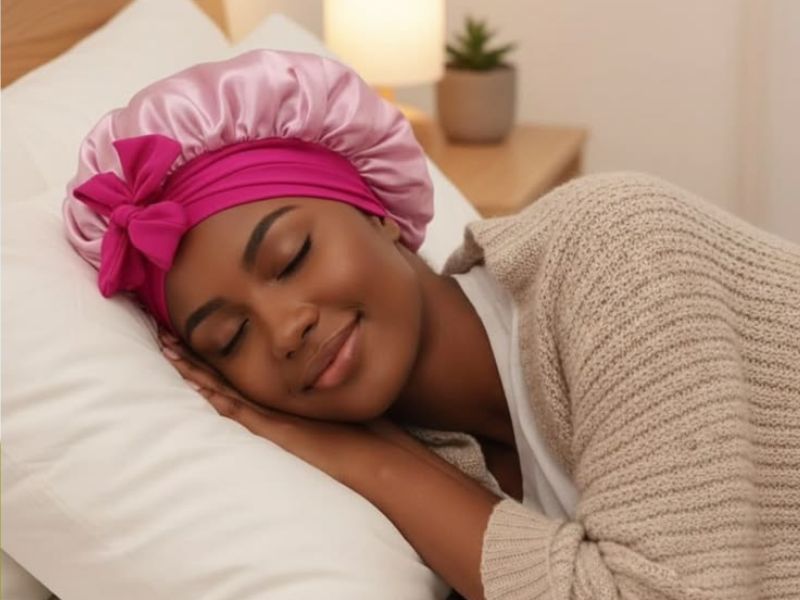
Sleeping with locs can be frustrating, especially when you spend time washing, retwisting, or styling your hair, only to wake up with flattened roots, frizz, lint, or a hairstyle that no longer looks the way it did the night before.
The right approach depends on your loc stage, hair length, hairstyle, and sleeping habits. Starter locs need a little more care because they can unravel more easily, while mature locs can generally withstand more movement. Locs styled into updos, curls, barrel twists, or other protective styles may also need special attention.
In this guide, you will learn how to sleep with locs without ruining your hairstyle, which nighttime coverings work best, how to protect different loc styles, and what to do if you wake up with frizz or flattened roots.
I Have an article on Microlocs for Beginners: 9 Things to Know Before Starting Your Loc Journey That is will help you understand more microlocs.
Why Protecting Your Locs While You Sleep Matters
Your nighttime routine plays an important role in how your locs look and feel. While you sleep, your head moves against your pillow, your hair rubs against the fabric, and moisture or sweat may build up around your scalp.
These small things can affect your hairstyle over time, especially if you sleep without covering your hair.
Here are some reasons to protect your locs at night.
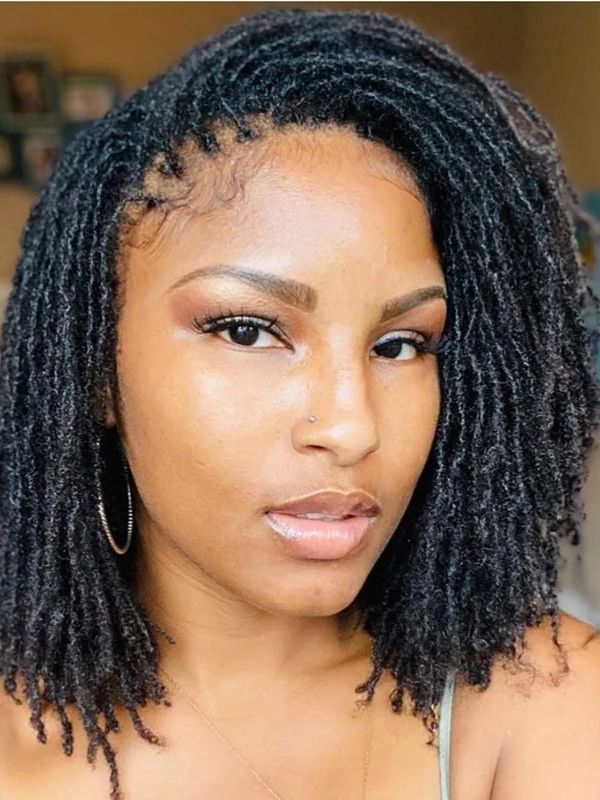
1. It Helps Reduce Unnecessary Frizz
Friction between your hair and your pillowcase can cause loose hairs to stand away from your locs. This is particularly noticeable around the roots and along the length of locs that have recently been retwisted.
Some frizz is completely normal. Locs naturally develop loose hairs as they mature, so your goal should not be to eliminate every stray hair. Instead, protecting your hair at night can help reduce unnecessary friction and keep your locs looking neater for longer.
2. It Helps Preserve Your Hairstyle
Have you ever gone to bed with beautiful curls, a neat updo, or freshly styled locs and woken up with everything flattened?
Your sleeping position and the way your hair is arranged can affect how long a hairstyle lasts.
A satin bonnet, a suitable scarf, or a loose pineapple style can help protect curls and reduce pressure on your hair. If your locs are in an updo, keeping the style secure without pulling tightly can also prevent unnecessary tension.
3. It Helps Protect Your Locs From Lint
Lint can become trapped between the strands that form your locs. Once it becomes embedded, removing it can be difficult.
Cotton pillowcases, blankets, and other fabrics can shed fibers that collect in your hair, particularly when your locs rub against them repeatedly.
Covering your locs with a smooth, lint-resistant material can reduce this problem. You should also pay attention to the blankets and clothing that regularly come into contact with your hair.
4. It Helps Reduce Dryness Caused by Friction
Your hair can lose moisture over time, and repeated rubbing against rough fabric may make it feel drier or more brittle. Shop this moisturizer for Loc from Amazon
A satin or silk covering helps reduce friction compared with many ordinary cotton fabrics. However, covering your hair does not replace proper loc care. You still need to keep your scalp clean, allow your locs to dry completely after washing, and use appropriate moisturizing products when needed.
5. It Helps You Spend Less Time Fixing Your Hair in the Morning
A good nighttime routine can save you time the following morning.
Instead of spending several minutes trying to reshape flattened locs or smooth down unnecessary frizz, you can remove your covering, gently arrange your hair, and get on with your day.
If you want your locs to remain neat between appointments, you may also find my guide on how often you should retwist your locs helpful.
1. Wear a Satin or Silk Bonnet Before Going to Bed
One of the easiest ways to protect your locs while sleeping is to wear a bonnet made from satin or silk.
These materials create a smoother surface for your hair to rest against, reducing friction between your locs and the fabric.
A bonnet can be particularly useful if you have long locs, starter locs, mature locs, or a hairstyle you want to preserve overnight.
However, choosing the right bonnet matters.

How to Choose the Right Bonnet for Your Locs
Look for a bonnet with enough room to accommodate the length and thickness of your hair.
If you have short locs, a standard bonnet may provide enough space. If your locs are long, thick, or styled into a voluminous updo, a larger bonnet may be more comfortable.
Pay attention to the following features:
- A comfortable band: The band should hold the bonnet in place without digging into your forehead or pulling at your hairline.
- Enough room: Your locs should fit inside without being compressed tightly.
- Smooth fabric: Satin or silk can help reduce friction against your hair.
- Secure fit: The bonnet should remain on your head as you move during sleep.
- Easy maintenance: Choose a bonnet you can wash regularly to keep it clean.
You do not need the most expensive bonnet available. A comfortable, well-fitting bonnet that stays on throughout the night is more useful than an expensive one that slips off after you fall asleep.
You can buy this beautiful Bonnet from Amazon
How to Wear Your Bonnet Correctly
Start by gently gathering your locs with your hands. Avoid pulling them tightly into a ponytail.
Place the bonnet over your head, making sure all your locs fit inside. Check that the hair around your edges is not being pulled by the band.
If you have long locs, arrange them loosely inside the bonnet rather than folding them into a tight bundle.
Before lying down, make sure the bonnet feels comfortable and does not create pressure around your roots.
Important: If your bonnet repeatedly slips off, try a different size or design. You can also use a satin pillowcase as a backup, which leads to the next tip. Here is a cute satin Pillowcase, you can get yours from Amazon.
2. Use a Satin or Silk Pillowcase as Extra Protection
Even if you wear a bonnet every night, having a satin or silk pillowcase can be helpful.
Some people move a lot during sleep, causing their bonnet to slip off or exposing parts of their hair. A smooth pillowcase provides another layer of protection if that happens.
It is also useful for people who find bonnets uncomfortable or prefer not to cover their hair completely.
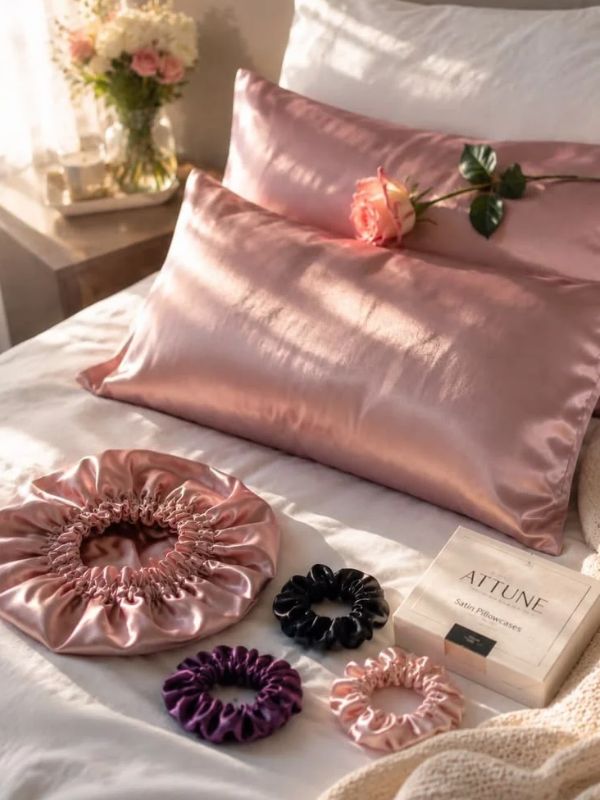
Is Satin Better Than Silk for Sleeping With Locs?
Both can work well.
Satin describes a type of fabric weave rather than one specific fiber. Satin pillowcases may be made from polyester or other materials, while silk is a natural fiber.
A good-quality satin pillowcase is often a more affordable option. Silk can also provide a smooth surface, although the cost may be higher.
The most important things are the fabric’s smoothness, comfort, and ease of cleaning.
How to Use a Satin Pillowcase Properly
Replace your regular pillowcase with a clean satin or silk one.
If you sleep with your locs uncovered, arrange your hair so that it does not become trapped underneath your head or twisted tightly around your neck.
If you wear a bonnet, use the satin pillowcase as additional protection rather than assuming you no longer need to cover your hair.
Wash your pillowcase regularly, following the fabric’s care instructions. Hair products, sweat, and natural oils can accumulate on the surface over time.
You can buy Good and quality Satin Pillowcase from Amazon
A clean pillowcase is particularly helpful if you experience scalp irritation or tend to sweat while sleeping.
Go through this article to get more information on How to Maintain Sister Locs and Keep Them Looking Beautiful
3. Tie Your Locs Loosely if You Have Long Hair
Long locs can become uncomfortable while sleeping. They may spread across your pillow, get caught underneath your shoulders, or become tangled around your body.
Gently gathering them before bed can help keep them manageable.
However, the key is to avoid tying your locs too tightly.
A tight ponytail can place repeated tension on your roots and hairline. Over time, frequent tension may contribute to thinning around areas that are repeatedly pulled.
Try a Loose Pineapple Style
A pineapple style involves gathering your hair loosely toward the top of your head.
For long locs, this can help keep the hair away from your face and reduce the amount of hair trapped underneath your head.
To create the style:
- Bend your head slightly forward and gather your locs toward the crown.
- Use your hands to arrange them without pulling at the roots.
- Secure them with a soft, loc-friendly hair tie or scrunchie if needed.
- Make sure the tie is loose enough to avoid discomfort.
- Cover your hair with a bonnet if you normally wear one.
If your locs are too heavy to sit comfortably at the crown, do not force them into this position. A loose arrangement toward the back of your head may feel better.
You should be able to remove the hair tie easily in the morning without tugging or pulling at your locs.
Get this quality Silk Bonnet from Amazon for your Locs care.
What If Your Locs Are Too Short to Tie?
You do not need to tie your locs at all.
Short locs can simply be arranged comfortably inside a bonnet or left loose against a satin pillowcase.
Avoid using tiny elastic bands to force short locs into a style. They may pull on individual locs or become difficult to remove.
Check out my post on How to Start Comb Coils for Starter Locs on Short Hair
4. Protect Starter Locs Without Causing Them to Unravel
Starter locs require a little more attention at night because they are still forming and may be more vulnerable to unraveling.
This is especially true if your locs were started with two-strand twists, comb coils, or another method that can loosen when exposed to repeated friction or moisture.
You do not need to be afraid of moving your head while sleeping. Instead, focus on reducing unnecessary rubbing and avoiding hairstyles that disturb the developing locs.
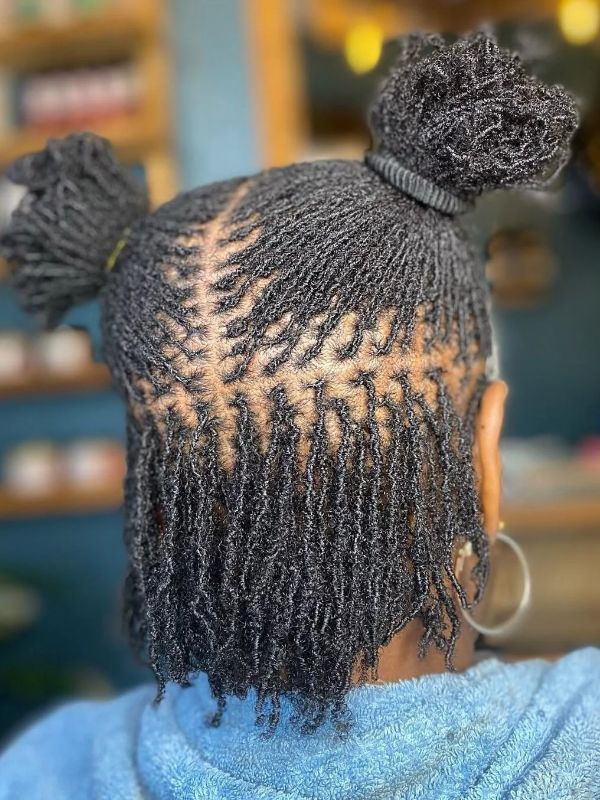
What to Do Before Sleeping With Starter Locs
First, make sure your hair is dry. If you washed your hair that day, allow it to dry thoroughly before putting on a bonnet. As someone with Locs, you should Shop this Locs Dryer from Amazon, that will help you dry your locs easier
Next, place your locs inside a clean, properly fitted bonnet or use another smooth covering that will not catch on your hair.
Avoid tying starter locs tightly or using small bands that pull at the roots.
If your starter locs were recently installed, be particularly gentle when arranging them. Do not repeatedly twist, tighten, or manipulate the roots to make them look neat before bed.
It is normal for starter locs to have some frizz and for their appearance to change as they develop.
Should You Sleep With Starter Locs Covered Every Night?
Covering your starter locs is generally a useful habit because it reduces friction and helps keep lint away.
A satin bonnet is a practical choice for many people. If it does not fit comfortably, a satin pillowcase can provide another option.
Your installation method also matters. Some starter locs loosen more easily than others, so follow the aftercare instructions provided by your loctician, particularly during the early weeks.
If you are still learning what to expect during this stage, read Starter Locs: 15 Things Nobody Tells You Before Starting Your Loc Journey. It can help you understand common changes and avoid unnecessary manipulation while your locs develop.
5. Keep Freshly Retwisted Locs Protected Without Flattening Them
Freshly retwisted locs can look neat and defined, but sleeping on them the wrong way may flatten the roots or disturb the style.
The solution is not to keep your head perfectly still throughout the night. It is to reduce friction and avoid putting unnecessary pressure on the roots.
Avoid Tight Hairstyles Immediately After Retwisting
After a retwist, resist the urge to pull your locs into a tight ponytail or bun before bed.
Your roots may be more sensitive after maintenance, and tight styling can place additional tension on the scalp.
Instead, allow your locs to rest naturally or arrange them loosely if they are long enough to need securing.
Use a bonnet that accommodates your hair without compressing it excessively.
Do Not Keep Retwisting the Roots Every Morning
You may notice a few loose hairs around your roots after sleeping. That does not automatically mean your retwist has been ruined.
Repeatedly twisting the same area can create unnecessary tension and may contribute to thinning or breakage over time.
Rather than trying to make every root look freshly maintained each morning, focus on keeping your scalp comfortable and your locs healthy.
If your roots repeatedly unravel or your retwist does not last as expected, consider discussing your maintenance method and timing with your loctician.
For more guidance, read How to Fix Frizzy Locs Without Retwisting Them. It explains why frizz does not always mean your locs need another retwist.
6. Protect Loc Curls, Updos, and Other Styled Locs
Locs can be styled into curls, buns, ponytails, barrel twists, and elegant updos. These styles can look beautiful, but some require more care during sleep than simply wearing your locs loose.
The right nighttime routine depends on how the style was created and how much tension it places on your hair.
How to Sleep With Curled Locs
If your locs have been curled using rods, pipe cleaners, or another curling method, avoid crushing them beneath your head.
Arrange your locs loosely inside a large bonnet so the curls have room. A bonnet that is too small may compress the style and flatten the curls.
If you used a curling method that requires the locs to remain in place for a certain amount of time, follow the instructions for that method.
Do not add more water simply because you want the curls to hold. Excess moisture can prolong drying and may affect the results.
How to Sleep With Locs in an Updo
An updo may be more delicate because the locs have been arranged into a particular shape.
If the style allows it, use a large bonnet that can accommodate the updo without crushing it.
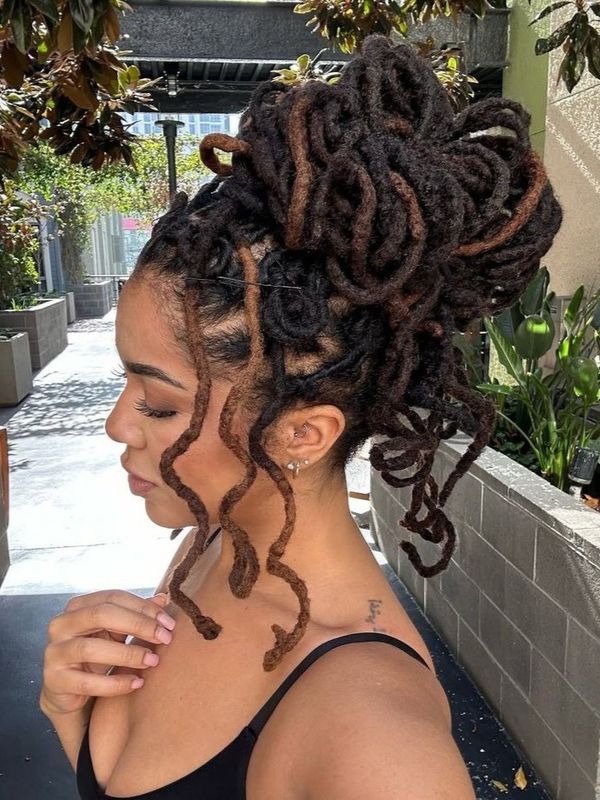
Avoid sleeping with tight pins, clips, or accessories that press into your scalp. Remove anything that feels uncomfortable or pulls on individual locs.
Some updos are not designed to be slept in. If your stylist used a temporary arrangement that is likely to loosen overnight, ask how best to preserve it.
How to Sleep With Locs in Barrel Twists
Barrel twists can help keep locs arranged neatly, but the style should not feel tight or painful.
If your locs are in barrel twists, use a covering that accommodates the entire style. Avoid pulling the twists into another tight hairstyle, as this can add tension.
If you feel soreness, tightness, or pulling around your hairline, do not ignore it simply to preserve the style. Persistent tension can damage your roots.
What About Locs Styled for a Special Occasion?
If you have styled your locs for a wedding, party, birthday, or another event, protecting them overnight can help preserve their appearance.
Before going to bed, check that any accessories are secure and comfortable. Remove pieces that could snag your locs or press into your scalp.
Choose a roomy bonnet and avoid unnecessary manipulation.
If you enjoy experimenting with different looks, you may also like my guide to styling medium-length locs, which offers inspiration for changing your look without relying on the same hairstyle every day.
7. Make Sure Your Locs Are Completely Dry Before Bed
This is one of the most important habits to develop, especially if you wash your locs regularly.
Locs are denser than loose strands of hair, and moisture can remain trapped inside them after the surface feels dry.
Going to bed with damp locs may prolong drying time and contribute to an unpleasant smell or scalp discomfort. Persistent dampness can also create conditions that encourage unwanted microbial growth.
How to Tell if Your Locs Are Dry
Do not judge dryness by touching only the outside of your locs.
The outer surface may feel dry while the interior remains damp, particularly if you have thick or long locs.
After washing, gently squeeze a few locs with a clean towel to remove excess water. Avoid rubbing them aggressively.
Allow your hair to air-dry in a well-ventilated area, or use a suitable hair dryer from Amazon according to its instructions. If you use a dryer, make sure the airflow and temperature are comfortable for your scalp and hair.
Pay attention to the roots, thicker locs, and the areas where your hair is gathered together. These places may take longer to dry.
Can You Sleep With Slightly Damp Locs?
It is better to let your locs dry fully before bed.
If you are short on time after washing, allow more drying time rather than covering damp locs with a bonnet and immediately going to sleep.
A bonnet is designed to protect your hair, not to dry it.
If your locs frequently take many hours to dry or develop a persistent musty smell, consider reviewing your washing and drying routine with a qualified loctician.
This is article will give you more Ideas about 15 Faux Locs Hairstyles for Women That Are Too Pretty to Ignore and Too Good Not to Try
8. Avoid Heavy Oils and Greasy Products Before Bed
Applying products to your hair before sleeping may seem like a good way to keep your locs moisturized, but using too much product can create other problems.
Heavy oils, thick creams, and sticky products may transfer onto your bonnet and pillowcase. Some products can also leave buildup on your locs, especially when applied frequently without adequate cleansing.
This does not mean you need to avoid every oil or moisturizing product. It means you should use products thoughtfully and pay attention to how your scalp and locs respond.

Photo credit
What Should You Apply Before Sleeping?
If your scalp feels comfortable and your locs do not need additional moisture, you may not need to apply anything.
If your scalp or hair feels dry, use a suitable lightweight product in moderation. Follow the product’s instructions and avoid applying large amounts simply because you are going to bed.
Remember that oil does not replace water, and adding more oil will not automatically solve dryness.
If you have persistent scalp itching, flaking, redness, or soreness, avoid layering multiple products over the problem. Identify the cause and seek advice from a qualified healthcare professional if the symptoms continue.
For people with locs, buildup and scalp care deserve particular attention because product residue can be harder to remove from densely formed hair.
9. Keep Your Nighttime Loc Covering Clean
Your bonnet, scarf, and pillowcase come into regular contact with your hair and scalp.
Over time, they can collect sweat, oils, product residue, and dirt. Wearing a dirty covering repeatedly can make your nighttime routine less hygienic.
You do not need a complicated washing schedule, but you should clean your coverings regularly.
How Often Should You Wash Your Bonnet?
The right frequency depends on how much you sweat, how often you use hair products, and how quickly the fabric becomes dirty.
As a practical starting point, wash your bonnet about once a week, or sooner if it becomes sweaty, oily, or visibly dirty.
If you sweat heavily at night, you may need to wash it more often.

Follow the care instructions for the fabric. Use a suitable detergent and make sure the bonnet dries completely before wearing it again.
You should also wash your pillowcase regularly.
Should You Share Your Bonnet?
It is better to use your own bonnet rather than share one, particularly if either person has scalp irritation or an infection.
Keeping your personal hair coverings clean is a simple way to maintain good hygiene.
10. Find a Sleeping Position That Does Not Put Pressure on Your Locs
You may have the right bonnet and pillowcase but still wake up with flattened roots or uncomfortable locs.
Your sleeping position can make a difference.
You do not need to force yourself to sleep in one position all night. Instead, pay attention to where your locs sit and whether your head is placing pressure on a particular area.
If You Sleep on Your Back
Arrange your locs so they do not form a thick bundle directly underneath your head.
Long locs can be moved gently toward the sides or arranged loosely above your shoulders, depending on their length.
A satin pillowcase can help reduce friction if some of your hair remains uncovered.
If You Sleep on Your Side
Try to keep your locs from becoming trapped between your head and shoulder.
If your hair is long, move it forward or backward into a comfortable position before settling down.
A bonnet can help keep the strands together and prevent them from rubbing excessively against your pillow.
If You Sleep on Your Stomach
Sleeping on your stomach may place more pressure on the front of your head and hairline, depending on your position.
Make sure your bonnet is comfortable and that your locs are not being pulled underneath your head.
If your hairstyle is particularly delicate, you may find it helpful to arrange your locs loosely before lying down.
The most important rule is comfort. You should not have to tolerate scalp pain or tightness to protect your hairstyle.
11. Do Not Sleep With Wet Locs Wrapped Tightly in a Scarf
A scarf can be useful for protecting locs, especially if you prefer it to a bonnet. However, the way you wrap it matters.
Wrapping damp locs tightly can restrict airflow and prolong drying. A tight scarf can also place pressure on your roots and hairline.
If you prefer a scarf, make sure your locs are dry before covering them.
Choose a smooth fabric and tie it securely enough to stay in place without creating tension. Avoid pulling the scarf tightly across your edges.
If your locs are long, arrange them comfortably before wrapping your hair. Do not force all your locs into a small space if the scarf is not large enough.
A scarf should help protect your hair, not leave you with a headache or sore scalp.
12. Keep Lint Away From Your Locs While You Sleep
Lint is one of those small problems that can become frustrating when it accumulates inside locs.
The fibers may come from pillowcases, blankets, towels, clothing, and other fabrics that rub against your hair.
Once lint becomes trapped inside a loc, removing it without damaging the hair can be difficult.
Simple Ways to Reduce Lint
Start by covering your locs with a clean bonnet or scarf made from a smooth material.
Use a satin or silk pillowcase if possible, and pay attention to blankets that shed fibers.
Avoid rubbing your locs against fuzzy blankets or leaving them uncovered against lint-producing fabrics for extended periods.
If you use towels after washing your hair, choose a towel that does not leave visible fibers behind. Pat your locs gently instead of rubbing them vigorously.
What If You Already Have Lint in Your Locs?
Do not dig into your locs with sharp objects or aggressively pull at the fibers.
Removing embedded lint can damage the structure of your locs, particularly if you try to force it out.
For minor surface lint, gentle removal may be possible. If the lint is deeply embedded, ask an experienced loctician about safe removal options.
Prevention is much easier than trying to remove lint after it has become trapped.
13. Adjust Your Routine for Your Loc Stage
Not every loc needs the same nighttime care.
Starter locs, developing locs, and mature locs can respond differently to friction, manipulation, and styling.
Here is a simple guide to help you adjust your routine.
Starter Locs
Starter locs may loosen more easily, depending on how they were installed.
Your priorities should be reducing friction, avoiding unnecessary manipulation, and following your loctician’s aftercare advice.
Use a suitable bonnet or smooth pillowcase. Avoid tying your locs tightly, and do not repeatedly twist loose roots every morning.
Budding Locs
During the budding stage, locs may look uneven, puffy, or less defined than you expected.
This is a normal part of the process for many people.
Protect your hair at night and avoid trying to flatten every area that looks different. Excessive manipulation can interfere with the natural development of your locs.
Mature Locs
Mature locs are generally more established, but they still benefit from protection.
You may have more flexibility when arranging your hair, especially if your locs are long. However, friction, lint, tension, and excessive product buildup can still affect your hair.
A bonnet, scarf, or satin pillowcase remains useful.
If you want to understand how to identify this stage, read What Do Mature Locs Look Like? 11 Signs Your Locs Are Fully Mature.
Sisterlocks and Microlocs
Sisterlocks and microlocs are smaller than many traditional locs, so it is important to use a covering that accommodates their size and arrangement without pulling at the roots.
Avoid rough fabrics and tight hairstyles that create unnecessary tension.
Follow the maintenance advice provided by your consultant or loctician, especially if your locs are new or recently retightened.
For more information about maintaining this type of hair, visit How to Maintain Sister Locs and Keep Them Looking Beautiful.
14. What to Do When You Wake Up With Frizzy or Flattened Locs
Even when you protect your hair properly, you may occasionally wake up with frizz, flattened roots, or locs that look different from the night before.
You do not need to start your entire hair routine again.
Begin by removing your bonnet or scarf gently. Allow your locs to settle, then use your hands to arrange them into your preferred style.
If your hair looks slightly flattened, give it a little time before deciding that something is wrong. Some hairstyles regain their shape once the pressure is removed.
For curls or updos, gently reposition the locs without pulling on the roots.
If your roots look frizzy, avoid immediately reaching for a retwisting product. A few loose hairs are normal, and repeated retwisting can place unnecessary tension on your scalp.
Should You Moisturize Your Locs Every Morning?
Not necessarily.
Your locs may not need additional moisture every day. Applying products too frequently can leave residue, especially if you use several products together.
Pay attention to how your hair feels. If it feels comfortable and looks healthy, you may not need to add anything.
If your locs feel dry, use a suitable lightweight product according to its instructions.
If you notice persistent dryness, breakage, thinning, or scalp irritation, review your hair-care routine instead of simply adding more product.
Frizzy Locs Can be annoying, if you want to protect your locs from getting Frizzy, Visit How to Fix Frizzy Locs Without Retwisting Them
15. A Simple Nighttime Routine for Locs You Can Start Tonight
You do not need to follow every tip in this article at once.
Start with a few practical habits and adjust them to your hair’s needs.
Here is a simple routine you can follow each night.
Step 1: Check that your locs are dry.
If you washed your hair, make sure it has dried completely before covering it.
Step 2: Remove accessories that may pull on your hair.
Take out uncomfortable clips, tight hair ties, or accessories that could snag your locs while you sleep.
Step 3: Arrange your locs comfortably.
If your locs are long, move them away from areas where they may become trapped underneath your head or shoulders. Keep any ponytail or gathered style loose.
Step 4: Put on your bonnet or scarf.
Choose a covering that fits comfortably and accommodates the length and thickness of your locs.
Step 5: Check your pillowcase.
A clean satin or silk pillowcase provides additional protection if your covering slips off.
Step 6: Avoid unnecessary product application.
Do not apply heavy oils or creams simply because you are going to bed. Use products when your hair or scalp needs them.
Step 7: Check your hair in the morning.
Remove your covering gently, arrange your locs with your hands, and assess whether they need any attention.
This routine should take only a few minutes once you become familiar with it.
The goal is consistency rather than perfection.
Check out these 10 Stunning Wedding Loc Styles That Always Impress
Common Mistakes to Avoid When Sleeping With Locs
Even with a good nighttime routine, a few habits can make it harder to preserve your hairstyle.
Here are some mistakes to avoid.
1. Sleeping with wet locs.
Allow your hair to dry fully before bed to avoid prolonged dampness.
2. Using a bonnet that is too tight.
A tight band can cause discomfort and place tension on your hairline.
3. Tying long locs too tightly.
Use a loose arrangement rather than pulling your roots into a tight ponytail.
4. Using rough pillowcases without any protection.
Smooth fabrics can help reduce friction and may make your hair easier to manage.
5. Retwisting your roots every morning.
Some frizz is normal. Repeated retwisting can cause unnecessary tension.
6. Applying too many products before bed.
Heavy products can leave residue and transfer onto your pillowcase or bonnet.
7. Ignoring scalp pain.
A hairstyle should not cause persistent soreness or tightness. Loosen or remove anything that pulls on your scalp.
8. Wearing a dirty bonnet repeatedly.
Wash your hair coverings regularly to remove sweat, oils, and product residue.
9. Forcing delicate styles into small bonnets.
Use a larger bonnet if your locs are long, thick, or styled into an updo.
10. Expecting your locs to remain perfectly smooth.
Locs naturally change as they mature. A little frizz does not automatically mean your nighttime routine has failed.
Frequently Asked Questions About Sleeping With Locs
1. Is It Better to Sleep With Locs Covered or Uncovered?
For many people, sleeping with locs covered is a practical choice. A satin bonnet or scarf can reduce friction and help protect the hair from lint.
A satin or silk pillowcase is another option, particularly if you find bonnets uncomfortable.
The right choice depends on your hair length, loc stage, hairstyle, and personal comfort.
2. Can I Sleep With My Locs Loose?
Yes. You can sleep with your locs loose if that feels comfortable.
However, long locs may become trapped underneath your head or shoulders, and uncovered hair may rub against your pillowcase.
If you prefer sleeping with your locs loose, consider using a satin pillowcase or a bonnet that gives your hair enough room.
3. Should I Wear a Bonnet Every Night?
Wearing a bonnet every night can be a helpful habit if it fits comfortably and keeps your locs protected.
You do not need to wear one if it causes discomfort or does not suit your hair. A suitable scarf or satin pillowcase can provide alternatives.
The important thing is to reduce unnecessary friction while keeping your scalp comfortable.
4. Can Sleeping Without a Bonnet Damage My Locs?
Sleeping without a bonnet does not automatically damage your locs.
However, repeated friction against rough fabrics can contribute to frizz, and lint may become trapped in your hair.
If you regularly sleep without a bonnet, using a smooth pillowcase and keeping your bedding clean can help reduce these problems.
5. How Do I Keep My Locs From Getting Flat While I Sleep?
Choose a bonnet with enough room for your locs, and avoid arranging your hair into a tight bundle.
If your locs are long, move them away from areas where your head places the most pressure. For curls and updos, use a covering that accommodates the hairstyle rather than compressing it.
Some flattening is normal, so you may still need to rearrange your hair in the morning.
6. Can I Sleep With Starter Locs Without a Bonnet?
You can, but covering starter locs is often helpful because it reduces friction and limits exposure to lint.
If you do not want to wear a bonnet, a smooth pillowcase can be an alternative.
Be especially gentle with newly installed locs, and follow your loctician’s instructions for your specific installation method.
7. How Should I Sleep With Long Locs?
If your locs are long, arrange them so they do not become trapped underneath your head or shoulders.
You can loosely gather them toward the crown or move them to a comfortable position beside your body. Avoid tight hair ties that pull at the roots.
A large bonnet can help keep the locs together without compressing them.
8. Can I Sleep With Locs That Have Just Been Retwisted?
Yes, but avoid tight hairstyles that place pressure on the roots.
Use a comfortable bonnet or scarf, and arrange your locs gently before bed.
If your scalp feels sore after retwisting, avoid pulling your hair into another style. Persistent pain or tightness may indicate that your hair is under too much tension.
9. Should I Oil My Scalp Before Sleeping With Locs?
Only if your scalp needs it and the product is suitable for you.
Applying oil every night is not necessary for everyone. Excessive product use may contribute to residue or buildup.
If your scalp is persistently itchy, flaky, or irritated, adding more oil may not solve the underlying problem.
10. How Do I Stop My Locs From Smelling After Sleeping?
Make sure your locs dry completely after washing, and keep your bonnet, scarf, and pillowcase clean.
Avoid going to bed with damp locs, particularly if they are thick or take a long time to dry.
If your locs develop a persistent musty smell despite proper drying and cleaning, consider consulting an experienced loctician or healthcare professional to determine the cause.
Conclusion On How to sleep with Locs
Learning how to sleep with locs without ruining your hairstyle comes down to a few simple habits: reduce friction, keep your locs dry, choose a comfortable covering, avoid tight hairstyles, and keep your nighttime accessories clean.
You do not need to spend a long time preparing your hair before bed. A suitable bonnet, a smooth pillowcase, and a few minutes of gentle preparation can make your morning routine easier.
Remember that your locs will not look exactly the same every morning, and that is normal. Some frizz, movement, and changes in appearance are part of having locs.
Focus on protecting your hair without overmanipulating it. With a consistent routine, you can help preserve your hairstyles while supporting the long-term health of your locs.
Start tonight: Make sure your locs are completely dry, arrange them comfortably, and protect them with a clean bonnet or smooth pillowcase. A small change in your nighttime routine can make your hair easier to manage tomorrow.
I have A guide on 9 Gorgeous Birthday Loc Styles That Steal the Spotlight that will be useful to my girlies, that want to rock their Locs on there birthday but does not know what style to choose.