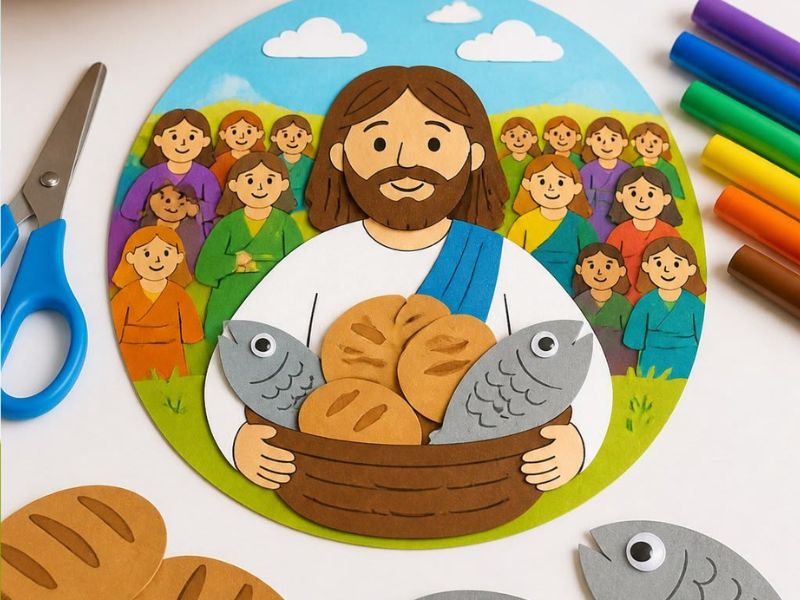
This Article will teach you more on 5 loaves and 2 fish crafts for kids
Teaching children Bible stories becomes more enjoyable when they can use their hands, explore their creativity, and make something connected to what they have learned. One wonderful story to introduce through creative activities is the miracle of Jesus feeding the five thousand with five loaves of bread and two fish.
The story reminds children that Jesus cares about people, that sharing can make a difference, and that God can do wonderful things with what we have. It also gives parents, Sunday school teachers, and children’s ministry leaders an opportunity to talk about kindness, generosity, gratitude, and faith in a way young children can understand.
If you are looking for five loaves and two fish crafts for kids, you will find several enjoyable ideas in this guide. From paper plate fish to a little basket filled with pretend bread, these activities allow children to recreate parts of the Bible story while practising important skills.
Each craft includes a list of materials, step-by-step instructions, and an explanation of what children can learn from the activity. Bible passages are also included to help you connect the finished projects to the story of Jesus feeding the five thousand.
Check out these 10 Easy Zoo animal crafts for preschoolers that spark creativity, that you kids will love doing.
What Is the Bible Story of the Five Loaves and Two Fish?
Before beginning the crafts, it helps to introduce children to the Bible story behind the activities.
The miracle of Jesus feeding the five thousand is recorded in all four Gospels: Matthew 14:13–21, Mark 6:30–44, Luke 9:10–17, and John 6:1–14.
In John 6, a large crowd follows Jesus because they have seen the signs He has performed by healing the sick. Jesus sees the people and knows they need food. There are thousands of people gathered, and feeding everyone seems like a difficult task.
Jesus asks Philip where they can buy bread for the crowd. Philip considers how much money would be needed to provide even a small amount of food for everyone.
Andrew then mentions a boy who has five barley loaves and two small fish. The food is nowhere near enough for such a large crowd, but Jesus takes what is available, gives thanks, and distributes the food to the people.
Everyone eats and is satisfied. Afterward, the disciples gather the remaining pieces of food, filling twelve baskets.
What appeared to be a small meal becomes part of an extraordinary miracle.
For children, this story offers several important lessons. They can learn that Jesus cares about people’s needs, that sharing is valuable, that we should be thankful for what we have, and that something small can still be useful.
When introducing the story, use language your children can understand. You can show them five pieces of pretend bread and two paper fish, then ask them to count the items.
Explain that the boy had only a little food, but he was willing to make it available. Jesus used that small meal to feed a very large crowd.
You can then tell the children that they will be making their own crafts to remember the story.
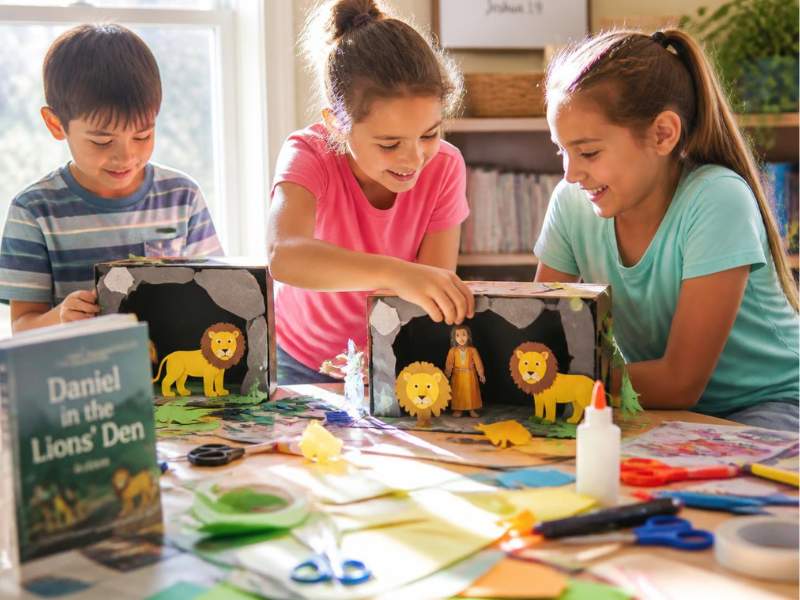
I Have another Christian craft that talks about 15 Easy Daniel and the lion’s Den crafts that helps kids learn the bible story, you will find useful.
1. Paper Plate Five Loaves and Two Fish Craft
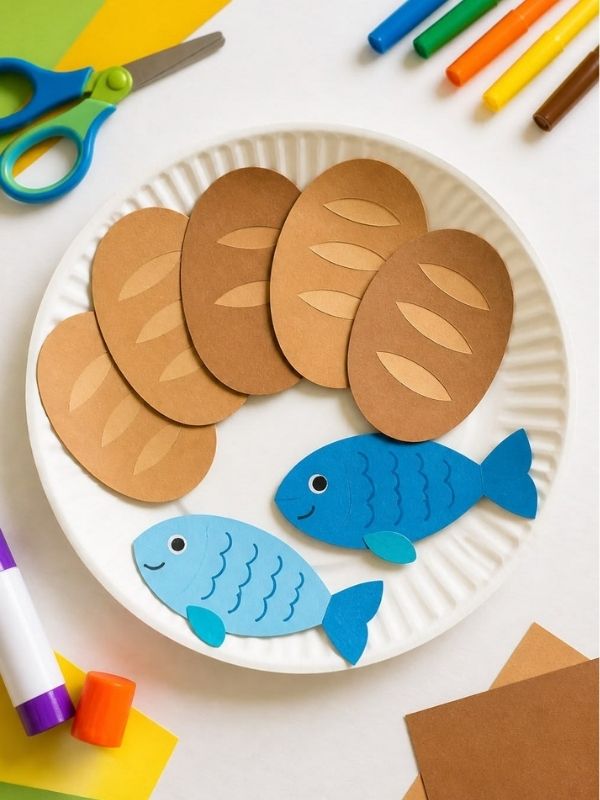
A paper plate is a useful material for children’s Bible crafts because it is easy to find, simple to decorate, and suitable for several creative projects.
For this activity, children will make a paper plate display featuring five loaves of bread and two fish. It is a good option for preschoolers, kindergarten children, and early elementary pupils.
The finished craft can be displayed on a classroom wall, placed on a Sunday school table, or taken home as a reminder of the Bible story.
Materials Needed
- One paper plate per child
- Brown or beige construction paper
- Blue construction paper
- Crayons or washable markers
- Child-safe scissors
- Glue stick
- Pencil
- Optional stickers for decoration

Step-by-Step Instructions
Step 1: Prepare the paper plate.
Give each child a paper plate to use as the base of the craft. If you are preparing the activity for a large class, you can write each child’s name on the back before distributing the plates.
Explain that the plate will hold the five loaves and two fish from the Bible story.
Step 2: Draw the bread shapes.
Use a pencil to draw five simple loaf shapes on brown or beige construction paper.
The loaves do not need to look exactly alike. Some can be long, while others can be slightly rounded. Encourage children to create their own designs.
For younger children, prepare the bread shapes in advance so they only need to colour and glue them.
Step 3: Cut out the five loaves.
Allow children who can safely use scissors to cut around their bread shapes. Younger children may need help with this part.
Count the pieces together as each loaf is cut out.
Say the numbers aloud and ask the children to count from one to five. This small activity connects the Bible story to early mathematics.
Step 4: Create two fish.
Draw two fish on blue construction paper. You can make one fish slightly larger than the other or allow children to choose their own shapes.
Cut out the fish carefully. If you are working with toddlers or very young preschoolers, prepare this part before the lesson.
Step 5: Decorate the fish.
Give the children crayons or washable markers to add eyes, scales, fins, and tails.
They can draw simple lines across the bodies of the fish or use small paper shapes as decorations.
As they work, explain that the two fish were part of the boy’s meal.
Step 6: Arrange the pieces on the plate.
Ask the children to place all five loaves and both fish on the paper plate before gluing them down.
This gives them an opportunity to count the items and check that they have included everything.
Arrange the bread along the bottom or one side of the plate, then place the two fish beside it.
Step 7: Glue the pieces in place.
Once the children are happy with their arrangement, help them glue the bread and fish onto the plate.
Press each piece gently so it stays attached. Allow the glue to dry before moving the finished craft.
Step 8: Add a Bible story caption.
Write or print the words “Five Loaves and Two Fish” on a small piece of paper.
Children can glue the caption to the plate or write it themselves if they are old enough.
You can also write John 6:1–14 on the back to help families find the Bible story later.
What Children Learn
This craft helps children remember the main items in the story while practising counting, cutting, arranging, and gluing.
They also learn that the boy’s meal consisted of five loaves and two fish. The activity gives you an opportunity to explain that Jesus used this small amount of food to feed a large crowd.
For an additional learning activity, ask the children to point to each loaf as they count to five. They can then point to the two fish and count them separately.
Bible passage: John 6:1–14.
Teaching point: Jesus can use what we have, even when it seems small.
I have another Bible craft you would Love to Engage your kids in, Look at these David and Goliath Bible crafts for preschoolers that teach children to trust God and be brave for more inspirations.
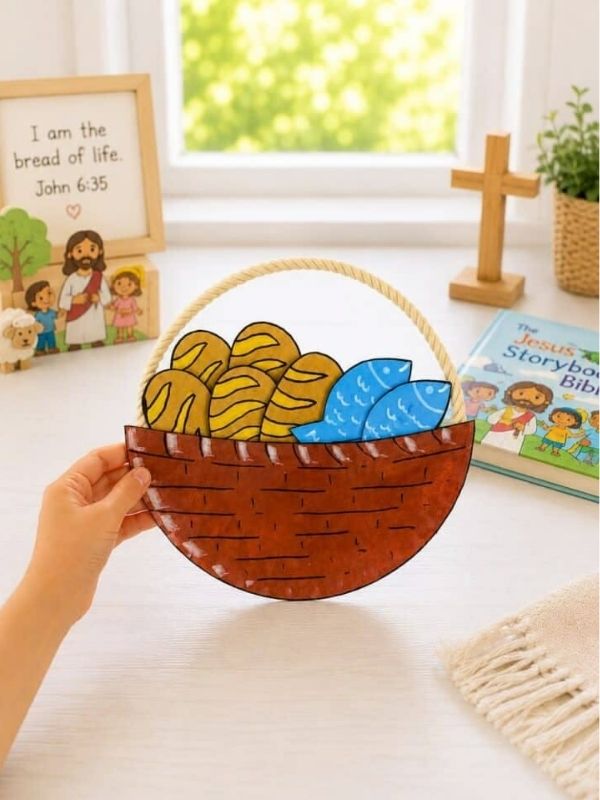
2. Five Loaves and Two Fish Cut-and-Paste Craft
A cut-and-paste activity is an excellent choice when you want children to practise following instructions while learning about a Bible story.
This project is particularly useful for preschool and kindergarten lessons because children can work with simple shapes, identify colours, count objects, and arrange the pieces on a sheet of paper.
You can prepare a basic worksheet yourself or draw the shapes on separate pieces of construction paper.
The aim is to help children create a picture that shows five loaves of bread and two fish.
Materials Needed
- White paper or light-coloured cardstock
- Brown, beige, and blue construction paper
- Child-safe scissors
- Glue stick
- Pencil
- Crayons or washable markers
- Ruler, if needed
Step-by-Step Instructions
Step 1: Prepare the background.
Give each child a sheet of white paper or cardstock.
Explain that they will use the paper as the background for their Bible story picture.
Older children can draw a simple basket or table on the paper before adding the bread and fish.
Step 2: Draw five loaf shapes.
On brown or beige paper, draw five bread shapes. Make them large enough for little hands to cut out without too much difficulty.
Younger children may benefit from outlines with wide, simple curves.
Step 3: Draw two fish shapes.
Use blue construction paper to draw two fish.
Include a rounded body, a tail, and a simple fin shape. The fish can be similar in size, or children can create their own designs.
Step 4: Cut out the shapes.
Ask the children to cut out the five loaves and two fish.
If the children are too young to use scissors safely, prepare the shapes in advance and allow them to concentrate on arranging and gluing.
Count the pieces before moving to the next step.
Step 5: Arrange the bread and fish.
Let the children place the shapes on the background without glue first.
They can arrange the five loaves in a row and place the two fish underneath or beside them.
Encourage them to count the pieces again to make sure the picture includes five loaves and two fish.
Step 6: Glue the shapes down.
Once the arrangement is ready, help the children glue each piece onto the paper.
Remind them to use a small amount of glue and press each shape gently.
Step 7: Add colour and details.
Children can draw a basket, a table, grass, or other details around the food.
They can also add patterns to the fish or draw lines on the loaves to make them look more like bread.
Encourage creativity while keeping the main focus on the Bible story.
Step 8: Write the lesson on the picture.
At the top or bottom of the page, write “Jesus Feeds the Five Thousand.”
Older children can copy the words themselves. Younger children can trace letters or decorate the title with crayons.
Read the story together and let the children explain what they made.
What Children Learn
The cut-and-paste craft helps children practise hand coordination, shape recognition, counting, and following directions.
It can also encourage them to talk about the story in their own words.
Ask questions such as:
- How many loaves did the boy have?
- How many fish did he have?
- Who used the food to feed the crowd?
- What happened after everyone had eaten?
These questions help children recall the story instead of simply completing a craft.
Bible passage: John 6:8–13.
Teaching point: We can remember Bible lessons through activities that help us see and talk about the story.
Check out these Apple crafts for preschoolers that are so easy, kids can make almost by themselves. that your kids would Love to engage to.
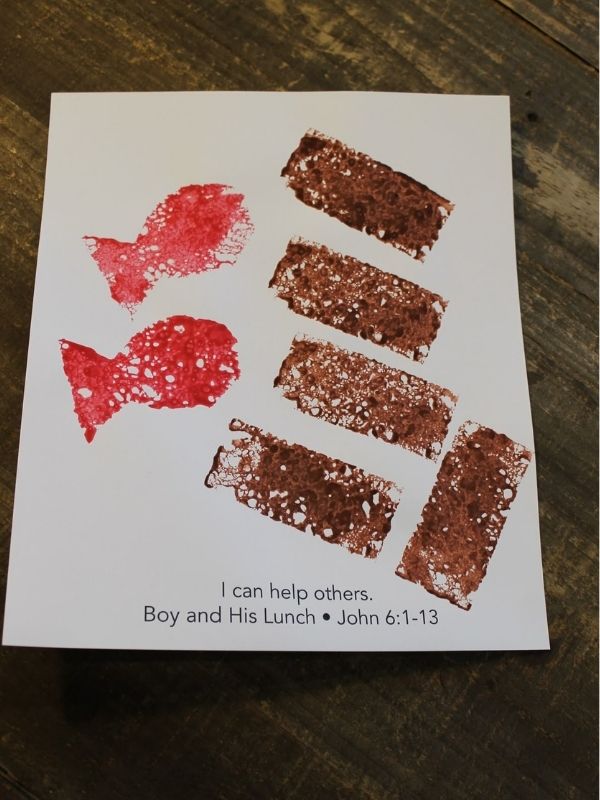
3. Five Loaves and Two Fish Handprint Craft
Handprint crafts are popular with young children because they make a personal keepsake. They also give parents and teachers a way to preserve a child’s artwork.
For this project, children will use their handprints to create a decorative background for five loaves and two fish.
The design can be adapted to suit different ages. Older children can trace and cut out their own handprints, while an adult can help younger children with the tracing and cutting.
Materials Needed
- White cardstock or construction paper
- Washable, child-safe paint
- Paintbrush or sponge
- Brown and blue construction paper
- Pencil
- Child-safe scissors
- Glue stick
- Crayons or washable markers
- Wet wipes or a damp cloth for cleaning hands
Step-by-Step Instructions
Step 1: Prepare the workspace.
Cover the table with scrap paper or another suitable protective covering.
Place the paint, paper, and cleaning materials within easy reach.
Explain to the children that they will use their handprints to decorate a picture about Jesus feeding the five thousand.
Step 2: Choose a paint colour.
Let each child choose a washable paint colour for the handprint.
You can use one colour for a simple design or offer several colours for children who want a more colourful background.
Make sure the paint is suitable for children’s use and supervise the activity.
Step 3: Make the handprint.
Help the child apply a thin layer of paint to the palm and fingers.
Press the hand gently onto the cardstock, then lift it carefully to reveal the print.
Allow the paint to dry completely before continuing.
Step 4: Create five loaves of bread.
While the handprint dries, draw five small loaf shapes on brown or beige paper.
Cut them out or allow older children to cut them under appropriate supervision.
You can add simple curved lines to represent the tops of the loaves.
Step 5: Make two fish.
Draw two fish on blue paper and cut them out.
Let the children add eyes, fins, tails, and scales using crayons or markers.
Step 6: Arrange the bread and fish.
Place the five loaves and two fish around the handprint.
The handprint can serve as the main decorative feature, with the food arranged below it or along one side.
Move the pieces around until the children are satisfied with the design.
Step 7: Glue the pieces in place.
Glue the loaves and fish onto the cardstock.
Press each piece gently and leave the picture flat while the glue dries.
Step 8: Add the Bible message.
Write “Jesus Feeds the Five Thousand” on the finished picture.
You can also add the reference John 6:1–14.
If the craft is intended as a keepsake, write the child’s name and the date on the back.
What Children Learn
Children practise creative expression, fine motor coordination, and following simple instructions.
The activity also provides a chance to talk about sharing. Explain that the boy had food that Jesus used to feed the crowd.
Ask children to name something they can share with others, such as toys, crayons, snacks, or their time helping someone.
Remind them that sharing is one way to show kindness to people around them.
Bible passage: John 6:8–11.
Teaching point: We can show kindness by being willing to share what we have.
If your children enjoy working with coloured paper, they may also have fun creating these DIY Paper Flowers a lovely craft project that encourages creativity and helps them practise working with different paper shapes.
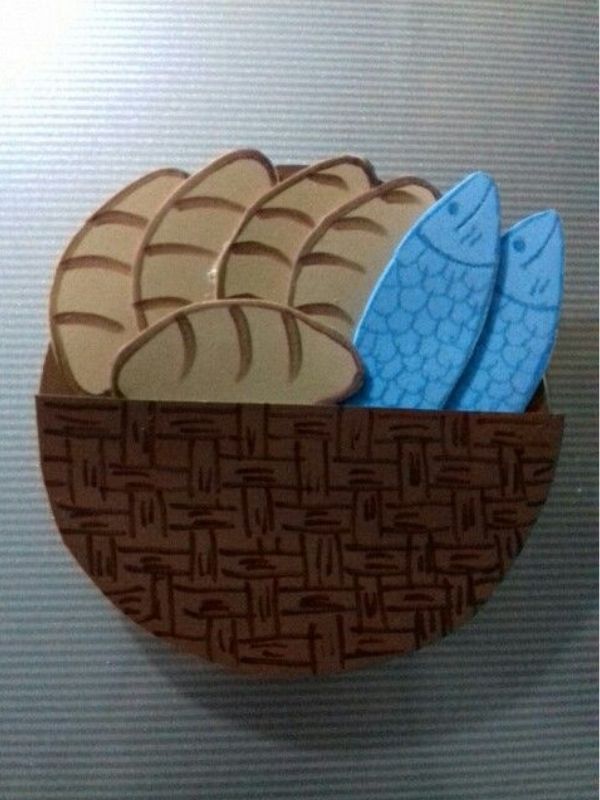
4. Paper Basket With Five Loaves and Two Fish
A paper basket craft helps children create a three-dimensional object rather than a flat picture.
It is also a useful activity for teaching counting and arranging objects. Children can make a small basket and fill it with pretend bread and fish to represent the boy’s meal in the Bible story.
The basket can be made from folded construction paper or a small paper container. For younger children, an adult can prepare the basket before the lesson begins.
Materials Needed
- Brown construction paper or cardstock
- Beige construction paper
- Blue construction paper
- Pencil
- Ruler
- Child-safe scissors
- Glue stick or child-safe craft glue
- Crayons or washable markers
- Optional paper strips for decoration
Step-by-Step Instructions
Step 1: Prepare the basket base.
Cut a rectangle from brown construction paper.
Fold the paper into a shallow container shape by bringing up the edges. Make small folds at the corners and secure them with glue.
An adult can prepare this part in advance for younger children.
Step 2: Strengthen the sides.
If the paper feels too thin, glue another piece of cardstock to the outside or inside of the basket.
Press the sides gently and allow the glue to dry.
The basket does not need to be large. It only needs enough space to hold the seven paper food shapes.
Step 3: Add a basket handle.
Cut a long strip of brown paper.
Attach one end to each side of the basket with glue. Hold the ends in place until they stick.
If you want a more decorative basket, children can draw lines along the handle to make it look woven.
Step 4: Make five loaves of bread.
Draw five loaf shapes on beige or brown paper.
Cut out each shape and count them together.
Children can add short lines to represent the texture of the bread.
Step 5: Make two fish.
Draw two fish on blue paper and cut them out.
Decorate them with simple scales, eyes, and fins.
For a more colourful design, children can use different shades of blue or add small paper shapes to the fish.
Step 6: Decorate the basket.
Use crayons or strips of paper to decorate the outside of the basket.
Children can draw simple lines, make a pattern, or add a small label reading “Five Loaves and Two Fish.”
Keep the decoration simple enough that the children still have time to complete the food shapes.
Step 7: Place the food inside the basket.
Put all five loaves and both fish inside the basket.
Count the pieces aloud as the children add them.
If the basket is too small to hold all seven pieces comfortably, use a larger base or place some of the pieces partly outside the basket.
Step 8: Retell the Bible story.
Ask the children to hold their baskets while you retell the story from John 6:1–14.
Pause when you reach the part about the boy’s food. Let the children point to their five loaves and two fish.
Explain that Jesus gave thanks and fed the crowd, and that the disciples gathered the leftovers afterward.
What Children Learn
This project encourages children to develop hand coordination, follow a sequence of steps, and recognise shapes.
It also provides a practical way to remember the food in the story.
You can extend the lesson by asking children what they might put in a basket to share with someone who needs help. Their answers can lead to a conversation about generosity, compassion, and caring for others.
Bible passage: John 6:9–13.
Teaching point: Even a small amount can become part of something wonderful when we are willing to give.
Keeping craft materials organised makes it easier to prepare activities for children. Check out these How to store Unbaked Polymer Clay so it stays soft for inspiration on organising craft supplies and keeping your creative space tidy.
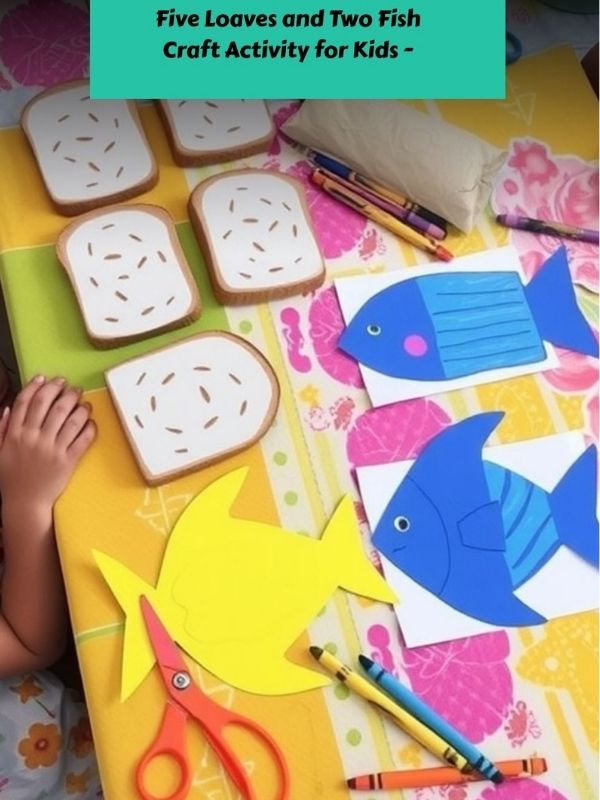
5. Five Loaves and Two Fish Colouring and Counting Craft
Not every craft needs several materials or complicated preparation. A colouring and counting activity is ideal when you need something simple for a Sunday school lesson, a preschool classroom, or a short Bible activity at home.
This project combines colouring with early number skills. Children colour five loaves and two fish, count the pictures, and answer questions about the story.
You can draw the worksheet yourself on a sheet of paper. Alternatively, create a simple page with outlines of five loaves and two fish, leaving enough space for children to colour each object.
Materials Needed
- White paper
- Pencil
- Black marker
- Crayons or coloured pencils
- Child-safe scissors, if you want to cut out the pictures
- Glue stick
- Optional extra sheet of paper for a background
Step-by-Step Instructions
Step 1: Prepare the worksheet.
Draw five large loaf outlines on one side of the paper and two fish outlines on the other side.
Make the shapes clear and simple so younger children can recognise them easily.
Write the title “Five Loaves and Two Fish” at the top.
Step 2: Introduce the story.
Before the children begin colouring, tell them briefly about Jesus feeding the five thousand.
Explain that a boy had five loaves of bread and two fish, and Jesus used the food to feed a large crowd.
Show the children the pictures and ask them what they notice.
Step 3: Count the loaves.
Point to the bread pictures one at a time.
Ask the children to count aloud from one to five.
For children who are still learning numbers, guide them by pointing to each picture as they say the number.
Step 4: Count the fish.
Repeat the activity with the two fish.
Ask the children how many fish they can see.
Encourage them to answer independently if they are ready, but provide help when needed.
Step 5: Colour the bread.
Give the children crayons or coloured pencils.
They can colour the loaves brown, beige, golden yellow, or any other colour they choose.
Explain that there is no need for every child’s picture to look exactly the same.
Step 6: Colour the fish.
Let the children choose colours for the fish.
They can add scales, spots, stripes, or other simple patterns.
This part encourages imagination while allowing children to practise holding and controlling their colouring tools.
Step 7: Add a basket or background.
Children can draw a basket beneath the bread and fish.
Older children may want to add a few people in the background to represent the crowd that Jesus fed.
Keep the activity suitable for the child’s age and ability.
Step 8: Complete the counting challenge.
Ask the children to count the five loaves again and then count the two fish.
You can ask, “How many loaves are there?” and “How many fish are there?”
Finally, ask them to tell you who used the food to feed the crowd.
Write John 6:1–14 on the page as the Bible reference.
What Children Learn
This activity introduces early mathematics through counting and number recognition. Children also practise colouring, concentration, and listening to instructions.
It gives teachers an easy way to check whether children remember the key details of the story.
For older children, you can add a simple worksheet question: “What did Jesus do with the five loaves and two fish?”
For younger children, pointing to the correct pictures may be enough.
Bible passage: John 6:1–14.
Teaching point: We can learn Bible stories while practising important everyday skills.
Once your children have finished these Bible crafts, you can keep the fun going with more 7 Easy crafts and arts for kids to do at home when they are bored. that encourage creativity, imagination, and hands-on learning.
6. Five Loaves and Two Fish Paper Bag Puppet Craft
Children often enjoy activities that allow them to tell stories and use their imagination. A paper bag puppet can help bring the feeding of the five thousand to life.
For this project, children will decorate a paper bag with a character or food design connected to the story. They can make a boy holding his meal, a fish puppet, or a simple bread puppet.
Once the puppets are ready, children can use them to retell the Bible story with a parent, teacher, or classmate.
Materials Needed
- Small paper lunch bags
- Construction paper
- Brown, beige, and blue paper
- Child-safe scissors
- Glue stick
- Crayons or washable markers
- Pencil
- Optional stickers or paper shapes

Step-by-Step Instructions
Step 1: Choose the puppet design.
Give each child a paper bag.
Explain that the bag will become a puppet they can use while talking about the Bible story.
Children can choose to make a boy, a loaf of bread, or a fish. If you have a large class, assign different designs so the children can later use their puppets together.
Step 2: Create the main shape.
For a bread puppet, cut a large loaf shape from brown paper, For a fish puppet, cut a fish shape from blue paper & For a boy puppet, use a simple circle for the face and paper shapes for the hair and clothing.
Step 3: Decorate the design.
Let the children add eyes, a mouth, hair, scales, or other details with crayons and markers.
Encourage them to make their characters friendly and easy to recognise.
Younger children may need help drawing the shapes.
Step 4: Attach the design to the bag.
Glue the paper design to the front of the bag.
If you are making a fish puppet, place the fish on the part of the bag that moves when the child operates it.
For a character puppet, place the face near the folded bottom section so it becomes more expressive when the bag is moved.
Allow the glue to dry.
Step 5: Make additional food puppets.
If time permits, create extra puppets to represent the five loaves and two fish.
Children can make the food shapes from construction paper and attach them to separate small bags.
You do not need seven individual puppets for every child. The group can share the food puppets during the storytelling activity.
Step 6: Review the Bible story.
Gather the children and explain the main events in the story.
Talk about the crowd, the boy’s food, Jesus giving thanks, and the disciples collecting the leftovers.
Use the puppets to help illustrate each part.
Step 7: Practise retelling the story.
Invite the children to move their puppets as you retell the story.
Ask a child holding a bread puppet to show the bread when you mention the boy’s meal.
A child holding a fish puppet can show the fish at the appropriate moment.
Older children can take turns saying a sentence about what happened.
Step 8: Share the lesson.
After the storytelling activity, ask the children what they remember most.
Explain that the story teaches us about Jesus’ care for people and the importance of being willing to share.
Allow children to take their puppets home so they can tell the story to their families.
What Children Learn
Paper bag puppets encourage imaginative play, communication, listening, and storytelling.
They also help children remember the order of events in the Bible story.
Some children may feel shy about speaking in front of a group. Giving them a puppet can make it easier to participate because they have something to hold and move while speaking.
Bible passage: John 6:1–14.
Teaching point: We can share what we learn about Jesus with other people.
If your children enjoyed making the five loaves and two fish crafts, keep their creativity going with these Paper crafts for kids, featuring more ideas for creating things with simple paper materials.
How to Teach Children the Lesson Behind the Five Loaves and Two Fish
Completing the crafts is only one part of the activity. You can make the lesson more meaningful by taking a few minutes to discuss what happened in the Bible story and what children can learn from it.
The aim is not to make children memorise every detail immediately. Instead, help them understand the main message and give them opportunities to express what they have learned.
Here are four important lessons you can discuss.
1. Jesus Cares About People’s Needs
In the feeding of the five thousand, Jesus recognised that the crowd needed food.
He did not ignore their hunger. The miracle shows His care for the people who had gathered to hear Him.
You can explain to children that caring for others includes noticing when someone needs help.
For example, if a classmate has no crayons, a child might offer to share. If a family member is struggling with a task, a child might ask how they can help.
Ask the children to name one way they can show kindness at home or in school.
Keep the examples simple and practical so they can understand how the lesson applies to everyday life.
Bible passage: John 6:5–11.
2. Sharing Is Important
The boy’s food was small compared with the needs of the crowd.
John’s account mentions the boy’s five barley loaves and two small fish. Jesus used the food to feed the people.
You can use this part of the story to talk about sharing.
Children may have different ideas about what sharing looks like. Some may mention toys, books, food, or school supplies. Others may talk about helping a sibling or including someone in a game.
Explain that sharing can be a way of showing kindness and consideration for others.
It is also helpful to remind children that sharing should be taught with care. They should not be pressured to give away something they need or to ignore reasonable personal boundaries. The lesson is about generosity and willingness to help.
Bible passage: John 6:8–11.
3. We Should Be Thankful
John 6:11 tells us that Jesus took the loaves and gave thanks before distributing the food.
This creates an opportunity to talk about gratitude.
Ask the children to name a few things they are thankful for. Their answers may include family, friends, food, a place to sleep, or the opportunity to learn.
You can also invite each child to say one short sentence of thanks.
For example, a child might say, “I am thankful for my family,” or, “I am thankful for the food we eat.”
Keep the discussion relaxed. Children may need time to think of their answers, and they should be allowed to express themselves in their own words.
Bible passage: John 6:11.
4. God Can Do Wonderful Things
The feeding of the five thousand is a miracle in which Jesus used a small meal to feed a large crowd.
For children, this part of the story can introduce a simple lesson about faith and God’s power.
Explain that the amount of food seemed insufficient for the number of people, but Jesus was able to feed the crowd.
Avoid making children feel that every problem will disappear immediately or that they will always receive exactly what they ask for. Instead, explain that the story shows Jesus’ power and care.
You can encourage children to pray when they are worried, ask trusted adults for help, and remember the Bible stories they are learning.
Bible passage: John 6:1–14.
If you love exploring creative projects for your home, you can also try these DIY Candle making that smell better than store-bought, for inspiration for your next handmade project.
Tips for Making Five Loaves and Two Fish Crafts Enjoyable for Different Ages
Children have different abilities, attention spans, and interests. A craft that works well for a seven-year-old may be difficult for a three-year-old without adult help.
You can use the same Bible story for different age groups by adjusting the materials, the number of steps, and the amount of assistance you provide.
For Toddlers
Choose activities with large, simple shapes.
The paper plate craft and colouring activity are good starting points because toddlers can participate without needing to complete complicated cutting or folding.
Prepare the shapes before the lesson and allow toddlers to colour, point, count with help, and glue the pieces with supervision.
Use short sentences when explaining the story.
For example, you might say, “The boy had five loaves and two fish. Jesus used the food to feed many people.”
Toddlers may not remember every detail, and that is fine. The aim is to introduce the story and make the activity enjoyable.
Always supervise toddlers closely and keep small objects, scissors, and other potential choking hazards out of reach.
I have an article on Valentine’s Day Crafts for Preschool that are almost too cute to resist you should check out.
For Preschoolers
Preschool children can often follow a few simple instructions and participate in basic cutting, colouring, and gluing activities.
The paper plate craft, cut-and-paste picture, and counting worksheet are useful choices.
Give instructions one step at a time rather than explaining the entire project at once.
You can also make counting part of the activity by asking children to touch each loaf as they count to five and each fish as they count to two.
Ask simple questions about the Bible story to encourage them to remember what they have heard.
For Kindergarten Children
Kindergarten children may be ready to complete more of the craft independently.
They can practise cutting out shapes, arranging the food, writing short captions, and decorating their finished pictures.
The paper basket and paper bag puppet crafts can work well for this age group with some adult assistance.
You can also ask children to retell one part of the story when they finish their projects.
This helps them practise speaking and remembering events in sequence.
For Elementary-Age Children
Older children may enjoy projects that involve more planning and detail.
The Bible story collage and mini book are good options because they allow children to create a fuller representation of the story.
You can also ask them to write a short paragraph explaining what they learned.
For example, they might describe why sharing matters or explain what happened after the people had eaten.
Older children can read John 6:1–14 with an adult and identify the parts of the story that appear in their crafts.
Encourage thoughtful answers rather than expecting every child to explain the lesson in exactly the same words.
How to Organise a Five Loaves and Two Fish Sunday School Craft Lesson
If you are preparing these activities for a Sunday school class, a little planning can help everything run smoothly.
You do not need to complete all eight crafts in one lesson. In most cases, choosing one craft and allowing enough time for the Bible story and discussion will be more enjoyable than rushing through several projects.
Here is a simple way to organise the session.
Step 1: Choose One Craft
Select a project that suits the children’s ages and the time available.
For a short lesson, choose the paper plate craft or colouring activity.
For a longer session, the basket, puppet, collage, or mini book may provide more opportunities for children to work creatively.
Read through the instructions before the lesson so you know which parts need to be prepared in advance.
Step 2: Prepare the Materials
Count the children who will attend and prepare enough supplies for everyone.
Cutting out complicated shapes beforehand can save time, particularly when working with preschoolers.
Place the materials in separate groups so the children can find what they need without searching through a large pile.
If you are using paint or glue, prepare the workspace before the children arrive.
Step 3: Introduce the Bible Story
Begin by reading John 6:1–14 from a Bible translation suitable for your class.
You can also tell the story in simple language after reading the passage.
Explain that a large crowd had gathered around Jesus, and the people needed food.
A boy had five loaves and two fish. Jesus gave thanks and used the food to feed the crowd.
After the people had eaten, the disciples collected twelve baskets of leftovers.
Pause at important moments to ask the children what they think happened next.
Step 4: Complete the Craft
Show the children the materials and explain the first step.
Demonstrate how to make the main shapes if necessary.
Allow the children to work at their own pace. Some will finish quickly, while others will need more time or assistance.
Offer help without taking over the entire project. The goal is to let the children participate as much as they safely can.
Step 5: Discuss the Lesson
When the children finish, gather them together and talk about the story.
Ask questions such as:
- Who had the five loaves and two fish?
- What did Jesus do with the food?
- How many baskets of leftovers were collected?
- What does the story teach us about sharing?
- What is one thing you are thankful for?
Use their answers to reinforce the main lesson.
Step 6: Let Children Share Their Work
Give each child an opportunity to show their craft.
They can explain what they made or point to the part they like most.
Avoid comparing the children’s work or suggesting that one picture is better than another. The purpose is to encourage participation and help the children remember the story.
Step 7: Close With Prayer
If prayer is part of your Sunday school lesson, close with a short, age-appropriate prayer.
You can thank God for food, family, teachers, and the opportunity to learn about Jesus.
Encourage the children to remember the lesson about gratitude and kindness during the week.
Step 8: Send the Craft Home
Allow the children to take their finished crafts home.
Encourage them to show their parents or caregivers and explain the Bible story in their own words.
This gives families an opportunity to discuss the lesson again after the Sunday school session has ended.
Crafting can also be a wonderful way for children to express love and appreciation for the people around them. You can explore these handmade crafts for gifts that look special without costing a fortune or more inspiration for thoughtful projects to make for family and friends.
Helpful Safety Tips for Bible Crafts
Children’s crafts should be enjoyable, but safety also matters.
Before starting, consider the children’s ages and choose materials that they can use appropriately.
Here are a few practical precautions.
- Use child-safe scissors. Young children should receive help with cutting, and an adult should supervise the use of scissors.
- Choose suitable glue. A washable glue stick is often easier for young children to handle than stronger craft adhesives.
- Supervise paint activities. Use paint intended for children’s activities, protect the work surface, and help children clean their hands afterward.
- Avoid small loose decorations for toddlers. Tiny stickers, beads, googly eyes, and similar items can present choking hazards.
- Prepare complicated pieces in advance. Cutting out basket shapes or folding paper containers beforehand can make activities safer and easier for younger children.
- Allow glue and paint to dry. Give finished projects enough time to dry before children carry them around.
- Keep the workspace organised. Place scissors and other tools where children can use them with appropriate supervision.
The aim is to make the craft accessible and enjoyable without creating unnecessary difficulties for the children or the adults helping them.
This christmas crafts for kids that are fun and simple to make, will be very useful to your kids during this festive season.
Frequently Asked Questions About Five Loaves and Two Fish Crafts for Kids
What Is the Best Five Loaves and Two Fish Craft for Preschoolers?
The paper plate craft and colouring activity are two simple options for preschoolers.
Both projects use basic shapes and allow children to practise counting, colouring, and gluing. Adults can prepare the shapes in advance so young children can concentrate on the parts they can manage.
You can also use the activity to introduce the Bible story and help children remember that the boy had five loaves and two fish.
What Bible Verse Goes With the Five Loaves and Two Fish Craft?
John 6:1–14 is the main Bible passage about Jesus feeding the five thousand with five barley loaves and two fish.
Also John 6:9 mentions the boy’s food, while John 6:11 describes Jesus giving thanks and distributing the food.
John 6:12–13 describes the disciples gathering the remaining pieces and filling twelve baskets.
Other Gospel accounts of the miracle can be found in Matthew 14:13–21, Mark 6:30–44, and Luke 9:10–17.
You can write the reference on the finished craft so children and their families can read the story later.
What Do Children Learn From the Five Loaves and Two Fish Story?
Children can learn about Jesus’ care for people, sharing, gratitude, and faith.
The story also provides opportunities to practise counting, storytelling, listening, and following instructions through craft activities.
The specific lesson you emphasise can depend on the age of the children and the purpose of your Bible lesson.
Can I Use These Crafts for Vacation Bible School?
Yes. These projects can be used for Vacation Bible School, Sunday school, children’s ministry, Christian preschool lessons, and family Bible activities.
Choose a craft that fits your group size and available time.
For larger groups, the paper plate and cut-and-paste crafts may be easier to organise because the materials are simple to prepare.
For smaller groups or longer sessions, the basket, puppet, collage, or mini book can provide more opportunities for individual creativity.
How Can I Make the Lesson More Interactive?
You can combine the craft with counting, storytelling, questions, and a short discussion.
For example, place five paper loaves and two paper fish on a table. Ask the children to count them before telling the story.
As you read John 6:1–14, let them point to the food at the appropriate moment.
Afterward, invite them to explain what Jesus did and name one way they can show kindness to someone else.
This approach allows children to participate in the lesson instead of only listening.
Why Did Jesus Collect the Leftover Food?
In John 6:12–13, Jesus tells His disciples to gather the pieces left over so that nothing is wasted. The disciples collect twelve baskets of leftovers.
You can use this part of the story to discuss being careful with food and appreciating what we have.
For younger children, explain that the disciples gathered the remaining pieces after everyone had eaten.
Conclusion on Five Loaves and Two Fish Crafts for Kids
The story of Jesus feeding the five thousand is a wonderful Bible lesson to explore through creative activities. It gives children an opportunity to learn about Jesus while practising useful skills such as counting, colouring, cutting, storytelling, and following instructions.
These eight five loaves and two fish crafts for kids offer different ways to bring the story to life. You can create a paper plate picture, make a little basket filled with pretend food, design a paper bag puppet, or put together a mini book that retells the miracle.
Most importantly, make room for conversation. As children work, talk to them about the boy’s food, Jesus’ care for the crowd, and the importance of gratitude and generosity.
When children can connect a Bible story with an activity they have made themselves, it gives them another way to remember what they learned.
I hope these craft ideas help you create a meaningful and enjoyable Bible lesson for your children, Sunday school class, or family.
I have some seasonal kids crafts like summer crafts for preschoolers, fun summer crafts for toddlers, and Easy Summer crafts for kids you should check out.