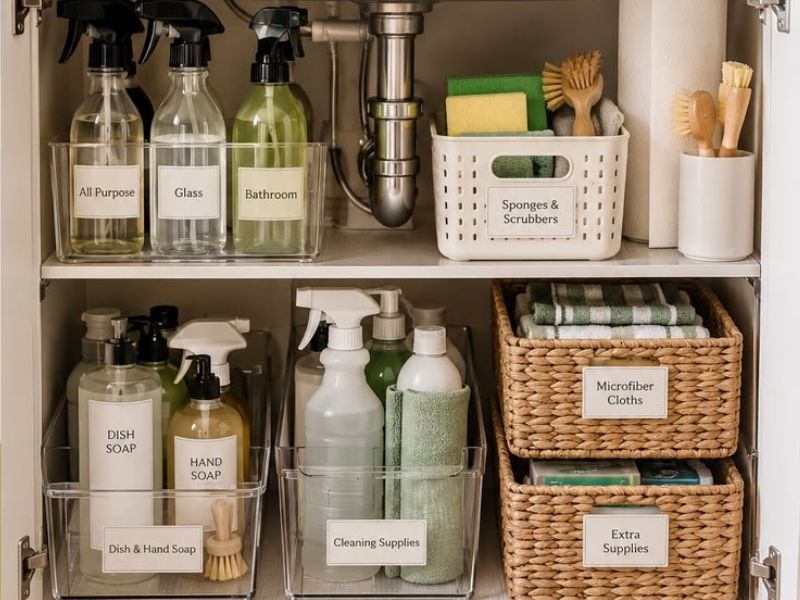
Have you ever opened the cabinet underneath your kitchen or bathroom sink and found yourself staring at a collection of cleaning supplies, toiletries, plastic bags, and other household items scattered everywhere? It is surprisingly easy for this little storage area to become one of the messiest spots in the home.
Between cleaning products, sponges, extra soap, toiletries, and everyday essentials, the space underneath the sink can fill up faster than expected. Before you know it, finding a particular item becomes difficult, and you may even end up purchasing something you already have simply because you cannot see it at the back of the cabinet.
One of the things I love about organizing this space is that even small changes can make a noticeable difference. Adding a sliding organizer, using stackable storage bins, or introducing a simple tension rod can help you create more room without changing the existing cabinet.
You can also customize your storage arrangement depending on whether you are organizing underneath a kitchen sink or a bathroom sink. Kitchen cabinets may need space for dishwashing supplies, cleaning products, and trash bags, while bathroom cabinets are often better suited for toiletries, skincare products, and extra towels.
If you have been looking for practical ways to make better use of this often-overlooked space, you are in the right place.
In this article, we will look at under the sink organization ideas for small spaces that can help you maximize storage, keep everyday essentials within reach, and maintain a tidier home.
Storage baskets are useful for keeping everyday items together and making cluttered spaces look more organized. If you enjoy creative storage solutions, explore these 15 Clever DIY Basket Ideas That Turn Simple Materials Into Beautiful Storage to find simple ways to organize different areas of your home.
Creative Ways to Make the Most of Your Under-Sink Space
The space beneath your sink may not be the largest storage area in your home, but with a little creativity, it can become one of the most useful. Whether you’re dealing with a small kitchen cabinet or a crowded bathroom vanity, the right storage solutions can help you make better use of every available corner.
From clever organizers that work around plumbing pipes to simple baskets that keep everyday essentials together, these ideas will help you create a cleaner, more functional space without making major changes to your cabinets.
Keeping your kitchen organized goes beyond the cabinet beneath your sink. You can also make better use of your pantry with these 20 Genius Pantry Organization Ideas That Save Room Stop Clutter designed to help you maximize limited storage space.
Let’s explore some practical ways to get started.
1. Use a Two-Tier Sliding Organizer to Maximize Cabinet Space
One of the most practical ways to organize a crowded under-sink cabinet is by introducing a two-tier sliding organizer.
When you place cleaning products and other household essentials directly on the cabinet floor, smaller items often get hidden behind larger bottles. You may have to remove several things just to reach the product you need.
A two-tier sliding organizer helps solve this problem by creating separate storage levels. Instead of keeping everything in one crowded area, you can arrange your supplies on different shelves and pull out the organizer whenever you need something.
This is especially helpful in small kitchens and bathrooms where cabinet space is limited.
You can find sliding organizers in different sizes, materials, and designs. Some feature metal frames with removable plastic trays, while others have adjustable shelves that can accommodate different bottle heights.
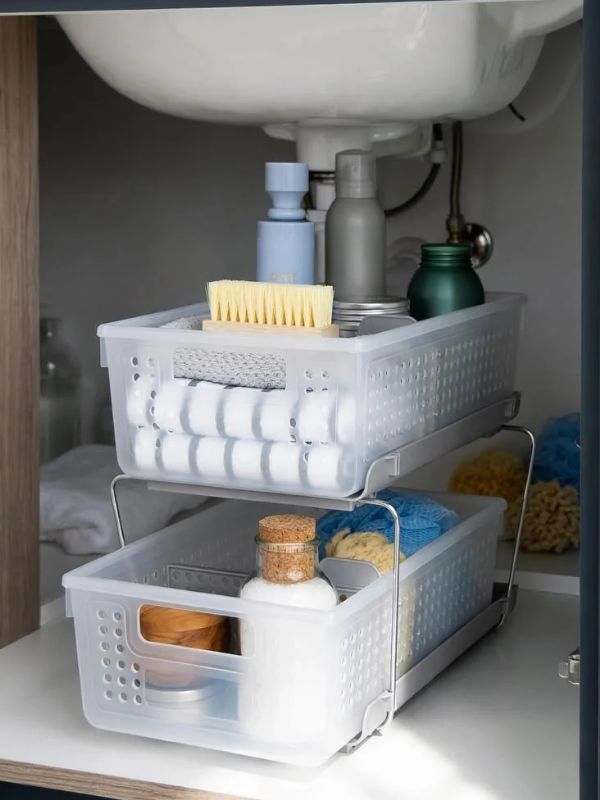
How to Set Up a Two-Tier Sliding Organizer
Step 1: Empty the cabinet.
Start by removing everything underneath your sink. This gives you a clear view of the available space and makes it easier to plan your storage arrangement.
Separate the items into categories, such as cleaning products, dishwashing supplies, bathroom toiletries, and miscellaneous household essentials.
Check expiration dates and dispose of products that are no longer usable according to their labels.
Step 2: Measure the available space.
Before purchasing an organizer, measure the cabinet’s width, depth, and height.
Pay particular attention to the plumbing pipes beneath the sink. These pipes can take up a considerable amount of space, so you want an organizer that fits around them comfortably.
Also, check whether the cabinet doors can close properly once the organizer is installed.
Step 3: Choose a suitable sliding organizer.
Look for a two-tier organizer with a compact design.
Some organizers feature an open section at the back or adjustable shelves, making them easier to position around plumbing.
If your cabinet is particularly narrow, consider a slim pull-out organizer instead.
Step 4: Arrange your products.
Place taller cleaning bottles on the bottom shelf and smaller items on the upper shelf.
For a bathroom cabinet, you could use the lower section for extra toiletries and the upper section for smaller skincare or personal care products.
Avoid overloading the shelves, especially if the organizer is made from lightweight plastic.
Step 5: Keep frequently used items accessible.
Arrange the products you use regularly toward the front.
This makes it easier to reach your dish soap, bathroom cleaning supplies, or everyday essentials without disturbing everything else.
Why This Organization Idea Works
A two-tier sliding organizer makes use of vertical space that might otherwise remain empty.
It also reduces the need to stack bottles on top of one another, making the cabinet easier to maintain.
A tidy kitchen is easier to maintain when everything has its proper place. Along with organizing the cabinet beneath your sink, try these Styling Kitchen Shelves Ideas to create a cleaner and more functional cooking space.
Styling tip: Choose a simple white, clear, or neutral organizer if you want a clean appearance. You can also use matching storage containers to create a more coordinated arrangement.
2. Add Stackable Storage Bins for Small Household Essentials
Sometimes, the biggest problem with an under-sink cabinet is not the lack of space but the number of small items scattered throughout it.
Cleaning cloths, sponges, gloves, scrub brushes, extra soap, and small household supplies can quickly make the cabinet look untidy.
Stackable storage bins provide a simple solution.
Instead of allowing these little items to spread across the cabinet floor, you can group similar products together in separate containers. This makes it easier to find what you need and prevents smaller belongings from getting lost behind larger bottles.
The best thing about stackable bins is that they allow you to make use of the cabinet’s vertical space.
You can place one container above another, creating additional storage without occupying the entire cabinet floor.
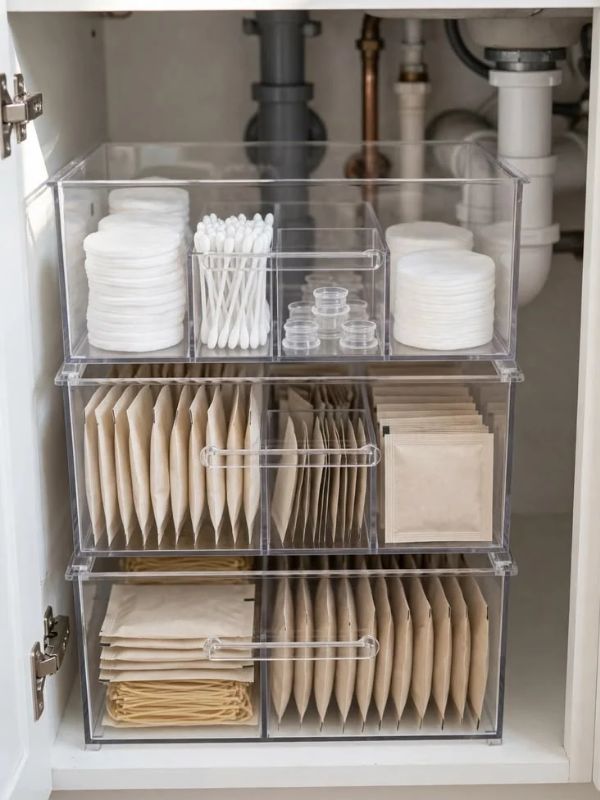
Photo credit
How to Organize With Stackable Storage Bins
Step 1: Choose the right containers.
Look for storage bins that are sturdy, easy to clean, and appropriately sized for your cabinet.
Clear containers are particularly useful because you can see what is inside without opening each one.
You can also choose white or neutral plastic bins if you prefer a more uniform appearance.
Step 2: Group similar items together.
Before arranging the bins, decide what belongs in each container.
For example, in a kitchen cabinet, you could create separate bins for:
- Dishwashing sponges.
- Cleaning cloths.
- Rubber gloves.
- Dishwasher supplies.
- Extra dish soap.
For a bathroom cabinet, you could use separate containers for:
- Hair accessories.
- Extra toiletries.
- Skincare products.
- Cotton pads.
- Personal care supplies.
Step 3: Arrange the containers according to size.
Place larger bins at the bottom and smaller ones on top.
Make sure the containers are stable and do not lean against plumbing pipes.
If your cabinet has limited height, choose shorter stackable containers that will fit comfortably.
Step 4: Add labels.
Labels make it easier to identify what belongs in each container.
You can use simple labels such as “Cleaning Supplies,” “Sponges,” “Hair Care,” or “Extra Toiletries.”
This is particularly helpful when several people use the same storage space.
Step 5: Leave room for easy access.
Avoid filling every available corner with containers.
Leave enough room to remove each bin without having to rearrange the entire cabinet.
Why This Organization Idea Works
Stackable storage bins are affordable, versatile, and easy to rearrange.
They are particularly useful when you have many small household items that need to be grouped together.
They also make regular cleaning easier because you can remove a container, wipe the cabinet underneath, and return it to its position.
Styling tip: Use matching containers to give the cabinet a coordinated appearance. Clear bins with simple labels are a lovely choice if you want to keep everything visible and easy to identify.
Your bathroom can also benefit from a few simple storage improvements. If you’re looking for affordable ways to arrange your toiletries and everyday essentials, take a look at these Bathroom Makeover Ideas .
3. Install a Tension Rod for Hanging Cleaning Supplies
If you have ever struggled to find enough room for cleaning bottles underneath your kitchen sink, a tension rod might be worth considering.
This simple storage accessory can help you use the upper section of your cabinet while keeping certain cleaning supplies off the cabinet floor.
A tension rod is particularly useful for bottles with spray handles. Instead of placing them upright alongside other cleaning products, you can hang them by their trigger handles.
This creates additional room underneath the rod for storage bins, cleaning cloths, and other household essentials.
It is also a relatively inexpensive organization solution because you do not need to drill holes into your cabinet walls.
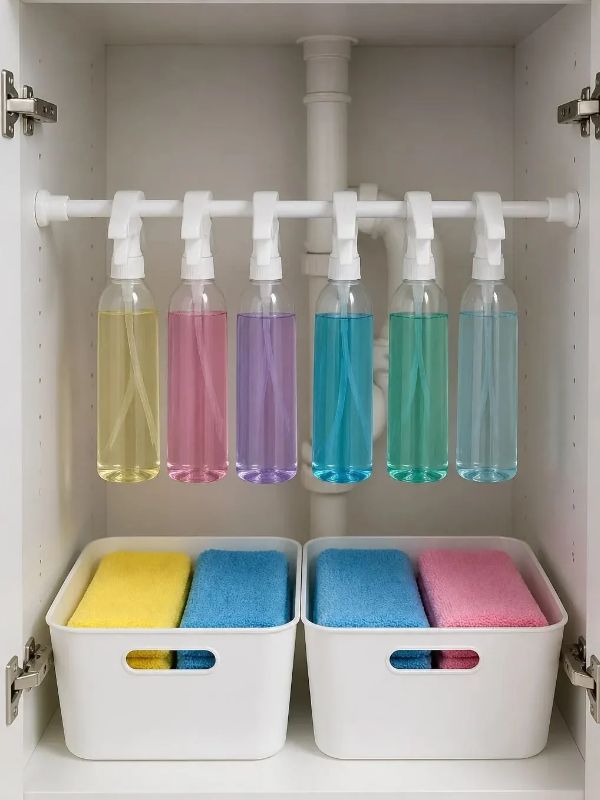
How to Install a Tension Rod Under the Sink
Step 1: Measure the cabinet width.
Measure the distance between the two cabinet walls where you want to position the rod.
Purchase an adjustable tension rod that fits within those measurements.
Make sure the rod is suitable for the weight of the items you intend to hang.
Step 2: Find a suitable position.
Look at the space beneath your sink and identify an area that does not interfere with the plumbing.
The rod should be positioned high enough to allow bottles to hang freely without touching the cabinet floor.
Also, make sure it does not obstruct the cabinet doors.
Step 3: Install the tension rod.
Extend the rod until it fits firmly between the cabinet walls.
Follow the manufacturer’s instructions to secure it properly.
Give it a gentle test before hanging anything.
Step 4: Hang your spray bottles.
Place suitable spray bottles over the rod using their trigger handles.
Arrange them with enough space between each bottle so that they can be removed easily.
Avoid hanging unusually heavy bottles or containers that are not designed for this type of storage.
Step 5: Use the space underneath.
Once your cleaning bottles are hanging, you can use the cabinet floor for additional storage.
Small bins can hold sponges, microfiber cloths, and other cleaning supplies.
Why This Organization Idea Works
A tension rod makes use of an area that is often overlooked.
It also helps separate cleaning bottles from smaller supplies, making the cabinet easier to navigate.
Styling tip: Arrange your cleaning bottles with their labels facing outward. This makes it easier to identify products quickly and gives the cabinet a more organized appearance.
Small spaces can become cluttered when there isn’t enough room for everyday belongings. These Small Space decorating Ideas offer practical ways to create more storage without taking up too much room.
4. Use Pull-Out Drawers for Easy Access to Everyday Items
One of the most frustrating things about a deep under-sink cabinet is having to reach all the way to the back to retrieve something.
Items placed behind larger containers can easily become forgotten, especially when you have limited visibility.
Pull-out drawers are a practical way to solve this problem.
They allow you to slide stored items toward you instead of reaching into the back of the cabinet.
Depending on your cabinet design, you can use a freestanding pull-out drawer organizer or install a cabinet-specific sliding storage system.
These organizers are particularly useful for kitchens where you need quick access to dishwashing products, cleaning cloths, and other everyday essentials.
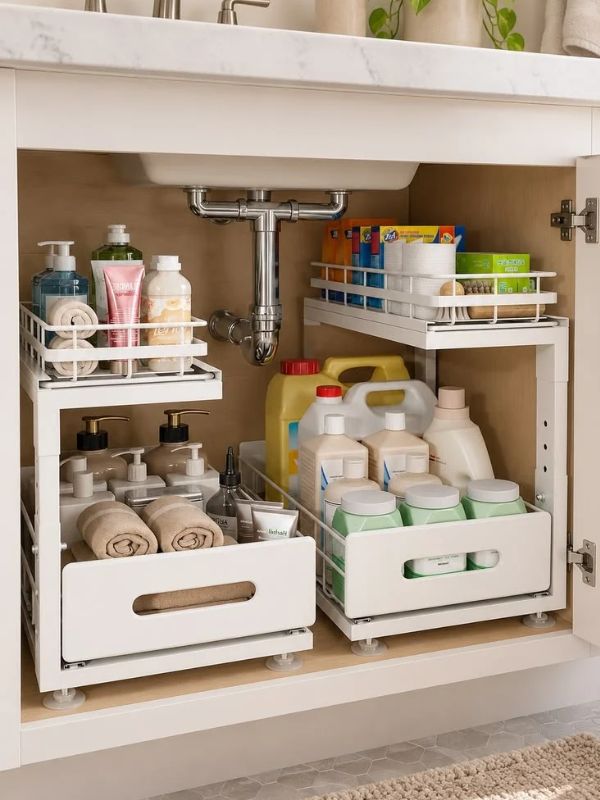
How to Organize With Pull-Out Drawers
Step 1: Measure your cabinet.
Measure the available width, depth, and height.
If your cabinet has a central plumbing pipe, choose an organizer designed to work around it.
Some pull-out organizers have an open-back design that makes them more suitable for under-sink spaces.
Step 2: Choose a drawer organizer.
Look for a sturdy design with smooth sliding mechanisms.
Metal and durable plastic options are both available.
If you do not want to install permanent hardware, consider a freestanding organizer that simply sits inside the cabinet.
Step 3: Decide what belongs in each drawer.
You can assign different purposes to each storage level.
For example:
- Top drawer: Sponges, gloves, and small cleaning accessories.
- Bottom drawer: Dish soap, cleaning bottles, and larger supplies.
For bathroom storage, you could use one drawer for toiletries and another for extra personal care products.
Step 4: Arrange items by frequency of use.
Keep your everyday essentials in the easiest-to-reach drawer.
Items you use occasionally can be stored toward the back or in the lower section.
Step 5: Maintain the arrangement.
After using an item, return it to its designated place.
This small habit prevents the cabinet from becoming cluttered again.
Why This Organization Idea Works
Pull-out drawers improve accessibility and make it easier to see everything inside your cabinet.
They are particularly useful for deep cabinets where items often disappear behind one another.
Styling tip: Choose organizers with removable trays or baskets. This makes cleaning easier and allows you to rearrange the storage system whenever your needs change.
The entryway is another area that can quickly become messy when shoes, bags, and other belongings have no designated place. Here are some small entryway organization ideas to help keep this space neat and welcoming.
Some Amazon Products you can shop.
- Two-tier under-sink sliding organizer.
- Clear stackable storage bins.
- Pull-out cabinet storage drawers.
- Adhesive cabinet door organizers.
- Under-sink pipe-friendly organizer.
5. Create a Small Cleaning Supply Station With Labeled Containers
Another clever way to organize the space underneath your sink is to create a dedicated cleaning supply station.
Instead of placing every cleaning product randomly inside the cabinet, arrange them according to their purpose.
This is especially helpful in the kitchen, where you may need separate products for washing dishes, cleaning countertops, wiping appliances, and maintaining the sink.
A small cleaning station can also prevent you from purchasing duplicate products because everything is arranged where you can see it.
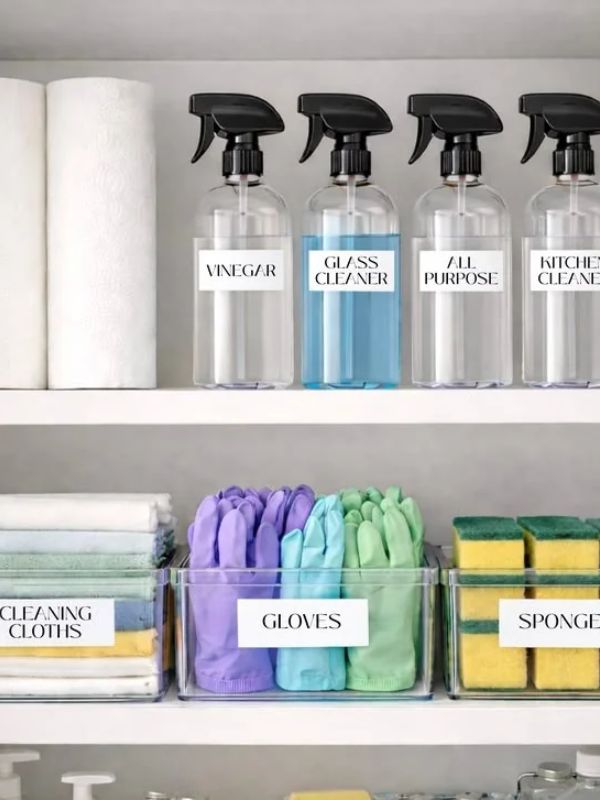
How to Create a Cleaning Supply Station
Step 1: Remove unnecessary items.
Take everything out of the cabinet and identify the products you actually use.
Separate cleaning supplies from unrelated household belongings.
Dispose of empty containers and products that are no longer usable.
Step 2: Select suitable storage containers.
Choose small bins, baskets, or plastic organizers that can accommodate your supplies.
You can use one container for dishwashing essentials and another for general cleaning accessories.
Avoid transferring chemicals into unlabelled containers. Keep cleaning products in their original packaging so that their instructions and safety information remain available.
Step 3: Add clear labels.
Labels make the cleaning station easier to maintain.
Some useful categories include:
- Dishwashing Supplies.
- Surface Cleaning.
- Cleaning Cloths.
- Gloves and Sponges.
- Extra Supplies.
Step 4: Arrange the containers.
Place the products you use regularly toward the front.
Keep heavier containers on the bottom and smaller accessories in separate bins.
Make sure all cleaning products remain upright and securely closed.
Step 5: Create a simple restocking system.
When you notice that a product is running low, add it to your shopping list.
You can also keep a small inventory of extra supplies so you know what needs replacing.
Why This Organization Idea Works
A designated cleaning station makes it easier to find products and maintain an organized cabinet.
It also helps prevent unrelated household items from taking over the space.
Important safety tip: Keep cleaning chemicals in their original containers, away from children and pets. Never combine different cleaning products, particularly bleach and ammonia-based cleaners.
Once you’ve finished organizing your home, you can add a few seasonal touches to make your space feel refreshed. Get inspired by these 10 Winter Home Decor Touches That Make Your Home Feel Warm and Inviting for a beautiful seasonal look.
6. Use Small Baskets to Organize Bathroom Essentials
Under-the-sink storage is just as important in the bathroom as it is in the kitchen.
Bathroom cabinets often contain skincare products, extra soap, hair products, cotton pads, toiletries, and other personal care essentials.
When these items are stored without a proper arrangement, the cabinet can become crowded very quickly.
Small storage baskets offer an easy way to create separate sections for different bathroom essentials.
You can choose woven baskets for a decorative appearance or plastic containers if you prefer something that is easier to clean.
The important thing is to select baskets that fit comfortably around the sink plumbing.
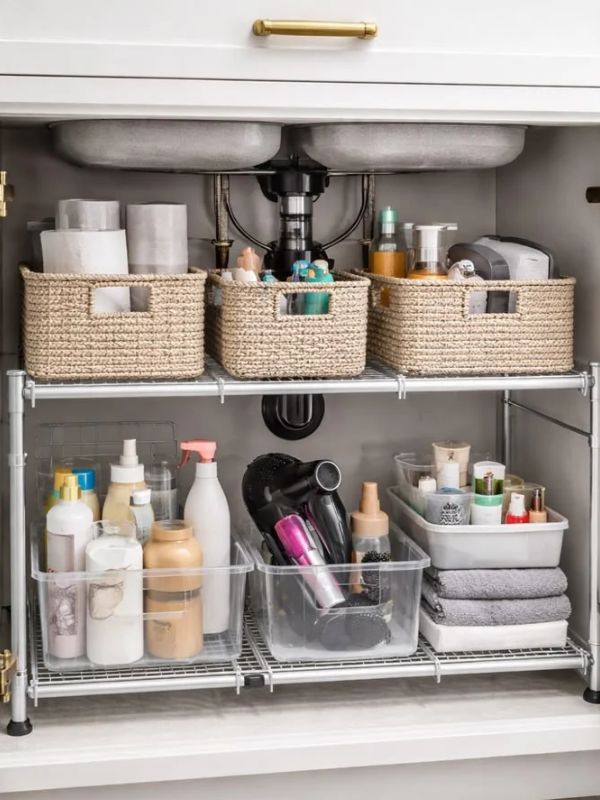
How to Organize Bathroom Essentials With Small Baskets
Step 1: Empty the bathroom cabinet.
Remove all the products and clean the cabinet thoroughly.
Check for expired skincare products, empty containers, and items you no longer use.
Step 2: Sort your bathroom essentials.
Group similar products together.
For example, you can create separate categories for:
- Hair care products.
- Skincare essentials.
- Extra soap and toiletries.
- Cotton pads and cotton buds.
- Hair accessories.
- Travel-size products.
Step 3: Choose baskets that fit your cabinet.
Measure the available space before purchasing your baskets.
Small rectangular baskets are particularly useful because they can fit neatly beside one another.
For cabinets with limited height, choose shallow baskets that allow you to see and retrieve items easily.
Step 4: Arrange the baskets.
Place each category in its own basket.
Keep frequently used items near the front and products you use occasionally toward the back.
Avoid overfilling the baskets because this can make it difficult to remove them.
Step 5: Add labels if necessary.
Labels can help you remember where everything belongs.
You could use simple descriptions such as “Hair Care,” “Skincare,” and “Extra Toiletries.”
Why This Organization Idea Works
Using separate baskets makes it easier to maintain order because every item has a designated storage area.
It also makes bathroom cleaning more convenient. You can remove a basket, wipe the cabinet, and return it without rearranging everything.
Styling tip: Woven baskets, white plastic bins, and clear acrylic containers can all look beautiful underneath a bathroom sink. Choose a style that complements your bathroom decor.
Remember to keep woven materials away from damp areas and ensure the cabinet remains dry.
When you’re short on storage space, don’t forget the area beneath your bed. These Clever Under Bed Storage Ideas Without Drawers That Actually Save Space can help you make use of an often-overlooked space in your bedroom
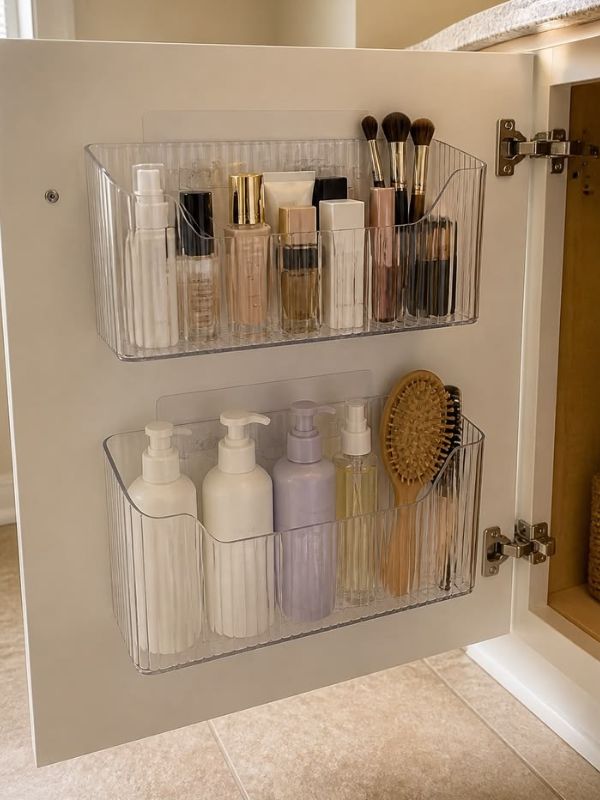
7. Add a Small Door-Mounted Organizer for Extra Storage
When organizing a small under-sink cabinet, it is easy to focus entirely on the cabinet floor and forget about the inside of the doors.
However, this is another area that can provide useful storage space.
A door-mounted organizer allows you to keep lightweight household essentials within easy reach without taking up additional room on the cabinet floor.
You can use adhesive hooks, hanging pockets, or slim organizers designed for cabinet doors.
This idea works particularly well for storing small items that you frequently need.
How to Create Door-Mounted Storage
Step 1: Check the inside of your cabinet door.
Open the cabinet and examine the available space.
Make sure there is enough room for an organizer without interfering with the plumbing or preventing the door from closing.
Step 2: Choose a suitable organizer.
There are different options depending on what you want to store.
Some useful choices include:
- Adhesive hooks.
- Small hanging baskets.
- Slim plastic organizers.
- Fabric storage pockets.
- Cabinet door racks.
Choose an organizer that is suitable for the cabinet material and the weight of the items you intend to store.
Step 3: Clean the mounting surface.
If you are using adhesive storage accessories, clean the cabinet door and allow it to dry completely.
Follow the manufacturer’s instructions before attaching the organizer.
Step 4: Arrange your essentials.
You can use small door-mounted organizers for lightweight items such as cleaning cloths, gloves, scrub pads, and small accessories.
In a bathroom, they can hold hair accessories, small toiletries, or other lightweight essentials.
Step 5: Check the cabinet door.
Close the door carefully to ensure that the organizer does not interfere with the cabinet’s normal operation.
Avoid placing heavy bottles or fragile containers in door-mounted storage.
Why This Organization Idea Works
Door-mounted storage makes use of an otherwise unused surface.
It is particularly helpful in small cabinets where every inch of space matters.
It also keeps frequently used accessories accessible without taking up room on the cabinet floor.
Styling tip: Choose a slim organizer that blends with the inside of your cabinet. A simple white or clear design can help maintain a neat appearance.
Organization and decorating can work beautifully together. If you want your home to look more inviting while keeping things in order, explore these Home Interior Ideas For Living Room for inspiration.
Additional Tips for Keeping Your Under-Sink Cabinet Organized
Once you have arranged your cabinet, a few simple habits can help you maintain the space.
Here are some practical tips worth considering.
1. Start by Removing Everything
Before purchasing storage accessories, take everything out of the cabinet.
This allows you to see exactly what you own and identify items that are taking up unnecessary space.
You may discover that you have several unopened cleaning products or toiletries that you forgot about.
Organizing becomes easier when you begin with only the items you actually need.
2. Work Around the Plumbing
Unlike ordinary kitchen or bathroom cabinets, under-sink spaces have pipes that can limit how much storage you can create.
Before purchasing organizers, carefully measure around the plumbing.
Consider adjustable or expandable organizers that can fit around pipes without interfering with them.
Never move or modify plumbing simply to accommodate a storage organizer.
3. Use Vertical Space
One of the easiest ways to maximize a small cabinet is to use the available height.
Stackable bins, two-tier organizers, and slim shelving units can help you create additional storage levels.
However, make sure your arrangement remains stable and does not interfere with the sink plumbing.
4. Keep Similar Items Together
Grouping similar products makes it easier to find things.
For example, keep dishwashing supplies together, bathroom toiletries in one section, and cleaning accessories in another.
This also makes it easier to know when you need to restock particular items.
5. Avoid Overcrowding the Cabinet
It can be tempting to fill every available space with storage containers.
However, an overcrowded cabinet can become just as difficult to manage as an unorganized one.
Leave enough room to remove bins, reach frequently used products, and clean the cabinet when necessary.
6. Check for Leaks Regularly
Because the space underneath your sink contains plumbing connections, it is important to check for leaks from time to time.
Look for dampness, water stains, unusual smells, or signs of moisture.
If you notice a leak, address the plumbing issue before returning your storage items.
Using waterproof trays beneath cleaning products can also help contain small spills, although they should never be treated as a substitute for fixing a leak.
7. Organize According to Your Daily Routine
The most practical storage arrangement is one that works with how you use your home.
If you wash dishes frequently, keep dishwashing essentials near the front.
If you use particular bathroom products every morning, place them in an accessible basket.
An organization system becomes easier to maintain when everyday items are convenient to reach.
You Can Explore these How to Style a Bar Cart If You Don’t Drink: 10 Beautiful Ideas
Frequently Asked Questions About Under the Sink Organization
1. How do I organize a small cabinet underneath the kitchen sink?
Start by removing everything and measuring the available space around the plumbing. Use stackable bins, two-tier sliding organizers, and small baskets to group similar items together. Keep frequently used cleaning products near the front and avoid overcrowding the cabinet.
2. What is the best organizer to use underneath a sink?
Two-tier sliding organizers are among the most practical choices because they create additional storage levels and make products easier to access. However, the best option depends on your cabinet dimensions, plumbing arrangement, and storage needs.
3. How can I organize under the sink without spending too much money?
You can reuse small household containers, baskets, and sturdy storage boxes. You can also introduce inexpensive tension rods, adhesive hooks, and simple plastic bins to make better use of the available space.
4. How do I organize cleaning supplies underneath the kitchen sink?
Group cleaning supplies according to their purpose. Keep dishwashing products together, place sponges and cloths in separate containers, and arrange cleaning bottles upright in a suitable bin or organizer. Always keep products in their original labelled containers.
5. How can I organize under a bathroom sink with pipes?
Choose organizers with adjustable shelves, open backs, or compact designs that can fit around the plumbing. Small baskets and stackable containers are also useful because they can be arranged in the spaces available on either side of the pipes.
6. How do I keep my under-sink cabinet from becoming messy again?
Give each item a designated place and return it after use. Remove empty containers regularly, check your supplies, and spend a few minutes each month reorganizing the cabinet.
Final Thoughts On Under the Sink Organization
Organizing the space underneath your kitchen or bathroom sink may seem like a small home improvement project, but it can make everyday routines much easier.
With the right storage accessories, you can transform an overcrowded cabinet into a neat space where everything has its own place. From two-tier sliding organizers and stackable bins to tension rods and door-mounted storage, there are several ways to make better use of the available space.
You also do not need to try all seven ideas at once. Start with the area that gives you the most trouble and introduce one or two storage solutions that suit your cabinet.
Remember that a good organization system should make your everyday life easier, not create more work. Choose practical containers, keep frequently used products accessible, and leave enough room to move things around comfortably.
With a little planning and consistency, even the smallest under-sink cabinet can become a useful and well-organized part of your home.
Which of these under-the-sink organization ideas would you love to try first?