10 Fine Motor Skills Activities for Preschoolers That Make Learning Fun and Creative.
Preschoolers learn so much through the little things they do every day. Picking up objects, turning pages, squeezing playdough, holding crayons, and putting small pieces together may look like simple activities, but they all help children develop important skills.
One area of development that deserves attention during the preschool years is fine motor development. Fine motor skills involve using the small muscles in the hands and fingers to perform different tasks. Children rely on these skills when drawing, writing, buttoning their clothes, using utensils, and completing everyday activities independently.
The good news is that helping preschoolers develop these skills does not require expensive toys or complicated learning materials. Many enjoyable activities can be created using simple household supplies, craft materials, and items you may already have at home.
If you are looking for creative ways to support your child’s development, these 10 fine motor skills activities for preschoolers offer a lovely starting point. Each activity encourages children to explore, practise hand movements, and learn through play.
Also If you are looking for more ways to keep little ones engaged in creative play, explore these DIY Projects Adults Can Finish in a Day: 10 Simple Ideas To Recreate for additional inspiration.
Why Are Fine Motor Skills Important for Preschoolers?
Fine motor skills play an important role in a child’s early development. They help children gain better control over their hands and fingers, making everyday tasks easier as they grow.
During the preschool years, children begin developing the coordination needed for activities such as holding pencils, using scissors, drawing shapes, fastening clothing, and handling small objects.
Here are some important reasons to encourage fine motor development:
1. They prepare children for early writing. Holding crayons, making lines, drawing circles, and controlling pencil movements help children develop the hand control needed for future writing activities.
2. They encourage independence. Everyday tasks such as using a spoon, opening containers, putting on shoes, and fastening buttons require hand and finger coordination.
3. They develop hand-eye coordination. Activities that involve picking up, placing, threading, or arranging objects encourage children to coordinate what they see with how their hands move.
4. They strengthen hand muscles. Squeezing, pinching, pressing, and manipulating different materials help children practise the small muscle movements used in everyday tasks.
5. They encourage concentration and problem-solving. Completing a simple activity often requires children to pay attention, make decisions, and work through small challenges.
Children develop at different rates, so there is no need to rush them through these activities. The goal is to provide enjoyable opportunities to practise and explore.
10 Fine Motor Skills Activities for Preschoolers
These activities are designed to make learning enjoyable while giving preschoolers opportunities to use their hands and fingers in different ways. Most require inexpensive materials, and you can adjust the difficulty to suit your child’s age and abilities.
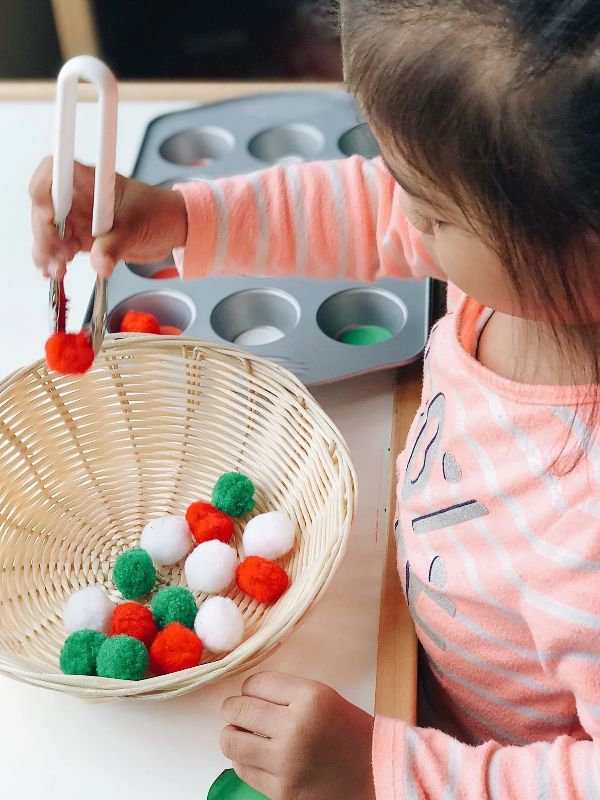
1. Pom-Pom Sorting with Tweezers
Pom-pom sorting is a colourful activity that encourages preschoolers to pick up, move, and organise small objects. It is a simple way to introduce children to sorting while helping them practise controlled finger movements.
Materials Needed:
- Large craft pom-poms
- Child-safe plastic tweezers or kitchen tongs
- Small bowls or containers
- A muffin tray (optional)
How to Set It Up:
Place different coloured pom-poms in one large bowl. Arrange several empty bowls or sections of a muffin tray nearby. Ask your child to use the tweezers to pick up the pom-poms and place them into containers according to their colours.
For example, all the red pom-poms can go into one bowl, while the blue ones go into another. You can begin with just two colours and introduce more as your child becomes comfortable with the activity.
Skills This Activity Develops:
- Finger control
- Hand-eye coordination
- Pincer grasp
- Colour recognition
- Sorting and categorisation
Make It More Interesting: Turn the activity into a colour-matching challenge. Call out a colour and encourage your child to find the matching pom-pom and transfer it to the correct container.
For younger preschoolers, use larger pom-poms and let them pick up the objects with their fingers before introducing tweezers.
Amazon Products to buy for this Crafts
- Learning Resources Helping Hands Fine Motor Tool Set
- Colourful Craft Pom-Poms Assortment
- Play-Doh Modeling Compound Starter Set
- Play-Doh Shape and Learn Tools
- Melissa & Doug Primary Lacing Beads
- Melissa & Doug Wooden Bead Set
- Melissa & Doug Reusable Sticker Pad
- Large Foam Craft Stickers for Kids
- Colourful Plastic Clothespins for Crafts
- Learning Resources Measuring Scoops Set
- Crayola Construction Paper
- Elmer’s Washable School Glue
- Learning Resources Primary Science Jumbo Eyedroppers
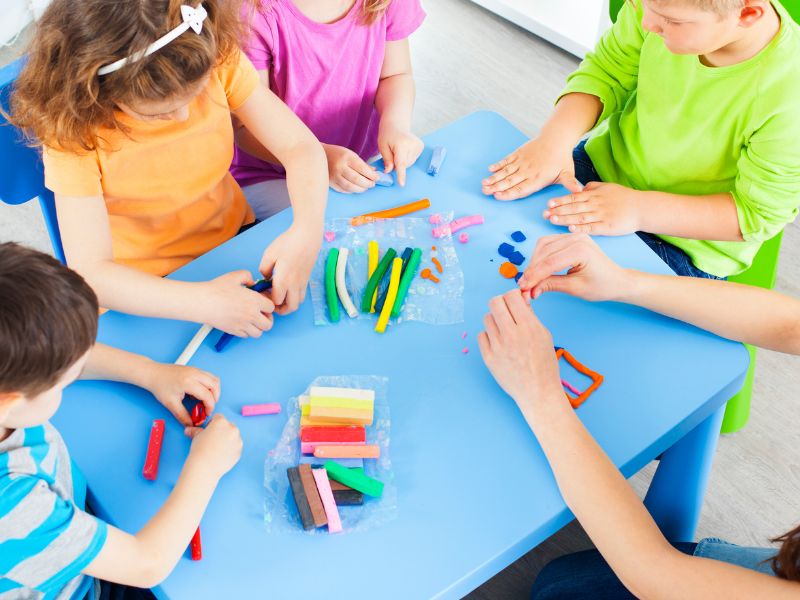
2. Playdough Shape Making
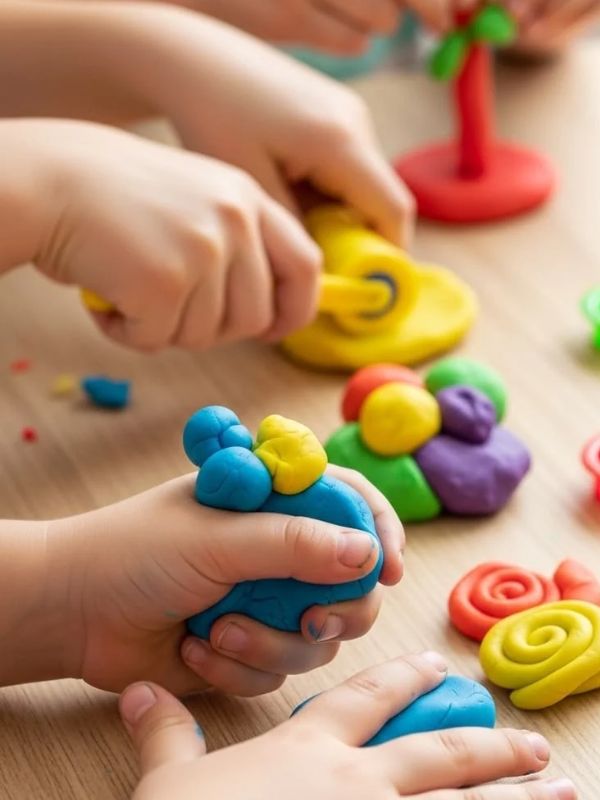
Playdough is one of the most versatile materials for preschool learning. Children can squeeze, roll, flatten, pinch, and mould it into different shapes. These movements give their fingers plenty of opportunities to practise strength and control.
You can use homemade or store-bought playdough, depending on what is available.
Materials Needed:
- Child-safe playdough
- A plastic rolling pin
- Large cookie cutters
- Playdough modelling tools
- A clean work surface
How to Set It Up:
Give your child a small amount of playdough and encourage them to explore it with their hands. Show them how to roll it into long shapes, flatten it with their palms, and pinch off smaller pieces.
Next, introduce cookie cutters and ask them to create simple shapes such as circles, stars, hearts, and squares.
You can also encourage them to make pretend food, animals, flowers, or little houses. Allowing children to choose what they create makes the activity more engaging.
Skills This Activity Develops:
- Finger and hand strength
- Bilateral coordination (using both hands together)
- Hand control
- Creativity and imagination
- Shape recognition
Make It More Interesting: Give your child a simple theme. They could make a pretend birthday cake, a garden filled with flowers, or different fruits using playdough.
For an extra learning opportunity, ask them to count the shapes they create or identify their colours.
If your child enjoys creating things with different materials, you can also explore these 9 Simple Clay Ideas You Won’t Believe Are So Easy to Make for more creative inspiration.
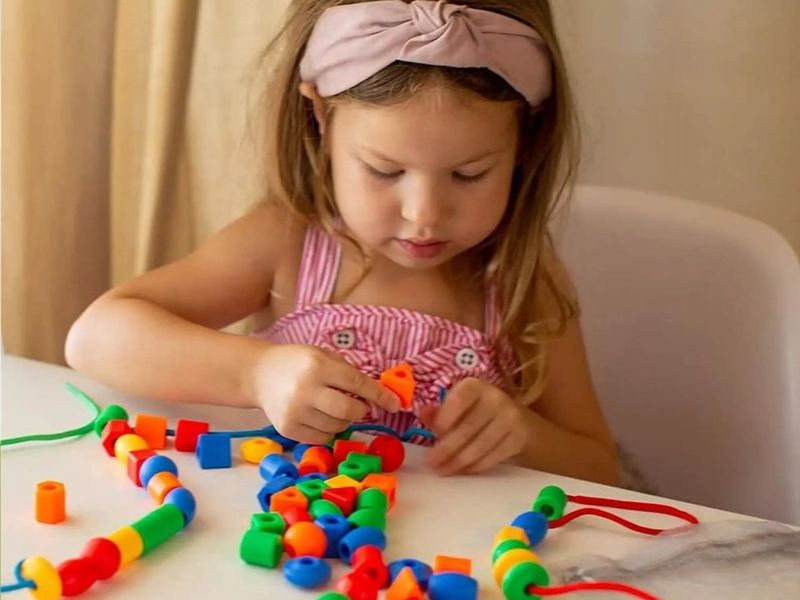
3. Bead Threading Activities
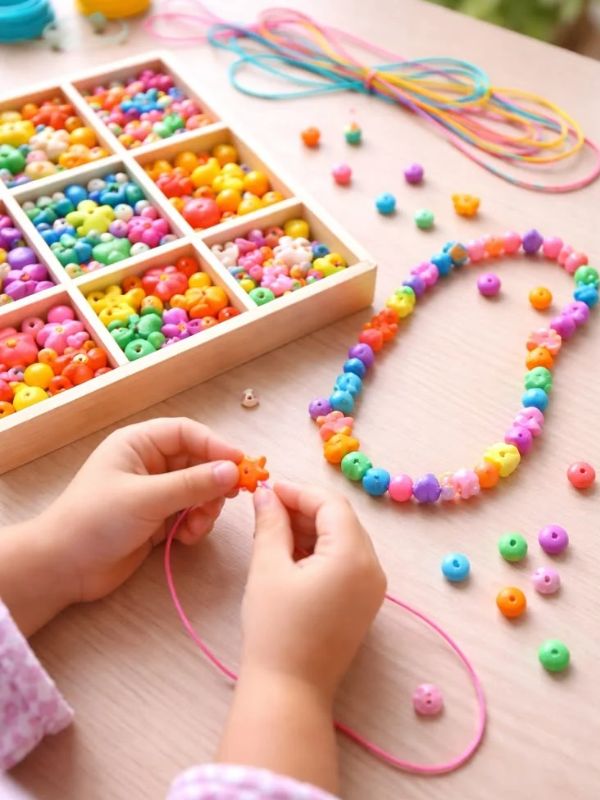
Threading beads onto a string is a useful activity for helping preschoolers practise controlled hand movements. It requires children to hold a bead, find its opening, and guide a string through it.
The activity can also introduce patterns, colours, and counting.
Materials Needed:
- Large, age-appropriate threading beads
- Thick shoelaces or a suitable threading cord
- A shallow tray
- A small container for the beads
How to Set It Up:
Place a selection of large beads on a tray and give your child a thick lace or threading cord. Demonstrate how to hold a bead with one hand while guiding the cord through its opening with the other.
Start with a few beads and allow your child to work at their own pace. Once they understand the process, encourage them to create a colourful pattern.
For example, they could thread one red bead followed by one yellow bead, then repeat the sequence.
Skills This Activity Develops:
- Hand-eye coordination
- Finger dexterity
- Bilateral coordination
- Pattern recognition
- Concentration
Make It More Interesting: Invite your child to create a necklace or bracelet using a simple colour pattern. They can also count the beads as they add them.
Safety Note: Beads can present a choking hazard. Use large, age-appropriate materials only, supervise children closely, and avoid this activity with children who still put objects in their mouths.
For more handmade creations that encourage creativity, take a look at these Simple DIY Bag Charms to Make at Home: Cute Ideas for Your Handbag for colourful craft inspiration..
4. Sticker Peeling and Sticking
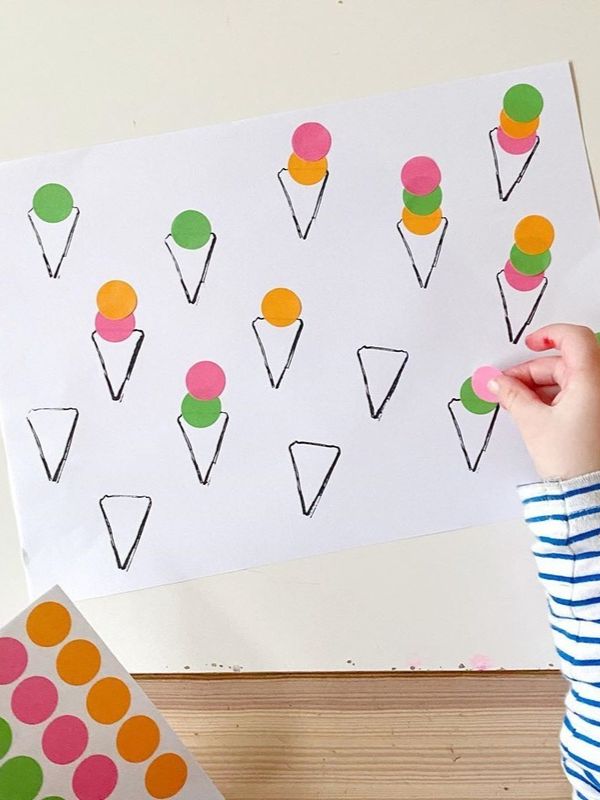
Sticker activities are a wonderful way to encourage preschoolers to practise using their fingertips. Peeling a sticker away from its backing requires small, controlled movements, while placing it on paper encourages hand-eye coordination.
This activity is also easy to prepare and can be adapted to different learning themes.
Materials Needed:
- Large stickers
- Coloured paper or plain drawing sheets
- A pencil or crayon
- A flat working surface
How to Set It Up:
Give your child a sheet of large stickers and a piece of paper. Encourage them to peel each sticker carefully and place it wherever they like.
You can make the activity more structured by drawing simple shapes on the paper. Ask your child to place a sticker inside each circle, beside a particular object, or along a drawn line.
For example, draw a simple tree and let your child decorate it with colourful stickers as pretend leaves.
Skills This Activity Develops:
- Fingertip control
- Pincer grasp
- Hand-eye coordination
- Visual attention
- Creativity
Make It More Interesting: Create a sticker picture together. Your child could decorate a flower garden, make a colourful underwater scene, or design a pretend birthday card.
Choose larger stickers that are easy for little hands to peel. If a sticker is difficult to lift, loosen one corner to help your child get started.
For another fun creative activity, you can introduce your child to these Apple Crafts for Preschoolers That Are So Easy, Kids Can Make Them Almost by Themselves , which are perfect for little hands and imaginative play.
5. Clothespin Colour Matching
Clothespin activities give preschoolers an opportunity to practise opening and closing their fingers against resistance. This simple movement helps them work on hand strength and control.
For this activity, you can introduce colours to make the experience more engaging.
Materials Needed:
- Large, child-safe plastic clothespins
- Coloured cardboard circles or cards
- A small basket or container
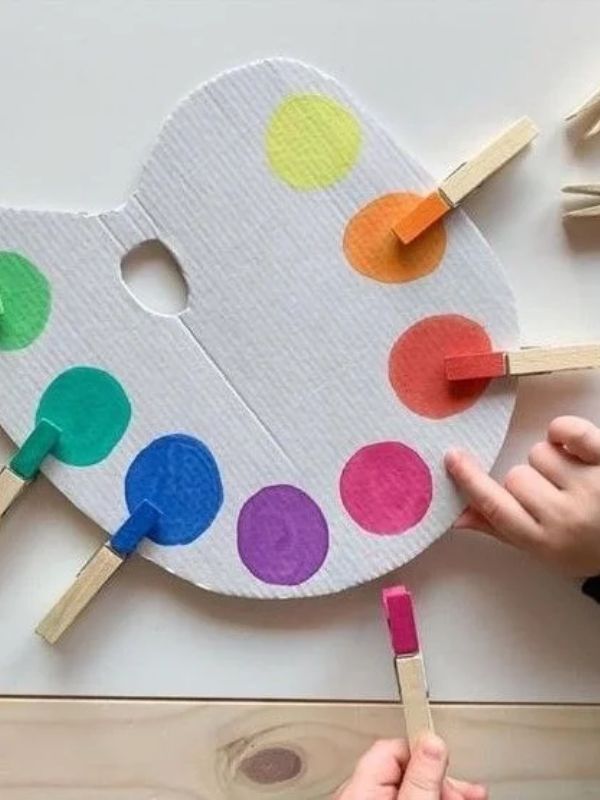
How to Set It Up:
Prepare several coloured cards and matching clothespins. Show your child how to squeeze the clothespin open and attach it to the edge of the matching card.
For example, a red clothespin should be attached to the red card, while a blue one belongs on the blue card.
Start with a small number of colours so your child can understand the matching process. As they become more comfortable, introduce additional colours.
Skills This Activity Develops:
- Finger strength
- Hand control
- Pincer movement
- Colour recognition
- Hand-eye coordination
Make It More Interesting: Turn the activity into a pretend animal game. Use a paper plate to create a simple sunshine picture, then let your child attach clothespins around the edge to represent the sun’s rays.
Use clothespins designed for children, avoid sharp or damaged clips, and supervise the activity to prevent pinching.
For another fun creative activity, you can introduce your child to these Apple Crafts for Preschoolers That Are So Easy, Kids Can Make Them Almost by Themselves , which are perfect for little hands and imaginative play.
6. Cotton Ball Transfer with a Spoon
This activity encourages preschoolers to practise picking up and transferring objects while controlling their hand movements. It is particularly useful for introducing simple coordination challenges.
You only need a few household materials to prepare it.
Materials Needed:
- Large cotton balls
- Two small bowls
- A child-sized spoon
- A tray
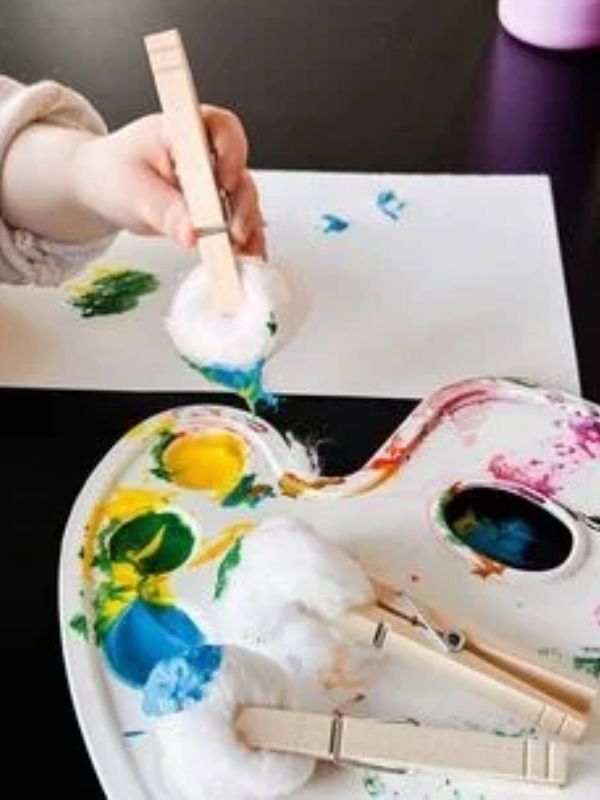
How to Set It Up:
Place several cotton balls in one bowl and leave the second bowl empty. Give your child a spoon and ask them to transfer the cotton balls from the first bowl into the second.
Encourage them to move slowly so the cotton balls do not fall off the spoon.
Once they become comfortable, you can introduce a slightly more challenging version by placing the bowls farther apart.
Skills This Activity Develops:
- Hand-eye coordination
- Wrist control
- Grip development
- Concentration
- Controlled movements
Make It More Interesting: Use cotton balls in different colours and ask your child to transfer only a particular colour at a time.
You can also introduce counting by asking them to move five cotton balls into the empty bowl.
For younger preschoolers, use their fingers instead of a spoon first, then introduce the spoon when they are ready.
If your child enjoys exploring different textures and materials, these 10 Easy Zoo Animal Crafts for Preschoolers That Spark Creativity offer another enjoyable hands-on creative experience.
7. Paper Tearing and Collage Making
Paper tearing is an enjoyable craft activity that allows preschoolers to explore textures, colours, and creative expression.
The movement of holding paper with both hands and pulling it apart encourages children to practise using their fingers and coordinating both hands.
Materials Needed:
- Coloured construction paper
- Plain cardboard or drawing paper
- Child-safe glue
- A shallow tray for paper pieces
- Crayons or markers
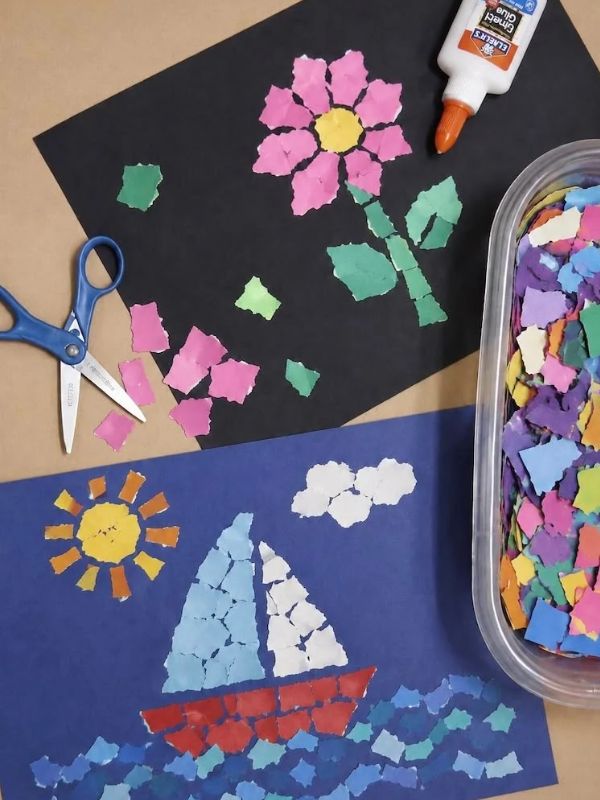
How to Set It Up:
Give your child a few sheets of coloured paper and demonstrate how to tear them into smaller pieces using both hands.
The pieces do not need to be perfect. Allow your child to create different sizes and shapes.
Next, draw a simple picture on a larger sheet of paper, such as a tree, flower, fish, or house. Encourage your child to apply glue to sections of the picture and place the torn paper pieces on top.
They can use green paper for leaves, blue paper for water, or different colours to decorate a house.
Skills This Activity Develops:
- Finger strength
- Bilateral coordination
- Hand control
- Creativity
- Visual recognition
Make It More Interesting: Choose a theme for each collage. One day, your child can create a colourful garden, and another day, they can make a paper rainbow or an underwater scene.
Allow them to select the colours and arrange the pieces themselves. The finished artwork does not need to look perfect. The process of creating it is what makes the activity valuable.
For more paper-based creativity, explore these 12 Paper Snowflake Crafts for Kids of All Ages for additional ideas that encourage cutting, arranging, and decorating.
8. Water Transfer with Droppers
Water transfer is a hands-on activity that allows preschoolers to practise squeezing and releasing a dropper. It is a fun way to introduce controlled finger movements while exploring simple science concepts.
Children often enjoy watching water move from one container to another, making this activity particularly engaging.
Materials Needed:
- A child-safe plastic dropper
- Two or three small, shallow containers
- Water
- A tray
- A towel for spills
- Washable food colouring (optional)
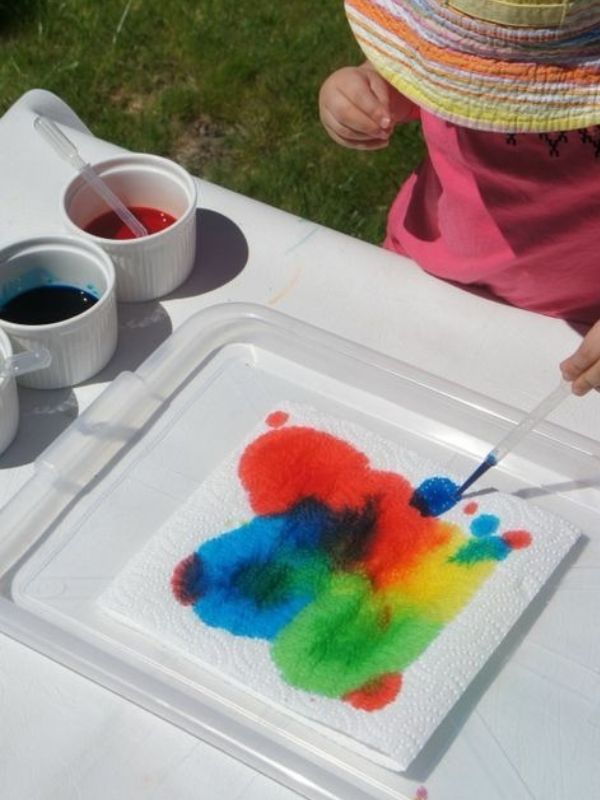
How to Set It Up:
Place a small amount of water in one container and leave another container empty.
Show your child how to squeeze the dropper, place its tip into the water, and slowly release the pressure to draw water inside.
Next, ask them to squeeze the dropper again to release the water into the empty container.
Repeat the process until they have transferred most of the water.
If you want to make the activity more colourful, add a small amount of washable food colouring to the water.
Skills This Activity Develops:
- Finger strength
- Finger isolation
- Hand-eye coordination
- Concentration
- Understanding cause and effect
Make It More Interesting: Place two containers of differently coloured water on the tray and let your child transfer small amounts into a third container. They can observe what happens when the colours mix.
Use only a small amount of water, supervise the activity closely, and never leave a young child unattended around water.
You can introduce your child to more Penguin-based creative experiences with these 6 Adorable Penguin Crafts for Preschoolers That Are Simply Too Cute
9. Pasta Necklace Making
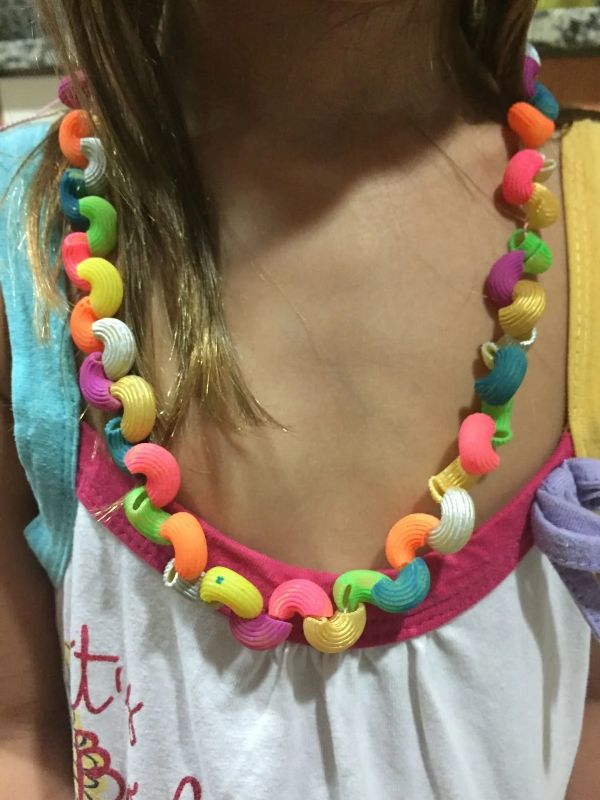
Pasta threading is another creative way to help preschoolers practise hand control and coordination. It is similar to bead threading but uses dry pasta shapes with suitable openings.
It also gives children an opportunity to create something they can proudly show to family members.
Materials Needed:
- Large dry pasta shapes with holes
- Thick string or a suitable threading cord
- A shallow tray
- Washable paint (optional)
How to Set It Up:
Choose large pasta shapes with openings that are easy to thread. Place them in a tray and give your child a thick cord.
Demonstrate how to hold one pasta piece and guide the cord through its opening. Encourage your child to repeat the process until they have created a short pasta chain.
For an extra creative touch, you can prepare painted pasta in different colours before the activity. Make sure the paint is completely dry and suitable for children’s crafts before use.
Skills This Activity Develops:
- Finger coordination
- Hand-eye coordination
- Bilateral hand use
- Pattern recognition
- Creative thinking
Make It More Interesting: Encourage your child to arrange the pasta pieces in a pattern, such as two large pieces followed by one small piece.
They can also count each piece as they add it to the string.
Safety Note: Dry pasta pieces can present a choking hazard, and children should not put them in their mouths. Use large pieces, supervise closely, and choose another activity if your child still mouths small objects.
If your child enjoys making little handmade accessories, these How to Make DIY Bag Charms at Home for Beginners are another creative project worth exploring.
10. Button Sorting Activities
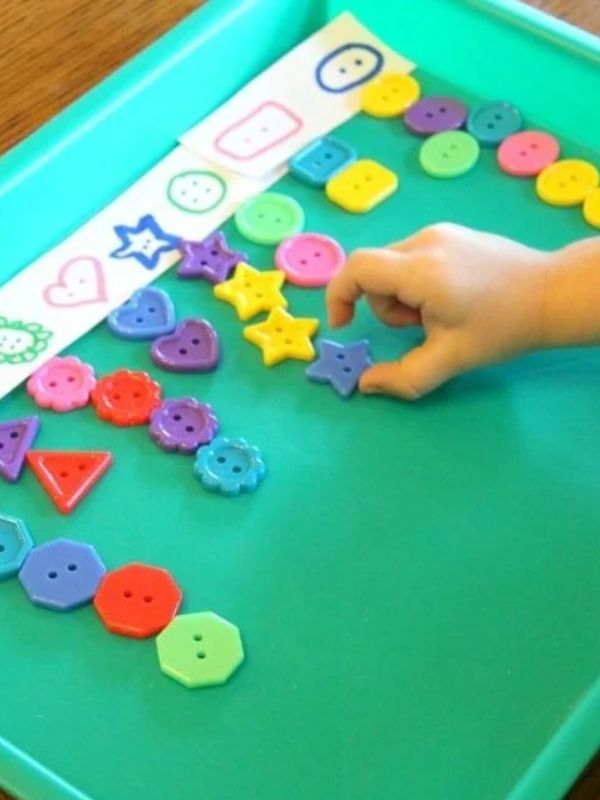
Button sorting gives preschoolers an opportunity to pick up, arrange, and organise objects according to their colours, sizes, or shapes.
It is a simple activity that can be adapted to introduce early maths concepts while encouraging controlled finger movements.
Materials Needed:
- Large, child-safe sorting counters or oversized craft buttons
- Small bowls or sorting trays
- Coloured paper
- A shallow container
How to Set It Up:
Place a selection of large sorting objects in a container. Provide two or three empty bowls and ask your child to arrange the objects according to their colours.
For example, red objects can go into one bowl, yellow objects into another, and blue objects into a third.
You can also introduce sorting by size. Ask your child to place the larger objects in one container and the smaller ones in another.
Skills This Activity Develops:
- Finger control
- Pincer grasp
- Visual discrimination
- Sorting and categorisation
- Early maths skills
Make It More Interesting: Create a simple counting game by asking your child to place five objects in one bowl and three in another. You can also ask them to identify which group has more or fewer objects.
Safety Note: Ordinary buttons are often small enough to be choking hazards. For preschoolers, use oversized sorting counters or large, age-appropriate objects under close supervision. Avoid small buttons, particularly for children who still put objects in their mouths.
For another activity that introduces children to creative materials and hands-on learning, explore these 10 Simple Christmas Crafts for Kids That Are Fun and Simple to Make
Tips for Making Fine Motor Activities More Enjoyable
Children are more likely to enjoy learning when activities feel playful rather than like tasks they must complete perfectly. You can make fine motor practice a natural part of their daily routine with a few simple adjustments.
Start with activities your child enjoys. If your child loves drawing, introduce crayons and stickers. If they enjoy building things, try playdough or large construction pieces. Starting with familiar interests can make participation easier.
Keep activities short and flexible. Preschoolers have different attention spans. Some may spend several minutes threading pasta, while others may prefer to move on quickly. Allow them to explore without forcing them to finish.
Offer different materials. Using playdough, paper, water, large sorting objects, and craft supplies gives children opportunities to practise different hand movements.
Encourage independence. Demonstrate an activity first, then allow your child to try it independently. Offer help when necessary, but give them enough time to explore the process.
Praise their effort. Instead of focusing only on the finished result, acknowledge the effort they put into the activity. You could say, “You worked hard to get that bead through the string!”
Make learning part of everyday life. Activities such as stirring batter with supervision, turning book pages, arranging large toys, and helping to fold small towels can also encourage hand coordination.
How Often Should Preschoolers Practise Fine Motor Activities?
There is no need to set aside several hours for fine motor practice. Short, enjoyable activities incorporated into a child’s daily routine can provide valuable opportunities to develop these skills.
You can introduce one activity each day or allow your child to choose from a small selection of activities throughout the week.
For example:
| Day | Activity |
|---|---|
| Monday | Playdough shape making |
| Tuesday | Pom-pom sorting |
| Wednesday | Paper tearing and collage |
| Thursday | Sticker peeling and sticking |
| Friday | Cotton ball transfer |
You can repeat activities your child particularly enjoys while introducing new ones gradually.
Remember that children do not need to master every activity immediately. Some may find threading difficult at first but become more comfortable after repeated opportunities to practise.
Frequently Asked Questions About Fine Motor Skills Activities for Preschoolers?
1. What are fine motor skills activities for preschoolers?
Fine motor skills activities are play-based tasks that encourage children to use the small muscles in their hands and fingers. Examples include playdough modelling, sticker activities, sorting objects, threading large beads, and tearing paper.
2. At what age should children start practising fine motor skills?
Children begin developing fine motor skills during infancy, and these abilities continue to develop throughout childhood. Preschoolers can participate in age-appropriate activities that encourage grasping, squeezing, drawing, sorting, and manipulating objects.
3. How can I improve my preschooler’s fine motor skills Activities at home?
You can encourage fine motor development at home through simple activities such as playing with playdough, using large crayons, transferring cotton balls, peeling stickers, and building with age-appropriate toys. Everyday tasks such as turning pages and helping with simple household activities can also provide practice.
4. Are fine motor skills activities important before children start writing?
Yes. Fine motor activities help children practise hand strength, finger control, and coordination, which are useful for early writing. However, preschoolers do not need to master handwriting before they begin school. Drawing, scribbling, colouring, and playing with different materials are valuable ways to prepare their hands.
5. What household items can I use for fine motor skills activities?
You can use items such as paper, large cotton balls, playdough, plastic containers, large clothespins, child-safe droppers, and chunky crayons. Always consider your child’s age and abilities before selecting materials, particularly items that could present a choking hazard.
6. Can fine motor activities help with handwriting?
Fine motor activities can support the hand control and coordination needed for handwriting. Activities involving squeezing, pinching, drawing, and manipulating materials give children opportunities to practise movements that are useful when they begin writing.
Conclusion On Fine Motor Skills Activities For Preschoolers.
Fine motor development is an important part of early childhood learning, and it can be encouraged through simple activities that children genuinely enjoy.
From sorting colourful pom-poms to creating playdough shapes and making paper collages, each activity gives preschoolers an opportunity to explore, practise hand movements, and develop useful everyday skills.
You do not need expensive educational materials to create meaningful learning experiences. A few household supplies, some creativity, and time to explore can turn an ordinary afternoon into an enjoyable learning opportunity.
Most importantly, allow your child to learn at their own pace. Celebrate their attempts, encourage curiosity, and make room for plenty of playful exploration. Those little moments of practice can help build skills they will continue using as they grow.
A small safety reminder for this Fine Motor Skills Activities article: Since some activities involve beads, pasta, pom-poms, and other small objects, keep the age recommendations and adult-supervision notes in the article. Choose larger alternatives for children who still put objects in their mouths.