
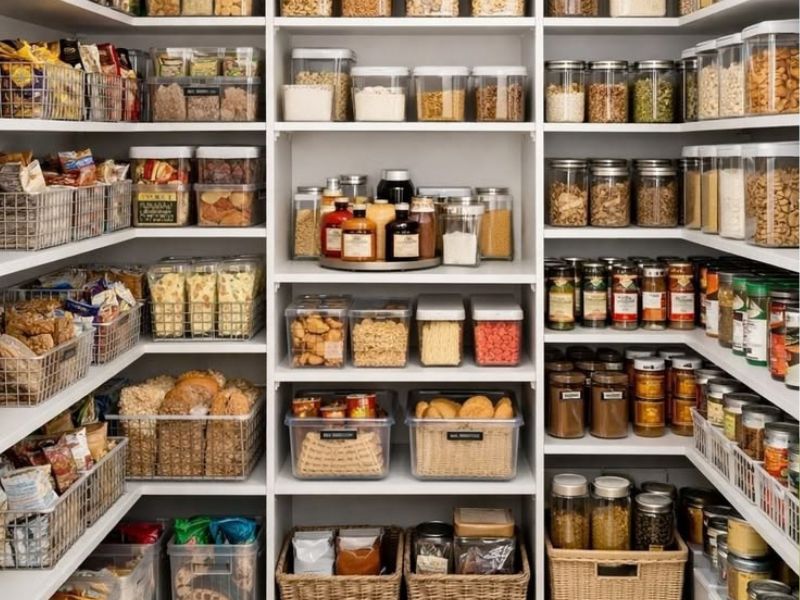
A pantry Organization system helps stop clutter before it starts when food packages, cans, bags, and kitchen supplies are all competing for the same shelves. Before long, you may find yourself moving three things just to reach the one item you actually need.
I’ve found that good pantry organization is less about having a huge pantry and more about making the space you already have work better. A few thoughtful changes can make shelves easier to use, give small items a proper home, and make it much easier to see what you already have.
In this guide, I’m sharing genius pantry organization ideas that can help you save room, control clutter, and create a pantry that feels much easier to use every day. You May Find this Post useful, Small Kitchen Makeover Ideas Ideas on A Budget
Start by Taking Everything Out
Before buying baskets or rearranging shelves, start with a clean slate.
Take everything out of the pantry and place the food on a table, countertop, or another clean surface. This gives you the opportunity to see exactly what you have instead of trying to organize everything while it is still packed onto the shelves.
As you remove things, group similar items together. Put canned foods in one area, snacks in another, baking ingredients together, breakfast foods together, and so on.

You may be surprised by how many duplicates you find.
It is very easy to buy another packet of pasta or another box of cereal when the original one has been pushed behind other food. Seeing everything at once makes those duplicates obvious.
This is also the right time to check expiration dates, damaged packages, opened foods, and anything you know your household is no longer going to use.
Once the unnecessary items are gone, you can organize the things you actually need.
Want to make your pantry shelves look as beautiful as they are organized? check out my guide on Styling Kitchen shelves Ideas for more inspiration.
Think About How You Use Your Pantry
One of the biggest mistakes people make when organizing a pantry is arranging everything according to how it looks instead of how they actually use it.
A beautiful pantry can still be frustrating if you have to reach behind five containers every morning to get your breakfast cereal.

Before putting things back, think about what you reach for most often.
If you use rice, pasta, cereal, snacks, or cooking ingredients every day, those foods should be easy to reach. Items you only use occasionally can go higher up or toward the back.
I like the idea of organizing a pantry around your routine. Your pantry should make your everyday life easier, not create another system that you have to work around.
If you love the idea of keeping your home organized while still making it look beautiful, you may also enjoy these Coffee Table Decor Ideas for a small living room for creating a stylish and welcoming living room.
Make Better Use of Vertical Space
One of the easiest ways to save room in a pantry is to look upward.
Many pantry shelves have plenty of unused space between the top of the food and the shelf above it. Instead of allowing that space to remain empty, you can create another level of storage.
Shelf risers are particularly useful for cans, jars, and smaller packages. They allow you to place food on different levels so you can see what is behind the front row.
For example, instead of stacking several cans directly on top of each other, a shelf riser can create a raised back section. You can then see the labels more easily without pulling everything forward.
This works especially well when you have tall shelves but relatively short pantry items.
You can also use stackable storage bins or sturdy organizers to create additional levels.
The important thing is to measure your shelves first. Buying organizers without checking the available height and width can leave you with storage pieces that take up more space than they create.
Use the Pantry Door
The pantry door is one of those areas that is often forgotten.
If your pantry has a solid door, you may be able to turn the inside into useful storage with an over-the-door organizer or mounted shelves.
This space can be useful for smaller and lighter items that tend to create clutter on the main shelves.
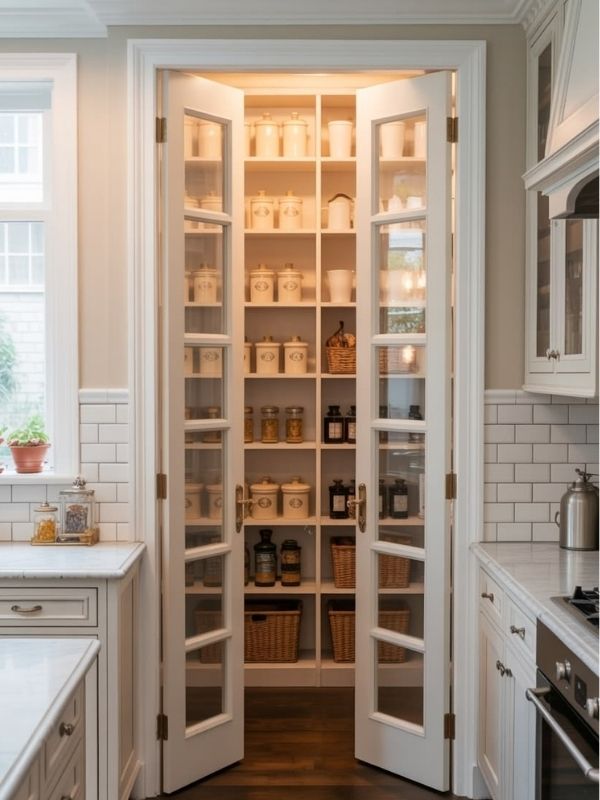
You could use it for spices, sauce packets, small snacks, tea bags, baking accessories, food wraps, and small bottles.
The door is especially useful because it gives you additional storage without taking away much shelf space.
Just remember that the weight needs to be appropriate for the door and organizer. Loading the door with heavy jars and bottles can make it difficult to open and close properly.
A beautiful home is in the little details too. If you’re looking for simple and fun ways to dress up your dining table using natural elements, you might also enjoy these Fun Natural Table Setting Ideas. They’re perfect for adding a relaxed, inviting touch to everyday meals or special gatherings.
Give Every Category Its Own Zone
A pantry becomes much easier to maintain when similar items stay together.
Instead of putting food wherever you happen to find an empty space, create simple zones.
You might have a breakfast section, baking section, snack section, canned food section, pasta and grains section, and cooking ingredients section.
The categories don’t need to be complicated.
For example, keeping cereal boxes together means you don’t have to search the entire pantry when you need cereal. Keeping baking ingredients together means flour, sugar, baking powder, chocolate chips, and similar ingredients can be found in one area.
The goal isn’t perfection. The goal is making your pantry predictable.
Once you know where something belongs, putting groceries away becomes much easier.
Your pantry may be the heart of your kitchen, but the entryway is one of the first spaces people notice when they walk into your home. If you’re looking for simple ways to make your entryway feel welcoming, organized, and stylish, take a look at these Modern Entryway Wall Decor Ideas for inspiration.
Use Baskets to Control Loose Items
Small packets and loose food items are some of the easiest things to lose control of.
Think about snack packs, seasoning packets, small bags of nuts, drink mixes, or individually wrapped foods. If these items are placed directly on a shelf, they can spread across the entire area.
A basket can give them a defined boundary.

Instead of several small packets covering half a shelf, you can place them inside one basket and pull the basket forward when you need something.
Baskets are also helpful because they allow you to group foods without having to transfer every item into a container.
I wouldn’t use baskets for everything. Too many baskets can actually make a pantry harder to use. Choose them for categories that tend to become messy.
If you’re working with limited space and want your room to feel comfortable, stylish, and less crowded, check out these Small Space Decorating Ideas for simple ways to make a small space feel more inviting.
Make Deep Shelves Easier to Reach
Deep shelves can look spacious but become frustrating very quickly.
The problem is that food placed at the back can disappear from view. You may forget about it until you discover it months later.
One useful solution is to use pull-out bins.
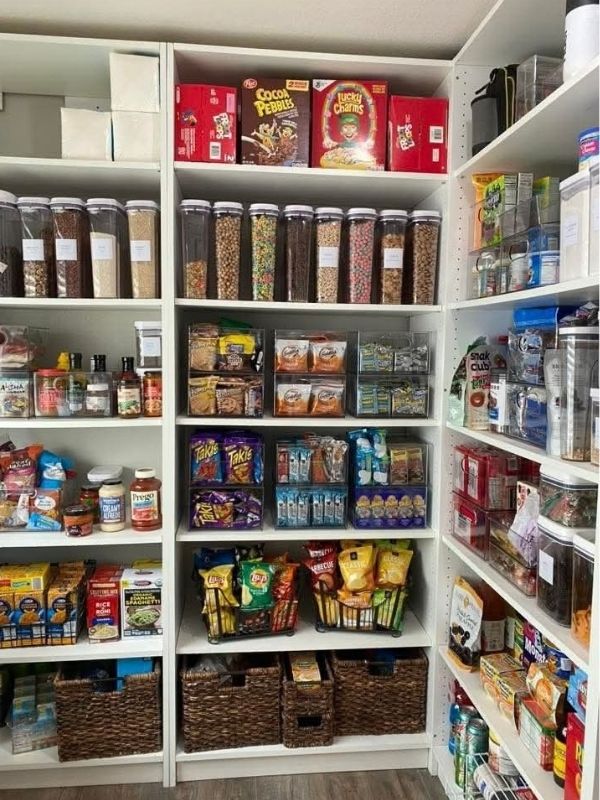
Instead of reaching deep into the pantry, you can pull the entire basket forward and see what is inside.
Clear bins can be particularly useful because you can see the contents without removing everything.
Another simple approach is to avoid putting small items at the back of deep shelves. Place taller items toward the back and shorter items toward the front so you can still see what you have.
The key is to make sure the back of the shelf remains accessible.
If you enjoy adding faith-inspired touches to your home, take a look at these 12 DIY Bible Verse Home Decor Ideas That Bring Scripture To Life for simple and meaningful ways to bring Scripture into your everyday space.
Store Food in Containers Strategically
Clear pantry containers can make a huge difference, but you don’t need to transfer every single food item into one.
Containers are especially useful for foods that come in awkward bags or packages.
Rice, pasta, cereal, flour, sugar, oats, beans, and similar dry foods can be easier to stack and organize in containers.
The uniform shape can also help you use shelf space more efficiently.
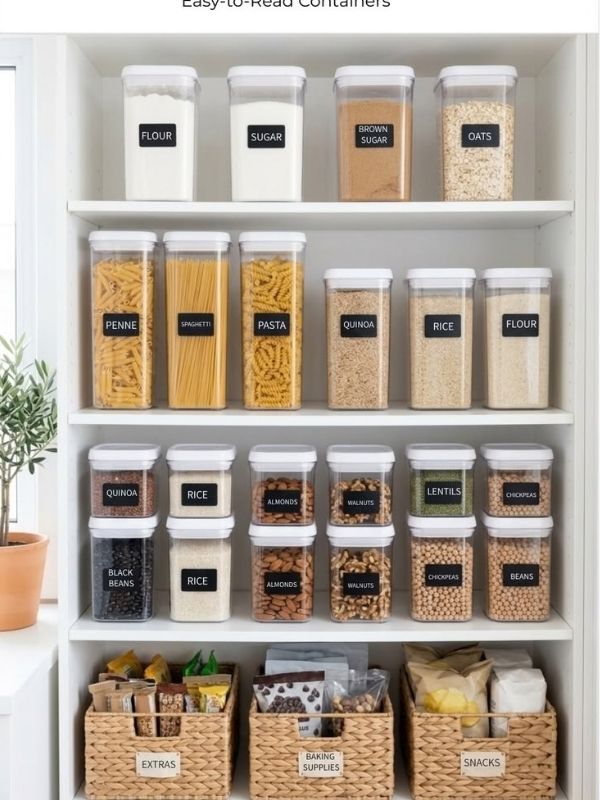
However, I wouldn’t automatically remove every food from its original packaging. Some foods are already packaged neatly and don’t need extra containers.
Before transferring something, consider whether the container will actually make it easier to store and use.
You also need to make sure containers are completely clean and dry before filling them. Moisture can cause problems with dry foods.
The living room is one of the main spaces where your home’s style really comes together. If you’re looking for simple ways to make your space feel more beautiful, comfortable, and put together, take a look at theseHome Interior Ideas For Living Room for inspiration.
Don’t Forget About Small Spaces
Small gaps can become surprisingly useful.
A narrow space beside a larger container might be perfect for spices or small bottles. A slim basket could fit into an awkward corner. A narrow rolling cart might work beside the pantry or cabinet if there is enough room.
You don’t necessarily need a large organizer to create more storage.
Sometimes the smartest solution is simply matching the storage piece to the awkward space.
Measure those little gaps before deciding they are unusable.
If you’re trying to make the most of every bit of space in your home, don’t forget about the area underneath your bed. For more practical ways to store your belongings while keeping your bedroom neat and organized, check out these Clever Under-Bed Storage Ideas Without Drawers That Actually Save Space.
Organize Cans So You Can See Them
Canned foods can take up a lot of shelf space, especially when they are stacked randomly.
Instead of placing cans wherever they fit, group them together.
You can organize them by type, such as vegetables, beans, fruits, soups, or sauces.
Tiered can organizers are another option because they raise the cans at the back so the labels are easier to see.
If you don’t want to buy a special organizer, you can still create a simple system by placing shorter cans toward the front and taller ones behind them.
The important thing is being able to see what you have.
Small changes can make a bathroom feel completely different without requiring a full renovation. If you’re ready to give your bathroom a fresh, beautiful look, check out these Bathroom Makeover Ideas for simple inspiration you can try in your own space.
Create a Snack Zone
Snacks can easily take over a pantry.
Small bags, boxes, bars, crackers, cookies, and individually packaged foods often end up scattered across different shelves.
Creating one dedicated snack area can make a huge difference.
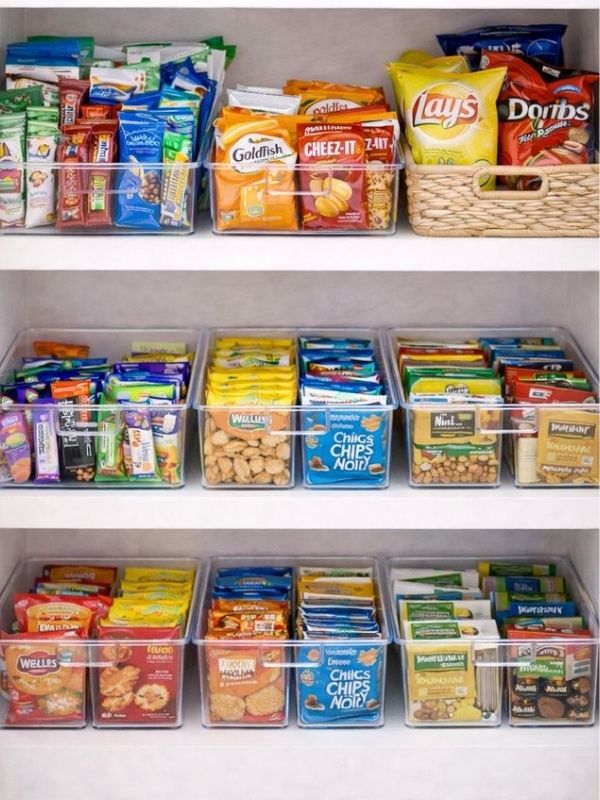
A basket or bin can hold smaller snacks, while larger boxes can sit behind or beside it.
If you have children, you could make the snack area easier for them to reach while keeping foods that need adult supervision somewhere else.
A dedicated snack zone also makes it easier to notice when something is running low.
Give Breakfast Foods Their Own Area
If your household reaches for cereal, oats, bread, spreads, tea, coffee, or similar foods regularly, keeping them together can save time.
You don’t have to create a perfectly styled breakfast station.
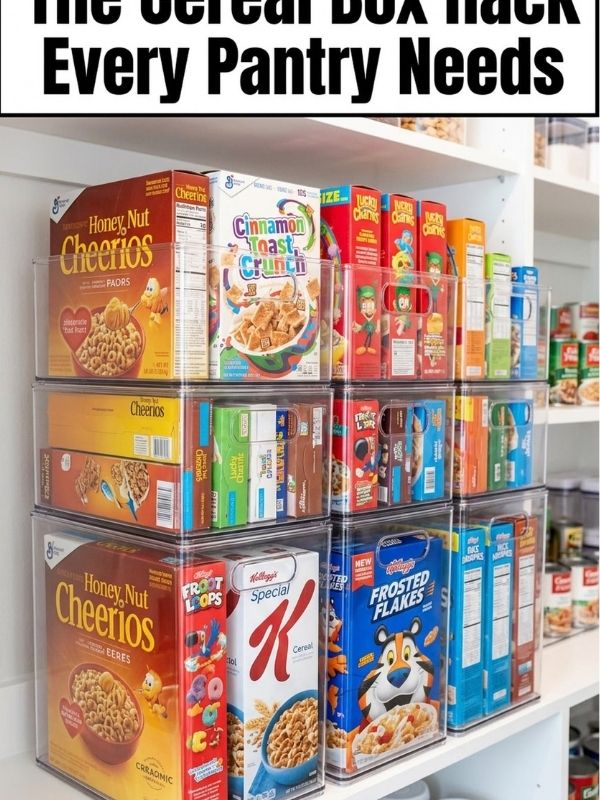
The idea is simply to keep the foods that are commonly used together close to each other.
For example, cereal can stay near oats and breakfast snacks, while tea and coffee can have their own small area.
This makes mornings easier because you’re not searching different shelves for things that are normally used at the same time.
Organize Baking Ingredients Together
Baking ingredients can create a surprising amount of clutter because many come in bags and small packages.
Create one section for flour, sugar, baking powder, cocoa, sprinkles, chocolate chips, and other baking supplies.
If you bake frequently, clear containers can make this area even easier to manage.
For smaller ingredients, a basket can keep packets together.
You can also place less frequently used baking supplies toward the back or on a higher shelf while keeping everyday ingredients within easy reach.
Use Labels When They Actually Help
Labels can make an organized pantry look beautiful, but their real purpose is helping you find things and put them back where they belong.
You don’t need to label every single shelf.
A few simple labels can be enough.
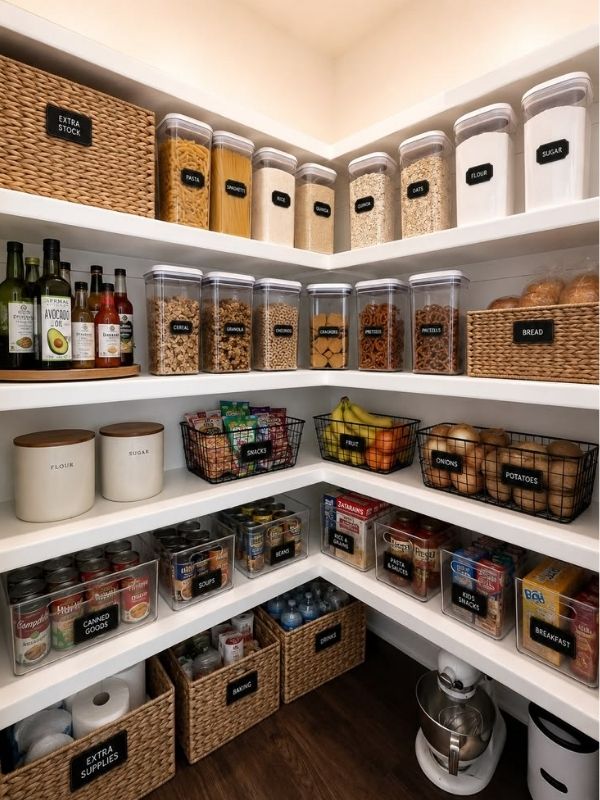
For example, you could label baskets Snacks, Baking, Breakfast, or Pasta & Grains.
If you use matching containers, labels can also make it easier to identify what’s inside at a glance.
Keep the labels simple and easy to read. You don’t need an elaborate labeling system if it makes putting groceries away feel like work.
Make Use of the Floor
If your pantry has a floor area, don’t automatically leave it empty.
The bottom of the pantry can be useful for heavier items that you don’t want to lift onto high shelves.
Large bags of rice, bulk food packages, bottled drinks, paper products, or larger containers may work well down there.
A sturdy basket or rolling bin can help keep the floor organized rather than allowing loose items to pile up.
Just make sure the items are protected from moisture, dirt, and anything else that could affect the food.
Keep Heavy Items Low
A good pantry organization system should also be practical and safe.
Heavy jars, large containers, bottles, and bulk food packages are generally easier to manage on lower shelves.
This reduces the need to lift heavy items from above your head.
Use higher shelves for lightweight items that you don’t reach for frequently.
This arrangement can also make the pantry easier for other household members to use.
Don’t Fill Every Inch
This is one of the most important pantry organization tips.
When you finally organize your pantry, it can be tempting to fill every available space.
But an overcrowded pantry will eventually become cluttered again.
Leave enough breathing room between categories so you can easily remove and return items.
You should be able to see what is behind the front row, pull out a basket without knocking things over, and place groceries back without rearranging half the shelf.
A little empty space is useful.
Use a First-In, First-Out System
When you buy new groceries, don’t automatically place them at the front.
Move older items forward and put newer items behind them when appropriate.
This simple habit helps you use older food first and reduces the chance of forgetting about items that have been sitting in the pantry.
For foods with expiration dates, check the dates regularly and keep items approaching their dates where they are easy to notice.
You don’t need a complicated inventory spreadsheet for this. A simple habit can be enough.
Create a Backstock Area
If you buy food in larger quantities, separate your everyday supply from your backup supply.
For example, if you have several unopened packets of pasta, you don’t necessarily need all of them mixed into your everyday cooking area.
Keep the extras together in a designated backstock section.
This can prevent your main shelves from becoming overcrowded.
It also makes grocery shopping easier because you can quickly check your backup supply before adding something to your shopping list.
Make Awkward Corners Work
Corners are often difficult to organize because they are not easy to reach.
Instead of pushing random items into the corner, consider using a rotating organizer, small basket, or another storage solution that makes the area accessible.
A lazy Susan can be particularly useful for sauces, oils, jars, and other small bottles.
Instead of reaching behind several items, you can rotate the organizer and bring what you need to the front.
This is one of those small changes that can make a pantry feel much more functional.
Keep Frequently Used Items at Eye Level
Your eye-level shelves are valuable.
Use them for things you reach for regularly.
This might include cooking oil, pasta, cereal, snacks, tea, coffee, or everyday ingredients.
Less frequently used items can move higher or farther back.
This simple change can make your pantry feel easier to use without adding any new storage products.
Organize by Function Instead of Appearance
A pantry doesn’t need to look like a showroom to be organized.
It needs to work.
You might see beautifully styled pantry photos online where every container matches and every label is perfectly aligned. That can be inspiring, but you don’t need to recreate that exact look.
If your original food packaging works for your household, keep it.
If baskets make sense for certain categories, use them.
If you prefer clear containers for dry foods, use them.
The best organization system is one that you can realistically maintain.
Make the Pantry Easier to Clean
Organization should also make cleaning easier.
When food is scattered across shelves, crumbs and spills can be difficult to notice.
Using baskets and containers gives you fewer loose items to move around when cleaning.
You can also line shelves with easy-to-clean shelf liners if appropriate for your pantry.
Try to clean small sections regularly rather than waiting until the entire pantry becomes messy.
A quick wipe while restocking can save you from a much bigger cleaning job later.
Don’t Buy Organizers Before Measuring
This deserves its own section because it can save you money.
Before purchasing baskets, containers, shelf risers, or racks, measure your pantry.
Check the width, depth, and height of your shelves.
Also measure the space between shelves.
An organizer might look perfect online but be too tall to fit on your shelf.
You should also consider how much space the pantry door needs to open and whether an over-the-door organizer will interfere with the shelves.
A few minutes with a measuring tape can prevent a lot of wasted money.
Pantry Organization on a Budget
You don’t need to spend a lot of money to make your pantry more functional.
Before buying anything, look around your home for storage items you already own.
Small baskets, boxes, jars, and containers may be useful as long as they are clean, sturdy, and suitable for the food or items you’re storing.
You can also repurpose sturdy boxes as temporary category organizers.
If you eventually want matching containers, you can buy them gradually rather than replacing everything at once.
Start with the areas causing the biggest problems.
Maybe your snacks are always messy. Maybe your cans are difficult to see. Maybe your deep shelves are wasting space.
Solve those problems first.
Make Your Pantry Work for Your Grocery Routine
One of the easiest ways to keep a pantry organized is to arrange it around the way you actually shop and cook. A pantry may look beautiful when you first organize it, but if the arrangement doesn’t match your daily routine, clutter can slowly return.
Think about the foods you buy most often. If rice, pasta, noodles, cereal, snacks, canned tomatoes, spices, or baking ingredients are regular items on your grocery list, give those foods a convenient place in the pantry.
I like keeping frequently purchased items where they are easy to see. This makes restocking much easier because I can quickly tell what is running low before I go shopping. It also helps prevent the situation where you buy another packet of something only to discover several unopened ones hiding at the back.
Another helpful habit is checking your pantry before writing your grocery list. Instead of relying completely on memory, take a quick look at the shelves. You may already have enough of certain ingredients for the week.
This can also help you notice foods that need to be used soon. For example, if you find an opened packet of pasta, a nearly finished bag of rice, or a can that has been sitting unused, you can plan a meal around it.
Keep Everyday Foods Easy to Reach
The foods you use every day shouldn’t be placed in the hardest-to-reach areas of the pantry.
If you make breakfast every morning, keep breakfast foods together and somewhere convenient. If you cook with certain ingredients regularly, keep them within easy reach as well.
This doesn’t mean everything has to sit on the middle shelf. The idea is to reduce unnecessary movement.
Imagine having to move several containers every time you need flour or search through three shelves whenever you want a snack. Even if the pantry is technically organized, that system will probably become frustrating.
A practical pantry should save you time.
Create a Small Restocking Routine
You can also make pantry organization easier by having a simple restocking routine.
When you finish an item, make a note of it immediately or add it to your grocery list. When you bring home a replacement, place it in the appropriate category instead of leaving it on the countertop until later.
If you have several unopened items, place the newest ones behind the older ones when appropriate. This keeps older food easier to notice and helps you work through what you already have.
You can also do a quick pantry check before a major grocery trip. Look at the main categories, see what is running low, and check the back of the shelves for anything you may have forgotten.
This small habit can make a noticeable difference over time.
Don’t Let Grocery Shopping Undo Your Organization
A freshly organized pantry can become crowded again after one large grocery trip if you simply put everything wherever there is an empty space.
Instead, take a few extra minutes when unpacking groceries.
Group similar foods together and place new items behind older ones where appropriate. Put small packets into their baskets, return containers to their assigned areas, and avoid creating temporary piles on random shelves.
If something doesn’t have a proper place, that’s useful information. It may mean your current categories need adjusting.
Your pantry organization should be flexible enough to change as your household’s needs change.
Leave Space for New Groceries
One small trick I find particularly helpful is leaving some room in each major category.
If your cereal section is completely full, bringing home another box means you have to squeeze it somewhere else. The same thing happens with snacks, canned food, pasta, and baking supplies.
Leaving a little extra space makes restocking much easier.
You don’t have to predict exactly how much food you will buy every week. Just avoid filling every container and shelf to its absolute limit.
That little bit of breathing room can be what keeps an organized pantry from becoming cluttered again.
What Makes a Pantry Look More Organized?
Sometimes a pantry is technically organized but still looks cluttered.
Visual consistency can help.
Grouping similar items together immediately creates a cleaner appearance.
You can also arrange items by height, keeping shorter items in front and taller ones behind them where possible.
Using a few matching baskets or containers can create visual consistency without requiring you to replace everything.
Another helpful trick is keeping labels facing forward.
When you can quickly see what everything is, the pantry feels much more orderly.
Common Pantry Organization Mistakes
A few habits can make pantry clutter return quickly.
One is keeping too much food.
Buying more than your household can realistically use can turn even a large pantry into an overcrowded space.
Another mistake is creating too many categories.
If every tiny group of food has its own basket, putting groceries away can become unnecessarily complicated.
Overusing containers is another common problem.
Containers can be useful, but transferring every food item into a container takes time and can sometimes create more work than it solves.
Finally, avoid putting things in places that are difficult to reach simply because they look pretty.
Your pantry should be attractive, but accessibility matters more.
How to Keep Your Pantry Organized
The easiest way to maintain an organized pantry is to put things back where they belong.
When you finish using something, return it to its category.
When you bring home groceries, place newer items behind older ones where appropriate.
Every few weeks, take a quick look through the pantry.
Check for empty packages, items that have been pushed to the back, expired food, and categories that are starting to become messy.
You don’t need to completely reorganize the pantry every week.
Small maintenance habits can keep the bigger system working.
What Should Go at the Top of the Pantry?
The highest shelves are usually better for items that you don’t use frequently and that are lightweight.
This could include seasonal foods, extra baking supplies, specialty ingredients, or backup items.
Avoid placing heavy containers where you need to stretch or use a stool to reach them.
Your most frequently used foods should be easier to access.
How Can I Make a Pantry Look Less Cluttered?
Start by removing anything you don’t need.
Then group similar foods together and give each category a home.
Use baskets for loose items, containers for foods that benefit from them, and vertical storage where there is unused space.
Most importantly, don’t overcrowd the shelves.
A pantry with fewer visible items and some breathing room will usually look much calmer than one packed from front to back.
How Do I Organize a Pantry Without Buying Anything?
Start with what you already have.
Remove everything, sort it into categories, discard or separate items you no longer need, and return everything according to how often you use it.
Reuse suitable boxes and baskets to contain smaller items.
You can also rearrange your existing shelves to make better use of vertical space.
Sometimes the biggest improvement comes from simply removing clutter and changing where things are stored.
How Often Should I Reorganize My Pantry?
There is no specific schedule that works for everyone.
A quick check every few weeks can be helpful, especially if your household uses the pantry heavily.
You can also use grocery shopping as a natural reminder.
Before buying more food, take a quick look at what you already have.
This can help you avoid duplicates and keep the pantry under control.
Conclusion On Pantry Organization
A well thoughtful pantry Organization can make everyday kitchen tasks feel much easier.
You don’t need a huge pantry, expensive containers, or a perfectly matching collection of storage products. What matters most is creating a system that makes sense for the way you actually use your kitchen.
Start by clearing out what you no longer need, group similar foods together, make use of vertical space, and keep the things you use most often within easy reach. Add baskets, containers, shelf risers, or door storage where they genuinely solve a problem.
I also think it’s important to leave some breathing room. A pantry doesn’t need to be packed from one end to the other to be useful. Having a little extra space makes it easier to see what you have and put groceries away without starting the clutter all over again.
With a few thoughtful changes, even an ordinary pantry can become a much more functional part of your kitchen. The goal is not simply to make everything look neat for a day. It’s to create a pantry that saves space, keeps clutter under control, and makes finding what you need much easier every day.