Clever Under Bed Storage Ideas Without Drawers That Actually Save Space.
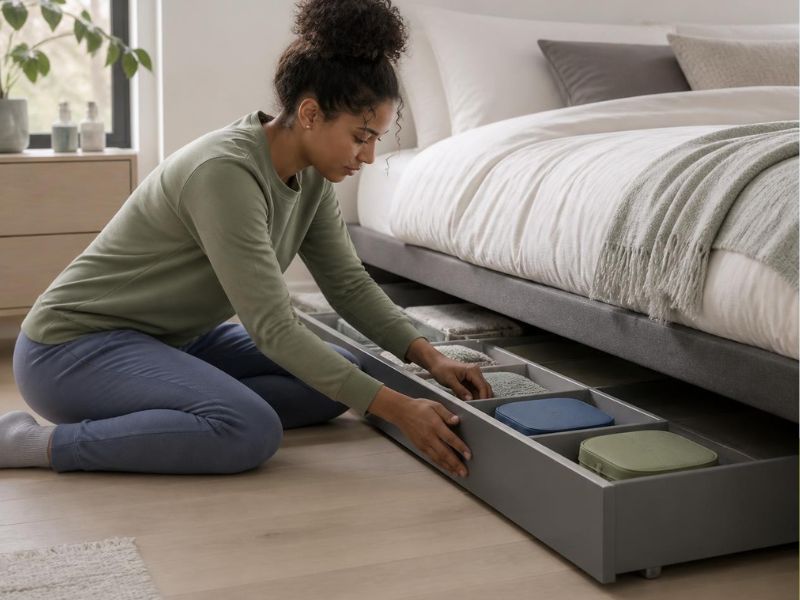
Here is everything you need to know about setting up, organizing, and maintaining under-bed storage without built-in drawers.
Phase 1: Essential Prep Work Before Buying Any Containers
1. Measure Your Precise Clearance Heights
-
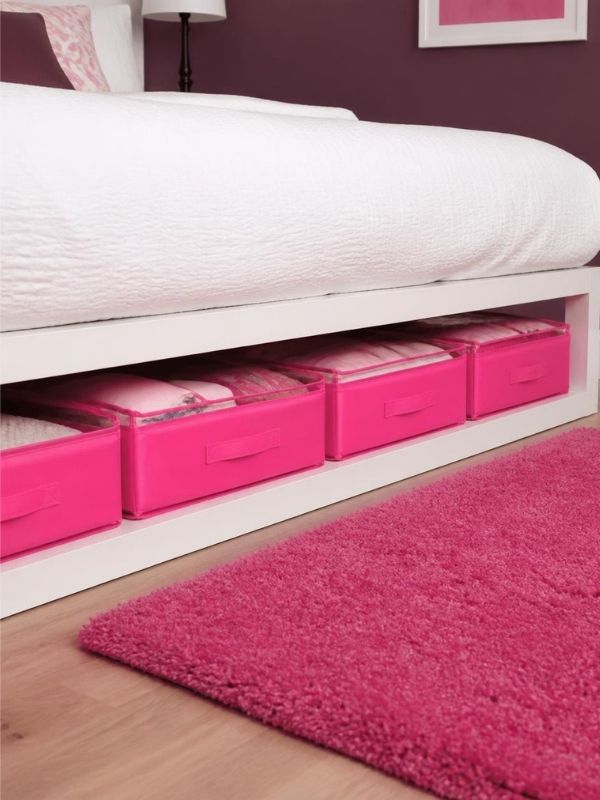
Use a tape measure to record the height from the floor to the lowest hanging part of your bed frame (note that side rails or center support beams can sit lower than the rest of the frame).
-
Measure the width and depth of the open space between the bed legs so you know how many containers can fit side-by-side.
-
Keep a small margin for error: choose containers that are at least half an inch shorter than your total clearance height so they glide out without scraping or scratching the frame.
2. Assess Your Flooring Type
-
Hardwood, Tile, or Laminate: Smooth plastic or wooden containers can scratch wood surfaces over time. Opt for containers with soft felt pads, rubber-coated caster wheels, or soft fabric bases.
-
Carpeted Floors: Soft containers without wheels can catch on carpet fibers, making them difficult to drag. Containers with hard, smooth plastic bottoms or sturdy wheels handle carpeting much better.
3. Clean the Area Thoroughly
-
Vacuum or mop the floor under the bed completely.
-
Wipe down the lower bed frame and slatted base to remove settled dust.
-
Consider placing an under-bed area rug or a protective liner if you want to keep fabric containers completely off bare floors.
1. Use Low Storage Bins That Can Slide Under the Bed
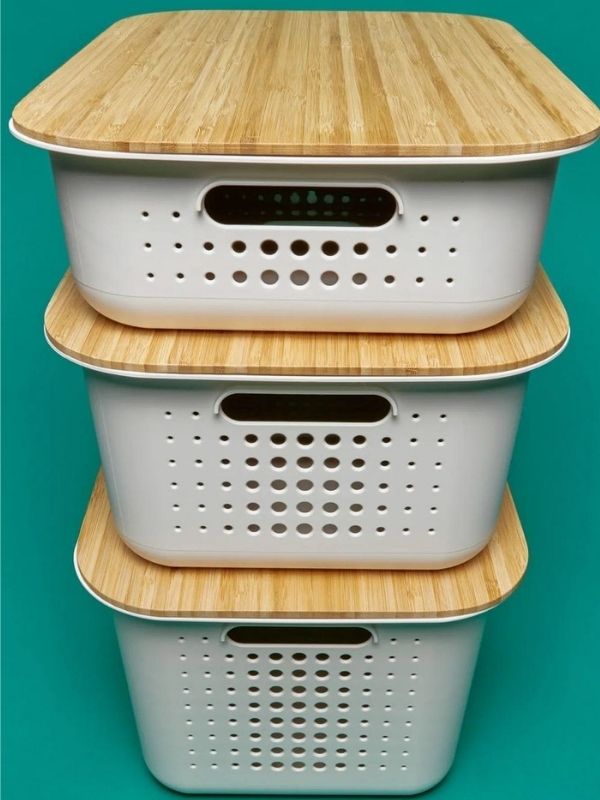
One of the easiest ways to create under bed storage without drawers is to use low-profile storage bins.
Before buying anything, measure the height between your floor and the bottom of your bed. This is important because a container that looks small enough in a shop may not actually fit underneath your particular bed.
Look for containers that are low, wide, and easy to pull out. Bins with handles can be especially convenient because you won’t have to struggle to get them from underneath the bed.
You can use them for things such as:
- Extra bedsheets
- Towels
- Bags
- Shoes
- Seasonal clothing
- Accessories
If you are storing clothes or bedding, make sure they are completely dry before putting them away. A sealed container can trap moisture, which is the last thing you want happening to your belongings.
A simple tip: Don’t fill the bin until the lid is difficult to close. Leaving a little room makes it easier to remove and return the container. Check Out My Post on Simple home Interior Ideas
2. Store Clothes in Under-Bed Storage Bags
Storage bags are particularly useful when you have a lot of clothing but very little wardrobe space.
Instead of allowing clothes you rarely wear to take up valuable wardrobe space, you can fold them neatly and place them in shallow storage bags underneath your bed.
This works well for clothing that you only use occasionally, such as special-occasion outfits, seasonal pieces, or clothes you don’t currently reach for very often.
Choose bags with zippers and, ideally, a clear section or label area. That way, you can identify what’s inside without opening every bag.
Try to avoid putting freshly washed clothes away while they are still slightly damp. Clothes should be completely dry before being stored.
If you live somewhere humid, it is also worth checking your stored clothes from time to time rather than leaving them untouched for months.
3. Create a Dedicated Shoe Storage Area
If shoes are constantly ending up beside your wardrobe or scattered around your bedroom, the space under your bed can become a useful shoe zone.
Instead of throwing shoes directly onto the floor underneath the bed, use shallow shoe boxes, individual shoe bags, or a low organizer.
Keeping shoes contained has two benefits: it makes the space easier to clean and prevents you from having to dig through a pile every time you’re looking for a particular pair.
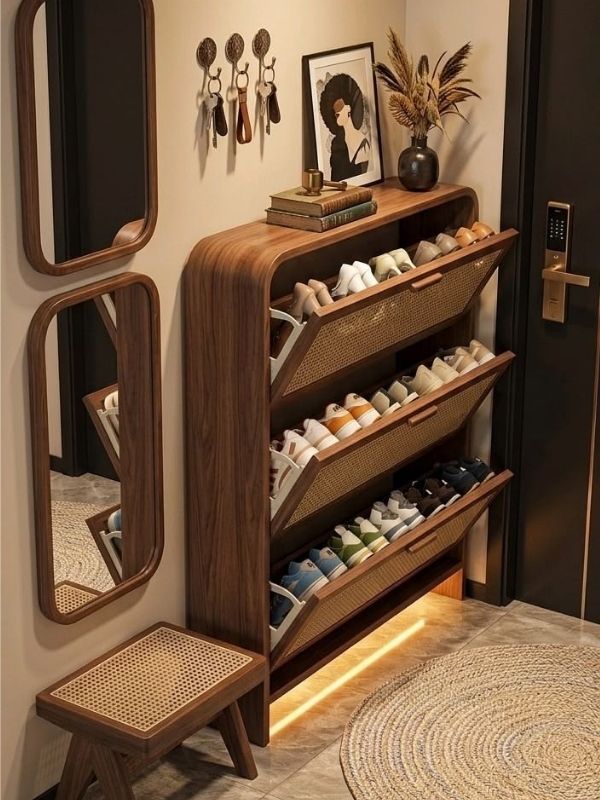
Before storing shoes, make sure they are clean and dry. If you’ve worn them outside, allow them to air out before putting them away.
You can also arrange them according to how frequently you wear them. Shoes you use regularly should stay closer to the edge of the bed, while occasional pairs can go farther underneath.
4. Keep Extra Bedding Under the Bed
Extra bedding can take up a surprising amount of wardrobe space because blankets, sheets, pillowcases, and duvet covers are bulky.
If your linen cupboard is already full, consider dedicating one under-bed container to bedding.
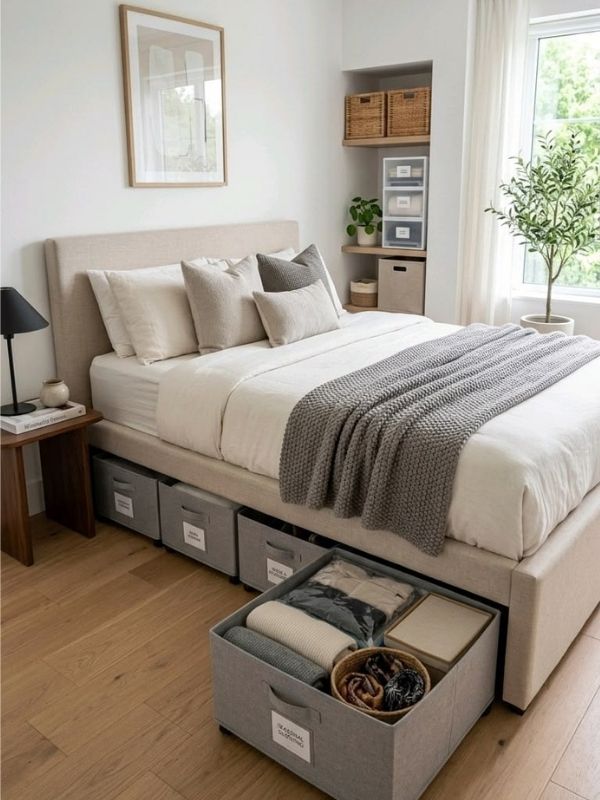
Fold matching sheets and pillowcases together so that you don’t have to search through several piles later. You could even place each complete bedding set inside one pillowcase. This keeps the set together and makes it easier to grab everything you need at once.
For blankets and thicker bedding, choose a container that gives the fabric enough room without forcing it inside.
It’s also a good idea to label the container “Bedding” so you know exactly where everything is.
5. Turn an Old Box Into Simple Under-Bed Storage
You don’t always have to buy a storage container.
A sturdy, shallow box can work surprisingly well as an inexpensive under-bed organizer. This can be particularly useful if you’re working with a tight budget.
Choose a box that fits comfortably underneath the bed and is strong enough to hold the items you want to store.
You can cover the outside with attractive paper or fabric if you want it to look neater. Add a simple label to the front so you can identify the contents easily.
However, cardboard is more vulnerable to moisture than plastic or other storage materials. For that reason, this option is better for dry indoor environments, and you should avoid placing cardboard directly on a damp floor.
If you notice moisture underneath your bed, choose a more moisture-resistant storage solution instead.
6. Use the Space for Seasonal Items
One of the smartest ways to use under-bed storage is to keep things there that you don’t need throughout the year.
Think about items that only come out occasionally:
- Holiday decorations
- Seasonal clothing
- Travel accessories
- Special-occasion shoes
- Extra blankets
- Occasion bags
This works because you aren’t constantly opening the storage container.
For example, instead of allowing a box of Christmas decorations to occupy a section of your wardrobe all year, you can store it underneath the bed and bring it out when you actually need it.
Just remember to label seasonal storage clearly. Six months later, you probably won’t remember which anonymous box contains the decorations.
7. Use Shallow Baskets for Things You Reach for Often
Not everything underneath your bed needs to be something you use once or twice a year.
If you have a few belongings that you use regularly, a shallow basket can make them easier to access.
You could use one for:
- Extra pillows
- Everyday bags
- Hair accessories
- Scarves
- Lightweight blankets
The important thing is to choose something that can be pulled out easily.
A basket without a lid can be convenient for frequently used items, while a covered container is generally better for things that need more protection from dust.
Try not to turn the basket into a “miscellaneous” container. Once everything gets thrown into one place, the storage may technically exist, but finding anything becomes another problem.
8. Make a Simple Rolling Storage Box
If you have a little DIY experience, you can turn a shallow wooden box or sturdy storage box into a pull-out under-bed organizer by adding small caster wheels to the bottom.
The advantage is convenience. Instead of getting down on the floor and reaching underneath the bed, you can simply pull the box toward you.
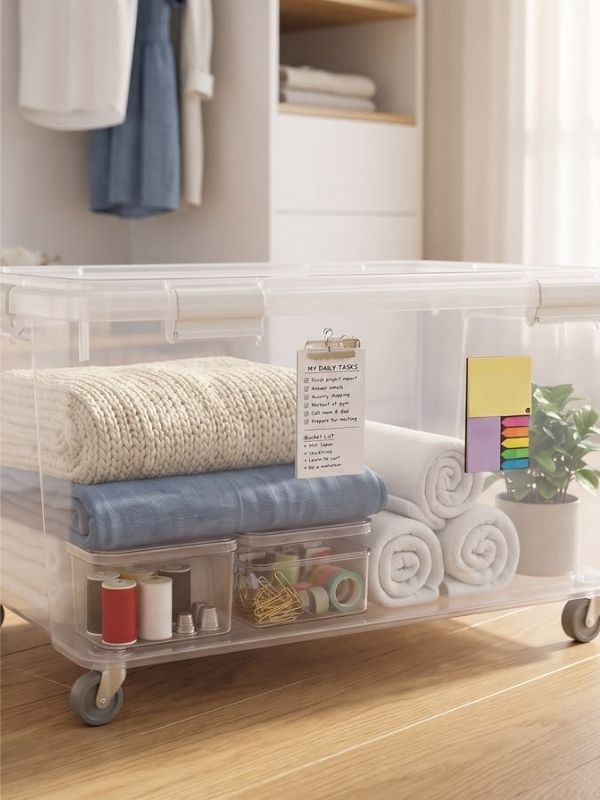
This can work particularly well for heavier belongings such as books, blankets, or larger bags.
However, make sure the wheels and box are strong enough for whatever you plan to store. You also want to make sure the finished storage box fits comfortably underneath the bed without scraping against the frame.
If you’re renting or don’t want to make anything permanent, a ready-made rolling storage container can provide the same basic convenience.
9. Label Your Under-Bed Storage
Good storage isn’t only about finding somewhere to put things. It’s also about being able to find them again.
This is why labels can make such a difference.
Use Simple descriptions such as:
BEDDING
SHOES
SEASONAL CLOTHES
BAGS
DECORATIONS
are enough.
If you have several containers, place the label somewhere visible from the side of the bed.
This small step can save you from pulling out every container just to find one item.
If you change what’s inside a container later, remember to update the label too.
10. Keep the Storage Organized With a Simple System
Once you have started using the space underneath your bed, the most important thing is to keep it from becoming cluttered again.
A simple system can help.
Place the things you rarely use toward the back and the things you reach for more frequently toward the front. Keep similar belongings together instead of mixing everything into one container.
For example, you could have:
- One container for bedding
- One for shoes
- One for seasonal clothing
- One for bags and accessories
You don’t need to fill every available inch underneath the bed. Leaving a little space makes it easier to remove containers and clean underneath them.
Most importantly, try to return items to the same place after using them. A storage system only works when it remains easy to maintain.
11. Use Flat Zippered Organizers for Small Items
Not everything needs a large storage bin. Flat zippered organizers are useful when the space underneath your bed is quite low or when you have smaller items that tend to get lost.
They can hold things like scarves, belts, small handbags, accessories, or extra pillowcases without taking up much vertical space.
The advantage of using a separate organizer for smaller belongings is that you won’t have to search through a large container every time you need one little item.
If you have several organizers, give each one a purpose instead of putting unrelated things together. For example, one could hold scarves while another keeps belts and accessories.
This makes the space underneath your bed feel more like an organized storage area and less like a place where miscellaneous items disappear.
12. Keep Extra Handbags and Backpacks Under the Bed
Handbags and backpacks can take up quite a bit of room in a wardrobe, especially when you have several that you don’t use every day.
The space underneath your bed can be a good place for bags that are used occasionally.
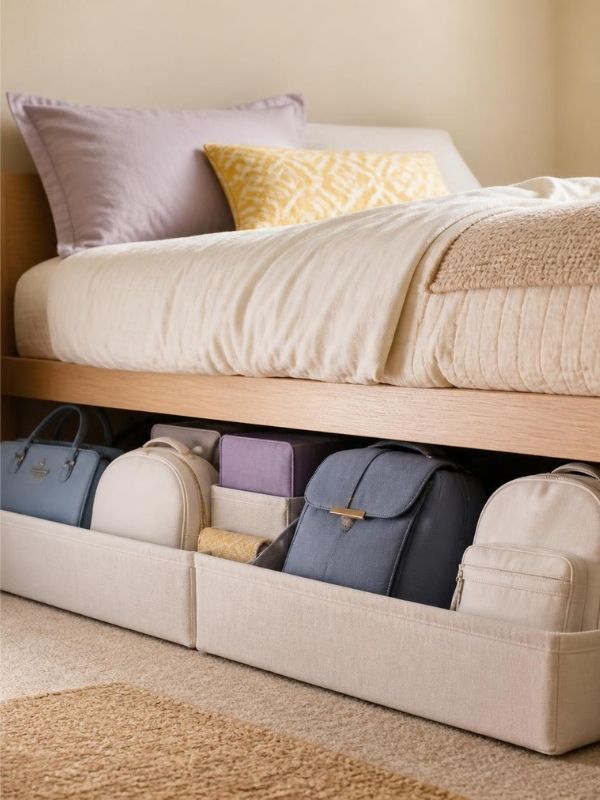
Before storing them, empty the pockets and make sure there is nothing inside that could stain or damage the bag. You can lightly stuff structured handbags with clean paper or soft fabric to help them maintain their shape.
Avoid piling bags on top of one another if doing so could crush them. Instead, use a shallow basket or storage container where they can sit neatly.
Keep your most frequently used bags closer to the edge so you don’t have to move everything underneath the bed just to grab one.
13. Create a Small Gift-Wrapping Storage Area
If you regularly keep gift bags, ribbons, wrapping paper, or greeting cards, the space underneath your bed can give these supplies a home.
A shallow container can hold gift bags and smaller wrapping supplies, while longer pieces of wrapping paper can be stored in an appropriately sized container so they don’t become crushed.
Keeping all your gift-wrapping supplies together also means you won’t have to search different parts of your bedroom whenever you need to wrap something.
Add a label such as “Gift Supplies” to the container. It sounds like a small detail, but it can make a big difference when you’re trying to find something quickly.
14. Store Extra Pillows in Large Breathable Bags
Extra pillows can be awkward to store because they take up a lot of space but aren’t necessarily used every day.
If your bed has enough clearance, you can place spare pillows underneath it in a large, clean storage bag.
Choose a bag that gives the pillows enough room rather than compressing them tightly. If the material allows some airflow, that can also be useful for keeping the pillows fresh.
Make sure the pillows are completely dry before storing them, and check them occasionally if they are going to remain underneath the bed for a long time.
This is especially useful for guest bedding because you can keep the extra pillows close to the bed without taking up valuable wardrobe space.
15. Divide the Space Into Simple Storage Zones
If you have enough room underneath your bed, you don’t have to use one large container for everything.
Instead, divide the area into simple zones.
For example, the space toward one side could be used for shoes, another section for bedding, and another for seasonal clothing.
This makes it easier to remember where everything belongs and prevents one large pile of belongings from forming.
You can even arrange the storage according to how often you use each category. Everyday items can stay near the sides of the bed where they’re easier to reach, while things you only need occasionally can go farther underneath.
The goal isn’t to fill every empty space. The goal is to make the space useful while keeping everything easy to find.
What Should You Avoid Storing Under Your Bed?
Although the space underneath your bed can be useful, it isn’t suitable for everything.
Avoid storing damp clothing, wet towels, food, or anything that can easily attract pests. You should also be careful with items that can be damaged by humidity or moisture.
Important documents, photographs, electronics, and other moisture-sensitive belongings may be better stored somewhere more protected.
If your bedroom tends to get dusty, choose containers with lids rather than leaving belongings exposed underneath the bed.
How to Make Under-Bed Storage Look Neater
You don’t want your bedroom to look organized everywhere else while the area underneath the bed is packed with mismatched bags and boxes.
A few simple choices can make the space look much better:
- Use containers that are similar in size when possible.
- Choose storage bags that can be zipped closed.
- Label your containers.
- Avoid overfilling them.
- Keep frequently used items near the edge.
- Clean underneath the bed regularly.
- Don’t keep unnecessary items simply because there is space for them.
You can also choose storage containers that complement the rest of your bedroom instead of treating the area as somewhere to hide clutter.
Final Thoughts On Under Bed Storage
You don’t need a bed with built-in drawers to make good use of the space underneath it. With low storage bins, bags, baskets, boxes, and a simple organization system, that forgotten space can become a useful part of your bedroom.
The key is to store the right things and give everything a designated place. Instead of pushing belongings underneath the bed and forgetting about them, think of the space as an extension of your existing storage.
Start with the items that are taking up the most unnecessary space in your wardrobe or bedroom. Once those are organized underneath the bed, you may be surprised by how much room you have created without adding another large piece of furniture.