7 Reasons Your Locs Are Not Growing as Long as You Expected.
Growing long locs is a journey that requires patience, consistency and an understanding of how your hair naturally behaves. When you first start your locs, you may imagine how beautiful they will look several years later. You picture longer locs falling over your shoulders, reaching your back or giving you the freedom to create the hairstyles you’ve always wanted.
But sometimes, your locs seem to remain the same length for months. You may notice that other people with locs started around the same time as yours appear to have longer hair, while yours seem to be growing slowly. You might even begin to wonder whether your locs have stopped growing altogether.
If this sounds familiar, you are not alone.
Locs can grow while appearing to remain the same length. In many cases, the problem is not that your hair has stopped growing, but that you are not retaining all the length your hair produces. Breakage, shrinkage, excessive tension, dryness and other hair-care habits may influence how much length you see over time.
The length of your locs is also influenced by your genetics, hair growth cycle, starting length, hair texture and how your locs mature. Not everyone’s locs will grow at the same rate or reach the same length within the same period.
In this guide, we will explore 7 reasons your locs are not growing as long as you expected, what may be happening to your hair and practical ways to help you retain more length as your locs mature.
Check Out this 10 Mistakes That Make Locs Dry, Brittle and Weak
Do Locs Actually Stop Growing?
Before discussing the reasons your locs may not be getting longer, it is important to understand that locs do not normally stop growing simply because they have become locked.
Hair grows from follicles located in the scalp. The locking process changes how the strands are arranged and intertwined, but it does not automatically stop hair growth.
However, the length you see is not always the same as the length your hair produces.
Your hair may be growing from the roots, but if the ends break, your locs may not appear to get longer. This is known as a length-retention problem.
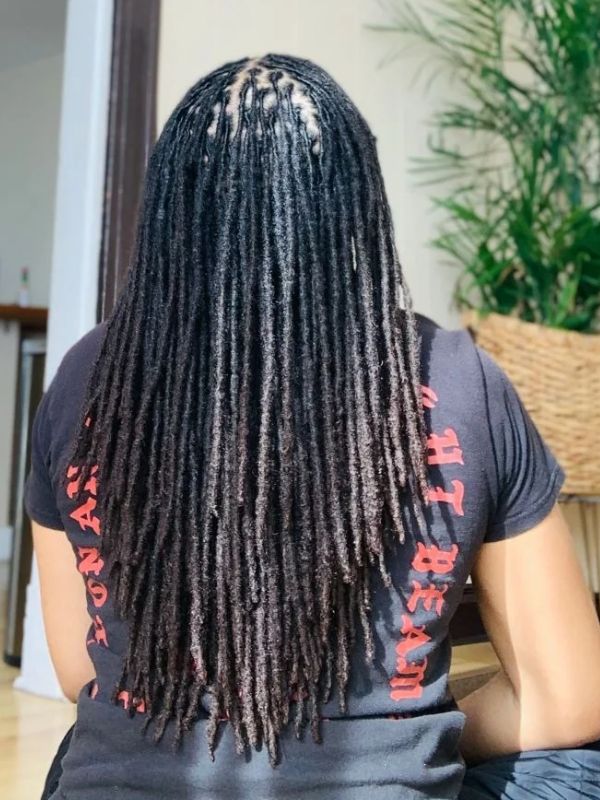
For example, if your hair grows several centimetres over a period of time but the ends repeatedly break, you may not notice much difference in your loc length.
Another reason your locs may appear shorter is shrinkage. Natural hair can shrink considerably depending on its texture, moisture levels, curl pattern and the way the locs are formed. As your locs mature, their appearance and length may change.
Some locs also experience different stages of development, including budding, swelling and tightening. These changes can affect how long your locs appear at different points in your journey.
So, before concluding that your locs are not growing, consider whether you may be experiencing slow length retention, shrinkage or changes associated with the locking process.
7 Reasons Your Locs Are Not Growing as Long as You Expected
1. Your Locs Are Breaking at the Ends
One of the most common reasons locs may not appear to grow longer is breakage.
Your hair can continue growing from the scalp while the ends break repeatedly. When this happens, you may struggle to retain the length your hair produces.
Breakage can occur for several reasons, including dryness, excessive manipulation, heat damage, tension, friction and weakened hair strands.
The ends of your locs are particularly important because they represent the older parts of your hair. Hair that has been growing for several years has been exposed to different environmental conditions, styling habits, washing routines and daily friction.
If the ends of your locs are weak or damaged, they may break more easily than the newer hair closer to your scalp.
You may notice that some locs are shorter than others, that the ends appear thinner or that small pieces of hair fall off when you handle your locs.
These may be signs that you are struggling with length retention.
What may contribute to breakage?
- Excessive heat styling.
- Dryness and inadequate moisture.
- Pulling or stretching locs during styling.
- Aggressive washing or manipulation.
- Friction against clothing and bedding.
- Repeated tightening or retwisting.
- Damaged or weakened ends.
How to reduce breakage and retain more length:
Start by reviewing your hair-care routine. If you frequently manipulate your locs, use excessive heat or style them tightly, consider reducing those habits.
Handle your locs gently when washing, drying and styling them. Avoid pulling on the ends to check their length or repeatedly twisting individual locs.
If you notice that your ends are breaking, consider whether they need a gentler maintenance approach.
You may also want to avoid hairstyles that place excessive tension on the locs, particularly if your hair is already fragile.
The goal is not to make your locs grow faster overnight. It is to reduce unnecessary damage so that you can retain more of the length your hair naturally produces.
2. You Are Experiencing Excessive Dryness
Dryness can affect the condition of your hair and may contribute to breakage when the strands become more vulnerable to mechanical damage.
Although locs do not require constant product application, they still need appropriate care. Depending on your hair texture, environment, washing routine and other factors, your locs may occasionally feel dry.
If your locs are frequently stiff, rough, brittle or difficult to handle, you may need to review how you maintain them.
Dry hair may become more susceptible to damage when it is exposed to repeated friction, pulling or excessive manipulation.
This can make it difficult to retain length, particularly when the ends are already fragile.
However, dryness is not the only cause of breakage, and not every loc that feels dry is necessarily damaged.
Signs your locs may be experiencing dryness:
- Your locs feel rough when you touch them.
- The ends appear brittle.
- Your hair feels less flexible.
- You notice small pieces of broken hair.
- Your locs feel stiff or unusually difficult to handle.
How to care for dry locs:
Consider incorporating an appropriate moisturizing approach into your hair-care routine.
Water or a suitable water-based moisturizing product may help hydrate your hair. Depending on your hair’s needs, you may also use a lightweight product that helps reduce moisture loss.
Avoid applying large amounts of heavy creams, waxes or oils simply because your hair feels dry. These products may leave residue and contribute to buildup.
Pay attention to how your hair responds to different products and techniques.
If your locs feel softer and more manageable after adjusting your routine, continue with the approach that works for your hair.
Moisturizing your locs appropriately and reducing unnecessary manipulation may help you protect your hair and retain more length over time.
3. You Are Retwisting Your Locs Too Frequently
Retwisting helps maintain the appearance of your roots, but doing it too frequently may put unnecessary stress on your hair.
When you repeatedly tighten your locs, especially around the roots, you may create tension that affects the hair and scalp.
Excessive tension can contribute to thinning, breakage and traction-related hair loss. If your locs are becoming thinner around the roots, particularly near your hairline, your retwisting routine may need to be adjusted.
Some people retwist their locs every few weeks because they prefer a neat appearance. However, the appropriate maintenance frequency varies depending on your hair texture, loc method, scalp condition and personal preferences.
Retwisting too frequently is not necessarily beneficial for your locs.
When the roots are repeatedly tightened, the hair may not have sufficient time to recover from the manipulation. This may become particularly problematic if your locs are thin or fragile.
How excessive retwisting may affect your locs:
- It may contribute to thinning around the roots.
- It may increase tension on your scalp.
- It may weaken fragile hair.
- It may contribute to breakage.
- It may increase the risk of traction-related hair loss.
What you can do instead:
Give your locs adequate time between retwisting sessions.
Avoid retwisting simply because you have noticed new growth. New growth is a natural part of your locs journey, and your roots do not have to remain perfectly neat all the time.
If you notice thinning, scalp tenderness or breakage, consider reducing tension and seeking advice from a dermatologist or experienced loctician.
Maintaining your locs should not require pulling your hair tightly or repeatedly tightening the same sections.
Allow your locs to grow naturally between maintenance sessions.
4. You Are Wearing Tight Hairstyles That Put Stress on Your Locs
Locs are incredibly versatile, and there are so many beautiful hairstyles you can create with them. You can wear them in buns, ponytails, updos, braided styles and other looks that allow you to express your personality.
However, some hairstyles may place excessive tension on your hair.
When your locs are repeatedly pulled into tight ponytails, buns or styles that stretch the roots, the tension may weaken the hair over time.
This is particularly concerning around your temples, hairline and other areas where the hair may be more vulnerable to tension-related damage.
You may notice that locs around your edges become thinner, that your scalp feels sore after styling or that certain locs break more easily than others.
If you frequently wear tight hairstyles, this may be contributing to your difficulty retaining length.
Hairstyling habits to reconsider:
- Tight ponytails that pull your locs backward.
- Buns that place excessive tension on your roots.
- Styles that repeatedly pull the same locs in the same direction.
- Tight braided styles that place pressure on your scalp.
- Leaving tension-heavy hairstyles in for extended periods.
How to protect your locs while styling:
Choose hairstyles that allow your scalp to relax.
Loose ponytails, relaxed buns, simple loc updos and styles that do not pull tightly on the roots may be more comfortable for your hair.
Avoid repeatedly styling your locs into the same tension-heavy hairstyle.
If a hairstyle causes pain, scalp tenderness, headaches or discomfort, loosen it.
You can enjoy beautiful locs hairstyles without putting excessive tension on your hair. Protecting your roots and reducing unnecessary stress may help you retain more length over time.
5. You Are Not Protecting Your Locs From Everyday Friction
Sometimes, the reason your locs are not retaining length may be connected to everyday friction that you barely notice.
Your locs come into contact with different surfaces throughout the day. They may rub against your clothing, pillowcases, scarves, car seats or bags. While occasional friction is normal, repeated rubbing may contribute to wear and damage, particularly around the ends of your locs.
This is especially worth considering if you have long locs that constantly rub against your shoulders, clothing or the back of your neck.
Your locs may also experience friction while you sleep. If you sleep without protecting your hair, your locs may repeatedly rub against your pillowcase, which can contribute to frizz, tangling and unnecessary stress on the hair.
Friction alone may not cause significant damage to healthy locs, but it can become a contributing factor when your hair is already dry, fragile or damaged.
How to reduce friction on your locs:
- Wear a satin or silk bonnet when sleeping.
- Use a satin or silk pillowcase if you prefer not to wear a bonnet.
- Avoid rough fabrics that constantly rub against your locs.
- Protect your locs when wearing clothing with rough collars.
- Avoid sleeping with your locs trapped beneath your body.
- Gently gather long locs before sleeping to reduce unnecessary tangling.
Protecting your locs at night is a simple habit that may help reduce friction and keep your hair more manageable.
You do not need an elaborate nighttime routine. A bonnet, scarf or suitable pillowcase may be enough to help protect your hair while you sleep.
6. Your Hair Is Shrinking, and You Are Mistaking It for Slow Growth
Shrinkage can make it difficult to appreciate how much your locs have grown, especially if you have naturally curly or tightly textured hair.
If your locs appear shorter than expected, it may not necessarily mean your hair is growing slowly. Your locs may be experiencing shrinkage, which can make their visible length shorter than their actual length.
Natural hair textures can shrink considerably. The extent of shrinkage depends on factors such as hair texture, curl pattern, moisture levels and the way your locs are formed.
During the locking process, your hair may also change shape, become more compact or develop different textures. These changes can affect how long your locs appear.
For example, your locs may appear longer when stretched but shorter when they are resting in their natural position.
Some people also experience changes in the appearance of their locs during different stages of maturation. Locs may swell during budding and later become more compact as they mature.
This can make it seem as though your hair is not progressing in length when it may actually be growing.
How to better assess your loc growth:
- Compare your locs using photographs taken at different times.
- Take pictures from the same angle and in similar lighting.
- Avoid comparing your loc length with someone else’s.
- Pay attention to changes in the length of your locs over several months rather than a few weeks.
- Consider how your locs change as they mature.
If you want to measure your locs, try measuring a few representative locs periodically rather than measuring your entire head frequently.
You may find that your hair is growing more than you initially thought.
[IMAGE 7: ADD HERE – UNDER THIS SECTION]
Image suggestion: A woman gently stretching a loc to show its actual length, or a photograph showing locs at different lengths.
Alt text: Natural loc length showing how shrinkage can affect the appearance of locs.
7. You Are Not Paying Attention to Your Overall Hair and Scalp Health
Your hair does not grow in isolation. Your overall health, genetics, hormonal changes, nutritional status and certain medical conditions can influence hair growth and shedding.
Although many locs-related length problems are connected to breakage and length retention, sometimes the concern may involve changes in the hair growth cycle itself.
Hair follicles go through different stages of growth, rest and shedding. The length of the growth phase varies from person to person and may influence how long individual hairs can grow.
Your genetics also play a role in determining your hair growth cycle and the length your hair may naturally achieve.
Additionally, nutritional deficiencies, certain illnesses, medications, hormonal changes and scalp conditions may contribute to increased shedding or hair loss.
If you have noticed that your locs are not growing as they used to, particularly if you are experiencing significant shedding, thinning or bald patches, it may be worth considering whether something beyond your hair-care routine is affecting your hair.
Signs that your hair concern may require professional attention include:
- Noticeable thinning across your scalp.
- Bald patches.
- Excessive shedding.
- Persistent scalp itching or irritation.
- Locs becoming significantly thinner at the roots.
- Sudden changes in hair density.
- Breakage that continues despite changes to your hair-care routine.
What you can do:
Pay attention to your overall health and scalp condition.
Eat a balanced diet that provides adequate protein, vitamins and minerals. Avoid unnecessarily restrictive diets, and seek medical advice if you suspect a nutritional deficiency.
If your hair is thinning, shedding excessively or developing bald patches, consider consulting a dermatologist. A dermatologist can help determine whether the problem is related to a scalp condition, nutritional deficiency, hair growth cycle or another underlying cause.
You do not necessarily need to buy hair-growth supplements to make your locs longer. Supplements are most useful when there is a demonstrated deficiency or a specific medical reason to use them.
Taking care of your overall health may support your hair, but it is important to understand that no particular food, oil or supplement can guarantee faster loc growth.
How to Help Your Locs Retain More Length
If your locs are not getting longer as you expected, you may need to focus less on trying to make your hair grow faster and more on protecting the length you already have.
Hair growth is influenced by factors you cannot always control, including genetics and your natural growth cycle. However, some of your daily hair-care habits can be adjusted to reduce unnecessary damage.
Here are practical ways to help your locs retain length.
1. Create a Gentle Hair-Care Routine
Your locs do not need to be constantly manipulated to grow.
Establish a routine that includes regular cleansing, appropriate moisturizing, gentle handling and protection from unnecessary tension.
Avoid frequently changing your products or techniques simply because you have seen someone else using a different routine.
Your hair may respond better to consistency than to constantly experimenting with new products.
2. Reduce Unnecessary Manipulation
Try to avoid repeatedly twisting, pulling, stretching or playing with your locs.
Excessive manipulation may contribute to breakage, especially when your hair is already fragile.
When you style your locs, avoid pulling on the roots or ends.
If your locs are weak, give them time to rest rather than repeatedly attempting to make them look perfectly neat.
3. Protect Your Locs at Night
Use a satin or silk bonnet, scarf or pillowcase to help reduce friction while sleeping.
This may help protect your locs from repeated rubbing against bedding, especially if you have long locs.
4. Avoid Excessive Heat
Heat can damage hair when used excessively or at temperatures that are too high.
If you regularly use blow dryers, flat irons or curling tools, consider reducing how frequently you use them.
When possible, use heat-free styling techniques and allow your locs to dry naturally in an environment with good airflow.
5. Wash Your Locs Properly
Keeping your scalp clean is important.
Wash your locs regularly enough to remove dirt, sweat, dead skin cells and product buildup.
Avoid aggressively rubbing your locs together during washing, particularly if your hair is fragile.
After washing, allow your locs to dry thoroughly.
6. Avoid Excessive Tension
Choose hairstyles that do not pull tightly on your roots.
Avoid repeatedly wearing tight ponytails, buns or styles that place excessive pressure on your hairline.
If you notice thinning around your edges or roots, reduce tension and consider seeking professional advice.
7. Be Patient With Your Locs
Your locs may not grow at the same rate as someone else’s.
Some people naturally retain length more easily, while others may experience more shrinkage, breakage or differences in their hair growth cycle.
Your locs may also go through different stages of development that affect how long they appear.
Instead of constantly comparing your hair with someone else’s, focus on maintaining your locs and tracking your own.
Frequently Asked Questions About Loc Growth
Why are my locs not getting longer?
Your locs may not appear to be getting longer because of breakage, shrinkage, excessive tension, dryness or changes associated with the locking process. Your hair may still be growing from the roots while the ends break or the locs shrink, making it difficult to notice the length. Genetics and your natural hair growth cycle also influence how quickly your hair grows and how long it can become.
How can I make my locs grow longer faster?
You cannot completely control your hair’s natural growth rate, but you can support healthy hair growth and improve length retention by reducing breakage, avoiding excessive tension, maintaining a healthy scalp, eating a balanced diet and protecting your locs from unnecessary damage.
How long does it take for locs to grow long?
There is no universal timeline for long locs. The length your locs achieve depends on your starting length, hair growth rate, genetics, shrinkage, loc method and how much length you retain. Some people may achieve shoulder-length locs within a few years, while others may take considerably longer.
Does retwisting make locs grow faster?
Retwisting does not make hair grow faster from the scalp. It helps maintain the appearance of the roots and may guide new growth into the loc structure. However, excessive retwisting or tightening can contribute to thinning and breakage, potentially affecting your ability to retain length.
Can dry locs stop growing?
Dry locs do not necessarily stop growing. Hair growth occurs at the follicles in your scalp. However, dry or damaged hair may be more susceptible to breakage, making it difficult to retain length. Addressing dryness and reducing unnecessary damage may help you retain more of the length your hair produces.
Why are my locs shorter than other people’s locs?
Locs may differ in length because of genetics, hair growth cycles, starting length, shrinkage, hair texture, breakage and length retention. Two people who started their locs at the same time may have very different lengths after several years. Your locs do not have to match someone else’s to be healthy.
Does trimming locs make them grow longer?
Trimming does not make hair grow faster from the scalp. However, removing damaged or severely broken ends may sometimes help improve the appearance of your locs and reduce the need to manage damaged sections. Trimming should not be done unnecessarily, particularly if you are trying to retain length.
Can locs grow to waist length?
Yes, locs can grow to waist length, depending on your hair growth cycle, genetics, length retention, starting length and other factors. However, not everyone will achieve waist-length locs, and the time required can vary considerably. Long locs often require years of patience and careful maintenance.
Final Thoughts On 7 Reasons Your Locs Are Not Growing as Long as You Expected
If your locs are not growing as long as you expected, it does not necessarily mean that your hair has stopped growing. In many cases, the challenge may be retaining the length your hair naturally produces.
Breakage, dryness, excessive retwisting, tension-heavy hairstyles, friction and shrinkage can all influence how long your locs appear. Your genetics, natural hair growth cycle and overall health may also play a role.
Rather than focusing on making your locs grow faster, focus on creating a hair-care routine that protects your scalp, reduces unnecessary damage and allows your locs to develop naturally.
You do not need to constantly tighten, manipulate or style your locs to make them longer. Sometimes, the most helpful thing you can do is give your hair time, handle it gently and remain consistent with your maintenance.
Your locs have their own journey, and that journey may look different from someone else’s. With patience, gentle care and an understanding of your hair’s needs, you can work toward retaining more length and enjoying the beauty of your locs at every stage.